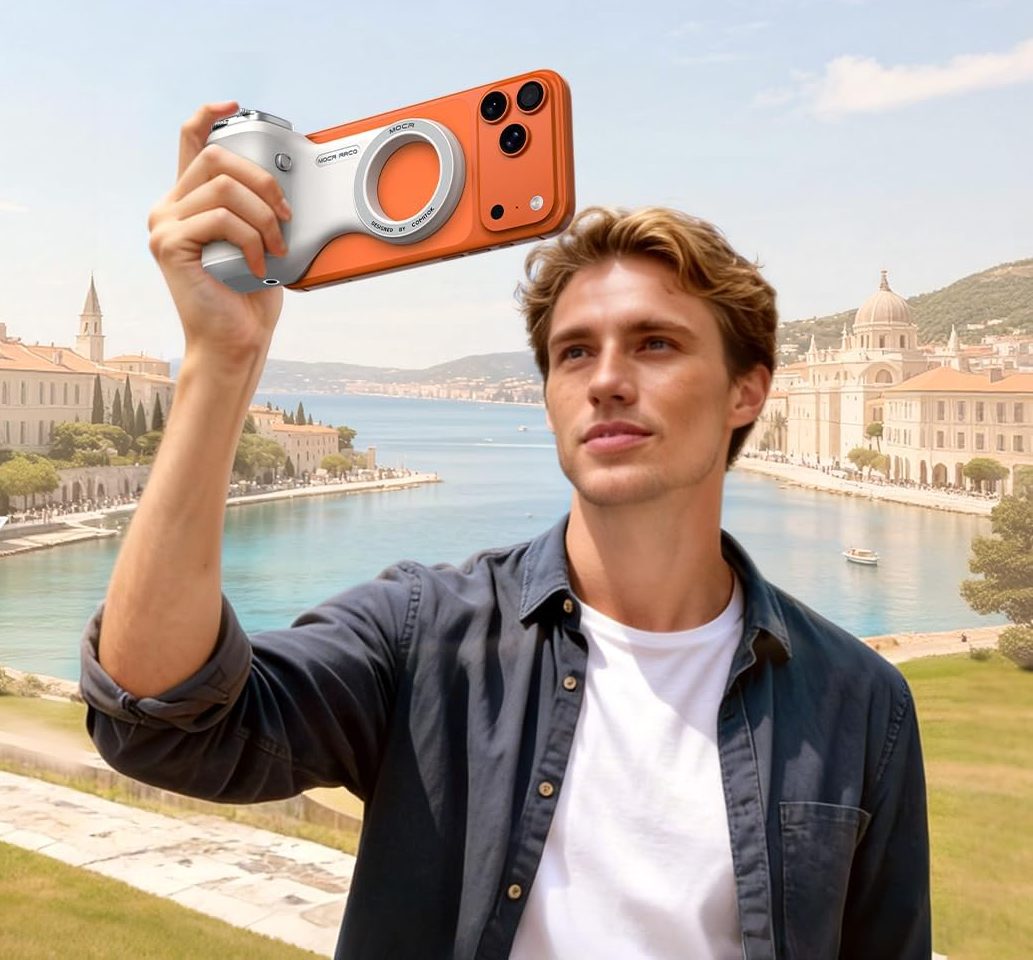
There’s a specific ache iPhone Pro Max users know intimately: the tension that builds in your thumb after holding the phone steady for more than thirty seconds of continuous recording. You’re trying to keep the frame stable while simultaneously reaching your thumb across the screen to stop recording, or balancing the weight in a way that doesn’t make your wrist complain. It became part of the recording experience itself—factored into planning, rarely discussed.
The adaptation happened so incrementally that most Apple users couldn’t articulate when phone cameras stopped feeling comfortable to hold. Each iPhone generation added camera capabilities and fractional weight increases. Pro Max models grew larger to accommodate better sensors and bigger batteries. Users adjusted their grip, developed new hand positions, learned to brace the phone against their body or rest it on surfaces between takes. The phones got better at recording video just as they got worse at being held while recording video.
What’s revealing isn’t that ergonomic grips exist now—it’s how many iPhone users had internalized physical discomfort as the cost of better cameras. The constraint shaped content in ways most creators never consciously recognized. Videos stayed shorter because holding the phone steady for longer took effort. Certain angles got abandoned because maintaining them required grip strength. Two-handed filming became standard not because it produced better footage, but because one hand couldn’t sustain the weight and reach the controls simultaneously.
Extended recording became a case study in normalized strain. You switched hands mid-shoot when the first one fatigued. You cut takes shorter than intended because your thumb couldn’t comfortably reach the stop button. You developed elaborate bracing techniques, propping elbows on tables or tucking the phone against your chest. iPhone users treated these adaptations as personal filming styles rather than responses to a design mismatch between device weight and human hand anatomy.
The camera grip with thumb rest didn’t just add stability—it eliminated the constant low-level negotiation between wanting to record and what your hand could physically manage. For iPhone Pro Max users accustomed to calculating whether a shot was worth the wrist strain, the absence of that calculation revealed how much creative decision-making had been outsourced to physical endurance. You didn’t realize you were choosing video length based on grip stamina until grip stamina stopped being a variable.
What shifted wasn’t the quality of what iPhone users captured—it was the recognition that an entire category of shooting decisions had been determined by ergonomics, not intention. Creators who’d spent years developing two-handed techniques and strategic hand-switching suddenly found those workarounds unnecessary. The detachable remote meant you could trigger recording without stretching your thumb across an increasingly large screen while simultaneously balancing increasing device weight.
The price has quietly dropped since many users first adapted to this habit. It now costs less than when most Apple users learned to work around it. The price shift went largely unnoticed, much like the behavior itself. A link is included solely to document the change.
The camera grip didn’t solve a technical problem. It solved the problem of iPhones becoming heavier and more capable while hands stayed the same size. For Apple users who spent years training themselves to hold phones in increasingly uncomfortable positions for the sake of better footage, that relief feels less like an accessory and more like someone finally noticing that professional-grade cameras had been crammed into objects designed for casual one-handed use.
"Note: Readers like you help support The Apple Tech. We may receive a affiliate commission when you purchase products mentioned on our website."