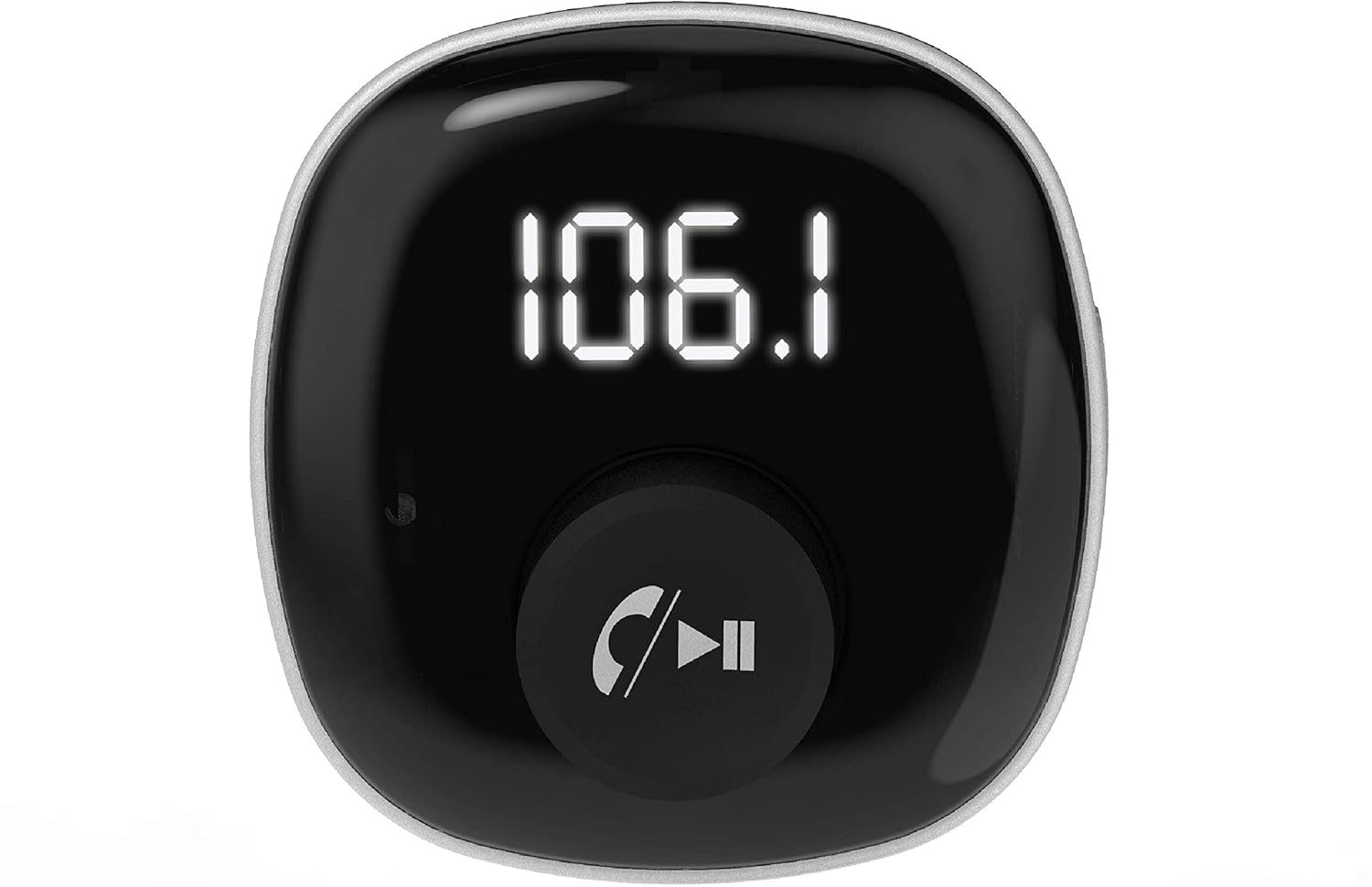
Valentine’s weekend has a particular way of revealing technological gaps in relationships. Not just whose phone has a better camera for dinner photos, but whose car can actually play the carefully curated playlist someone made for a romantic drive. For couples who own vehicles manufactured before roughly 2016, that playlist exists on a phone with no clear path to the speakers. The solution isn’t elegant. It’s a small black device that plugs into the cigarette lighter and broadcasts to an FM frequency, turning modern streaming into analog radio signals the car can understand.
The FM transmitter fell out of cultural relevance around the same time Bluetooth became standard in new vehicles. But vehicle turnover is slow. The average car on American roads is over twelve years old, which means millions of Valentine’s dates happen in cars that have USB ports for charging but no USB audio input, that have auxiliary jacks that require cables no one carries anymore, or that have neither and assume you’re satisfied with whatever the local radio stations are playing.
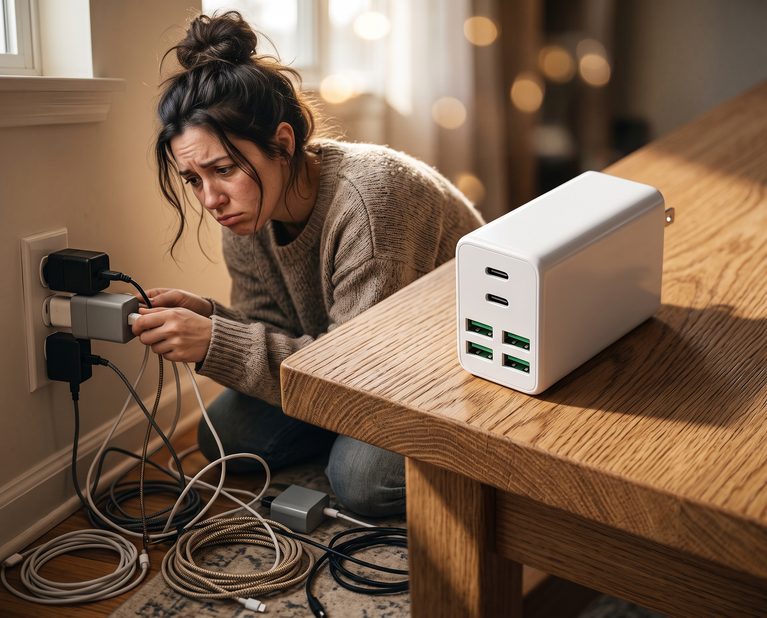
Dual USB ports became relationship infrastructure. One person’s phone is navigating. The other person’s phone is streaming music. Both phones are steadily losing battery because location services and cellular data are power-hungry. The math doesn’t work with a single charging port. Someone’s device dies, or someone makes the sacrifice, or someone remembers to charge fully before leaving and hopes it lasts. The second port eliminates the negotiation. It’s not romantic, but neither is the conversation about whose phone gets priority.
The frequency selection ritual has become a minor Valentine’s tradition for certain couples. You turn the device to 88.1, and it’s occupied by static or a religious station. You try 88.3, and there’s interference. You land on 88.5, and it’s clear enough, until you drive three miles and suddenly a college radio station bleeds through. Nothing says romance like spending the first ten minutes of a date night drive scanning for an FM frequency that isn’t already occupied. In rural areas, this is easy. In cities, it’s archaeological work, finding the dead zones in the electromagnetic spectrum.
Handsfree calling was the original justification for Bluetooth in cars, back when texting while driving was becoming socially unacceptable and legally prohibited. But in older vehicles, that functionality never arrived. Phone calls happen through the phone’s speaker, held awkwardly near the driver’s face, or through wired earbuds that make the passenger feel like they’re eavesdropping on half a conversation. The Bluetooth adapter restores what feels like baseline functionality—the ability to have a conversation without holding hardware or making everyone in the car an unwilling participant.
What’s peculiar is that this device category exists in a state of permanent obsolescence. Every new car renders it unnecessary. Every person who trades up to a newer vehicle leaves their FM transmitter behind, forgotten in a glove box or donated along with the car. But every person who keeps driving their paid-off 2013 sedan needs one, which means the market refreshes constantly not through upgrades but through vehicle age demographics. You don’t buy a better FM transmitter. You buy the same FM transmitter your car has always needed.
The Valentine’s gift angle is oddly practical. It’s not jewelry or flowers. It’s admission that the car—often a shared space for couples—has a problem that’s been tolerated long enough. The purchase says: I’ve noticed we fumble with this every time we drive together, and I’m solving it. There’s romance in that attentiveness, even if the object itself is a workaround for automotive manufacturers who assumed everyone would upgrade vehicles more frequently than they actually do.
The 20% discount matters because FM transmitters occupy a specific price threshold. Too cheap, and they introduce static, fail to hold frequency, or produce audio quality that makes you question whether the playlist was worth the effort. Too expensive, and you’re spending serious money to add functionality to a car you might replace in two years anyway. The sweet spot is affordable enough to justify immediately but expensive enough to filter out the truly terrible options. The discount just accelerates a purchase that was already half-decided.
What the device really provides is continuity. Your music library lives on your phone. Your car stereo was designed when music libraries lived on CDs or radio stations. The transmitter bridges those eras without requiring you to burn CDs like it’s 2005 or accept that your Valentine’s drive soundtrack is whatever the algorithm decides to play between commercials. It’s a small rebellion against planned obsolescence—refusing to replace a functional car just because its audio system doesn’t speak the same language as your phone.
The black color is the only color, which tells you everything about this product category. It’s not trying to be noticed. It’s trying to solve a problem and disappear into the dashboard clutter. Visibility would be failure. The best FM transmitter is the one you forget is there, until you’re ten minutes into a drive and realize you’re listening to exactly the song you wanted, at exactly the right moment, and the fact that it’s traveling through your phone, through Bluetooth, through an adapter, through an FM frequency, and into speakers that predate the iPhone doesn’t matter at all. It just works, which on Valentine’s weekend, is sometimes the most romantic thing technology can offer.
"Note: Readers like you help support The Apple Tech. We may receive a affiliate commission when you purchase products mentioned on our website."