
The iPhone’s camera system handles most visual documentation needs effortlessly, but a category of inspection tasks—inside walls, under appliances, behind fixtures—sits outside its capabilities entirely.
Something is wrong behind the refrigerator. Maybe it’s a leak, maybe it’s a pest problem, maybe it’s just accumulated debris from fifteen years of not moving the appliance. You need to see what’s back there, but the gap between the fridge and the wall is four inches, and your iPhone—capable as it is—can’t navigate that space. The camera needs line of sight. The space doesn’t provide it.
This is the edge case that defines a category of tools the iPhone can’t replace. Apple’s camera system is remarkable for surface-level documentation. You can photograph documents, scan QR codes, use augmented reality to measure furniture, even do macro photography of tiny objects. But all of this assumes the subject is accessible, visible, and within reach. The moment something is enclosed, embedded, or obscured, the iPhone’s utility drops to zero.
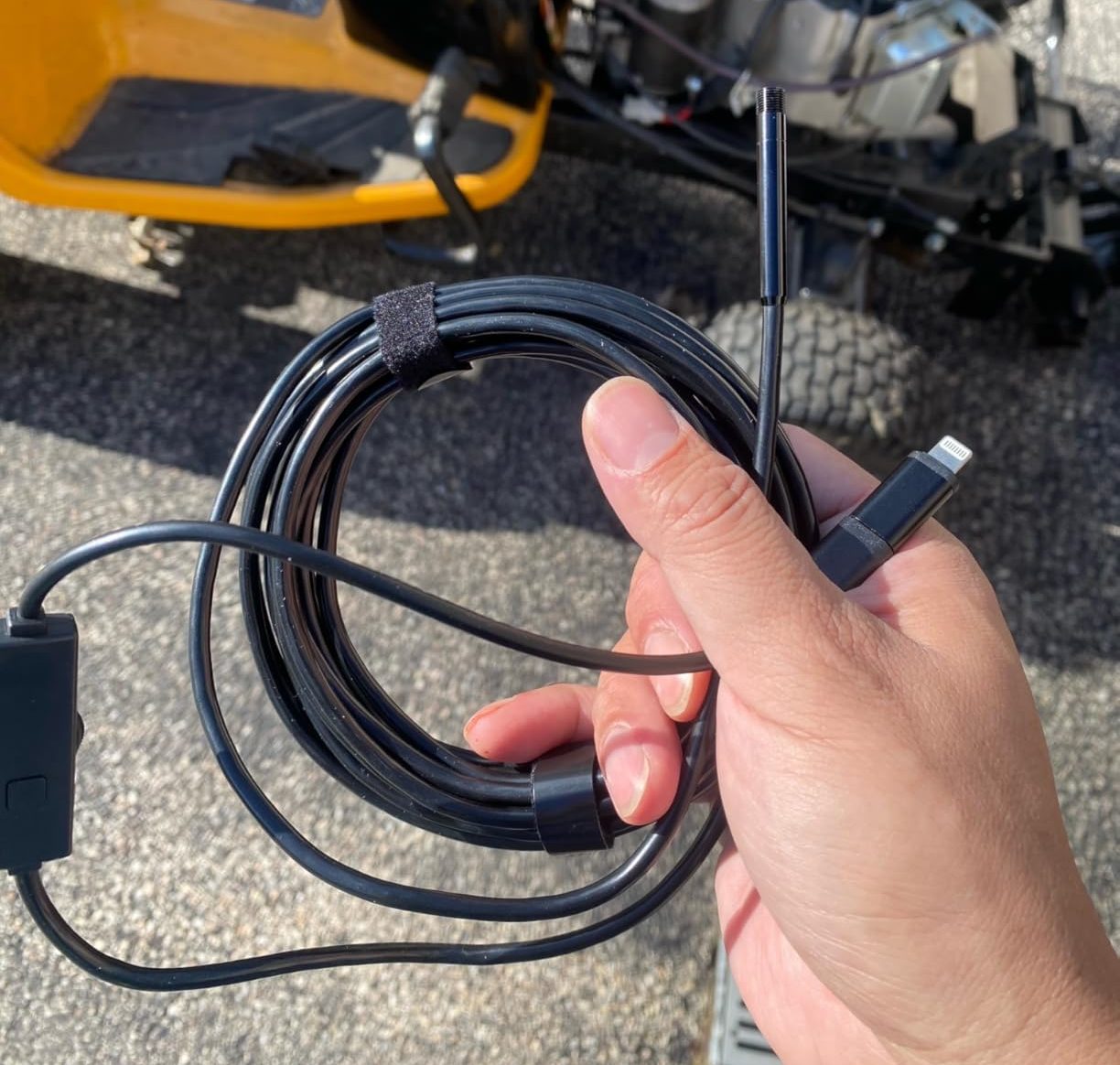
Inspection cameras solve this by separating the lens from the display. A narrow, flexible cable with a camera on the end connects to the iPhone via USB-C, turning the phone into a viewfinder for spaces it could never physically access. The cable snakes into wall cavities, under floorboards, inside engine compartments, behind built-in furniture. The iPhone shows what the camera sees in real time, but the camera does the navigating.

This setup inverts the usual relationship. Normally, the iPhone is the autonomous device—it captures, processes, and stores images independently. With an inspection camera, the iPhone becomes subordinate infrastructure. It’s the display. The processing happens on the phone, but the critical component is the external camera doing the actual work. The iPhone facilitates the task without being the tool that performs it.
Use cases cluster around maintenance and diagnostics. Checking for mold inside walls before tearing into drywall. Locating a dropped screw inside a piece of equipment without disassembling the entire thing. Inspecting HVAC ducts for obstructions. Confirming that a cable was properly routed through a conduit. These aren’t frequent tasks for most people, but when they arise, the alternative is destructive disassembly—tearing things apart to see what’s wrong, then putting them back together.
The LED lights on the camera head matter because most hidden spaces are dark. You’re not just looking into a gap; you’re looking into a gap with no ambient light. The iPhone’s flash is irrelevant here—it’s pointing at the phone, not at the subject six feet away at the end of a cable. The lights travel with the camera, illuminating whatever surface it’s pressed against.
There’s a recording capability that extends the utility beyond immediate inspection. You can document what you find—a cracked pipe, a chewed wire, a structural issue—and share that footage with a contractor or technician without needing them to replicate the inspection. The iPhone stores the video like any other file, which means it integrates into the broader ecosystem. You can AirDrop it, upload it to iCloud, annotate it in Photos. The iPhone is designed for what’s in front of you, not what’s hidden six feet inside a wall or under three layers of cabinetry. Previously listed at $22.43, current listings hover around $12 (CODE 45G3XR9S) for models with USB-C compatibility. The price point positions these as task-specific tools rather than everyday accessories, but for the tasks they address, there’s no real iPhone-native alternative.
"Note: Readers like you help support The Apple Tech. We may receive a affiliate commission when you purchase products mentioned on our website."