
The band that you barely noticed during the day also meant you barely noticed the watch at night. When Apple Watch introduced sleep tracking, it created a new expectation: the watch should stay on your wrist overnight. But traditional sport bands with clasps created pressure points that became noticeable during sleep. You’d wake up with indentations on your wrist or simply find the watch too present to ignore.
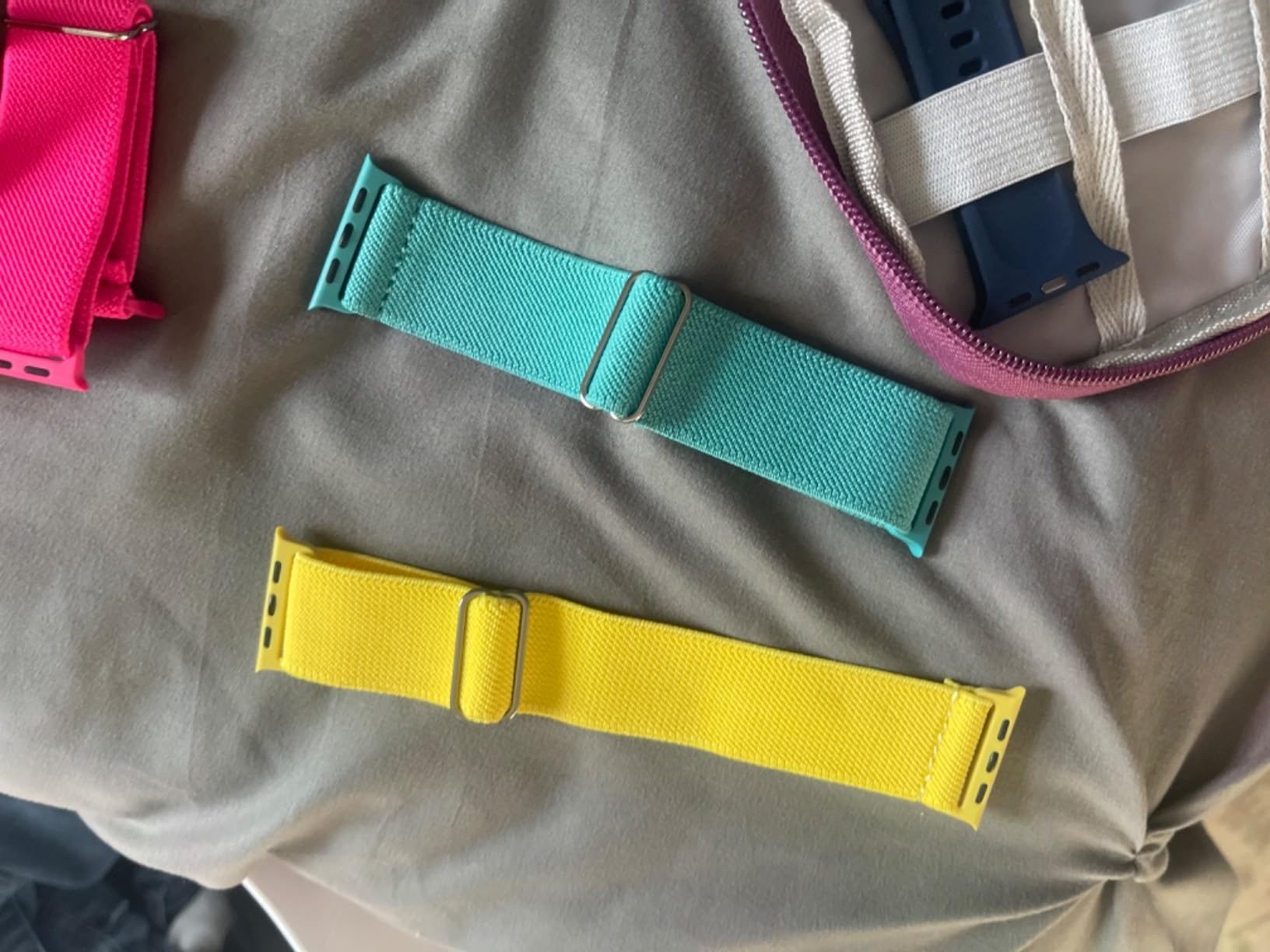
Stretchy elastic bands solve this through continuous pressure distribution. There’s no clasp, no buckle, no point of concentrated contact. The band stretches over your hand when you put it on, then settles into an even, gentle grip that remains consistent throughout the day and night. The lack of hardware means nothing digs into your wrist when you shift positions during sleep.
This has enabled a behavioral shift: Apple Watch as truly continuous wearable rather than daytime-only device. Users charge the watch during their morning routine—shower, breakfast, getting dressed—then wear it for the next 23 hours. The band never comes off except during that charging window, which means the watch becomes less like an accessory you put on and more like something that just… stays.
The trade-off is sizing precision. Clasp bands offer adjustability—you can tighten or loosen them based on swelling, temperature, or activity. Elastic bands come in fixed sizes, and getting the right fit requires trial. Too tight and they’re uncomfortable. Too loose and the watch slides around, affecting sensor accuracy for heart rate and blood oxygen measurements.
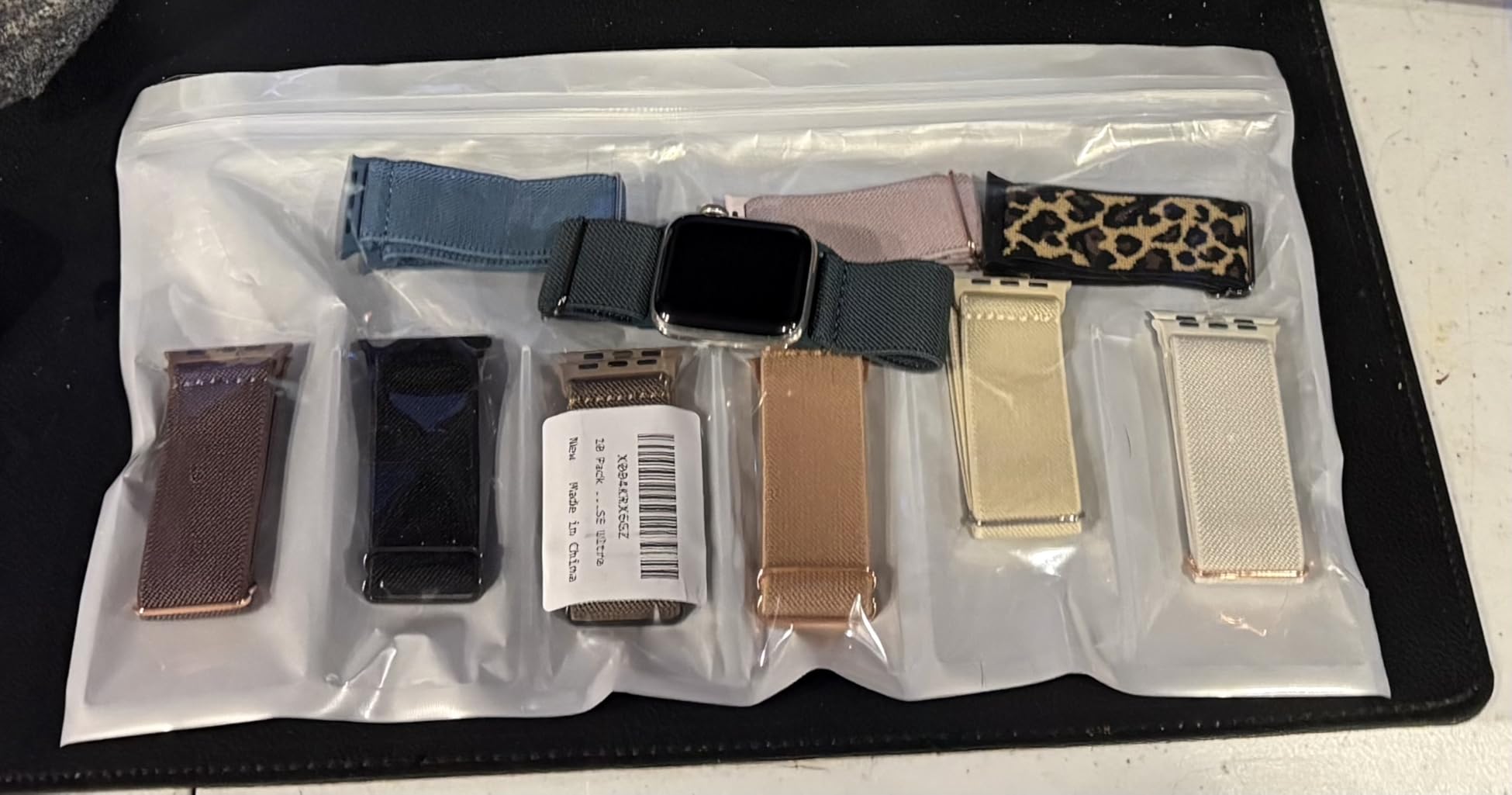
Multi-packs address this by making experimentation affordable. Ten bands for under ten dollars means you can try different sizes without significant financial commitment. Once you find the right fit, the extras become rotation options—different colors for different contexts, or backups for when one needs washing.
What’s interesting is how this changes the Apple Watch’s identity. With a clasp band, it feels like a watch—something you deliberately put on and take off. With an elastic band, it feels more like a ring or a bracelet—something that becomes part of your body rather than something you’re wearing.
Previously listed at $9.99, current listings hover around $8.99. The extremely low price for ten bands reflects manufacturing efficiency and competition, making band rotation economically trivial.
"Note: Readers like you help support The Apple Tech. We may receive a affiliate commission when you purchase products mentioned on our website."