
There’s a particular fatigue that sets in when your primary computing device is also the thing you hold in your hand for six hours a day. It’s not just physical—though wrist strain and thumb cramping are real—but cognitive. The act of picking up the phone, unlocking it, glancing, setting it down, and repeating that loop becomes a reflex so ingrained it stops registering as a choice.
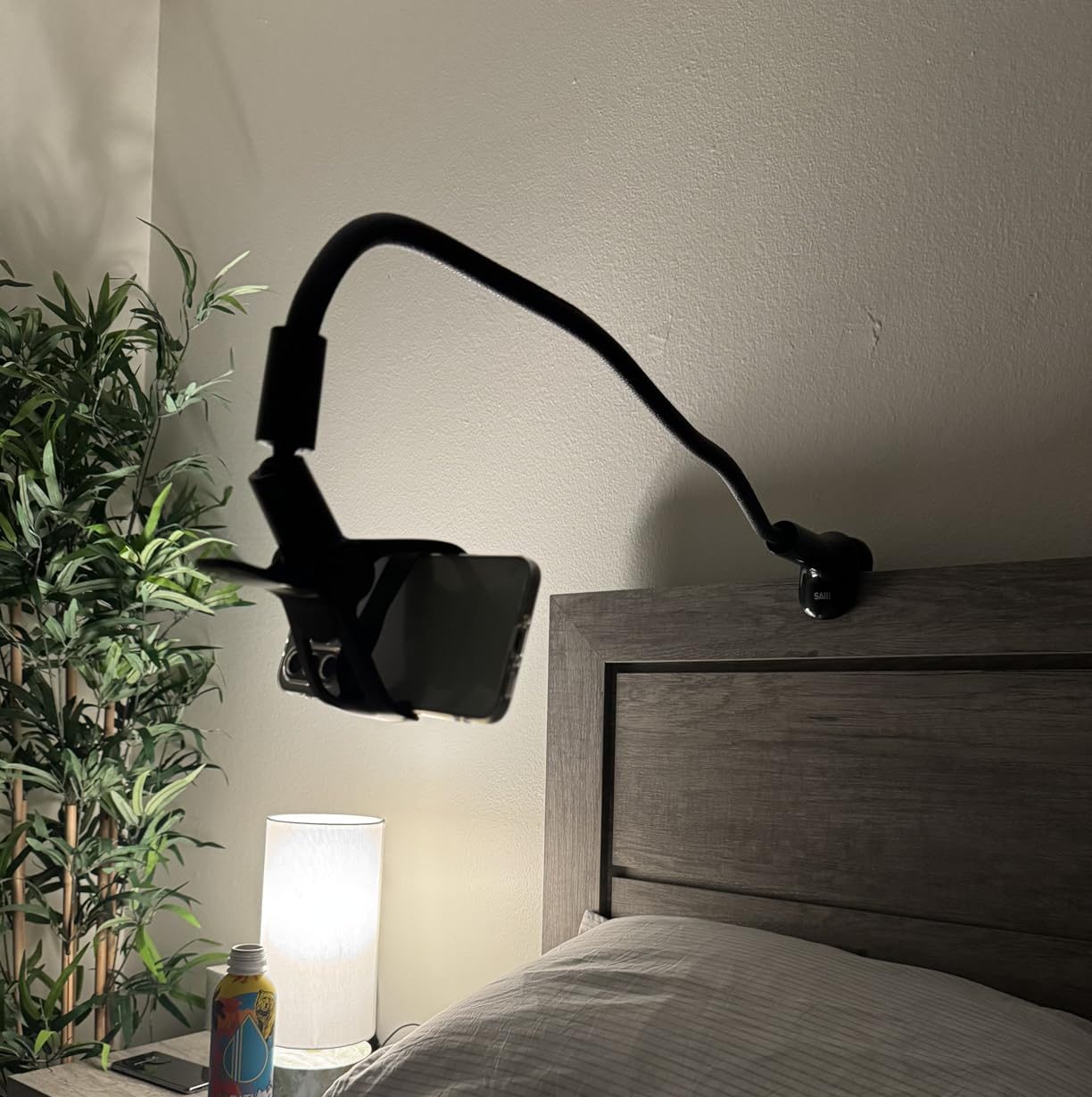
A subset of iPhone users has begun opting out of that loop entirely. Not by reducing screen time, but by changing its posture. Flexible arms that clamp to desks, bedframes, or kitchen counters allow the phone to hover at eye level, transforming it from a handheld distraction into a fixed reference point. The phone becomes part of the room’s architecture, not something you pick up and put down forty times an hour.
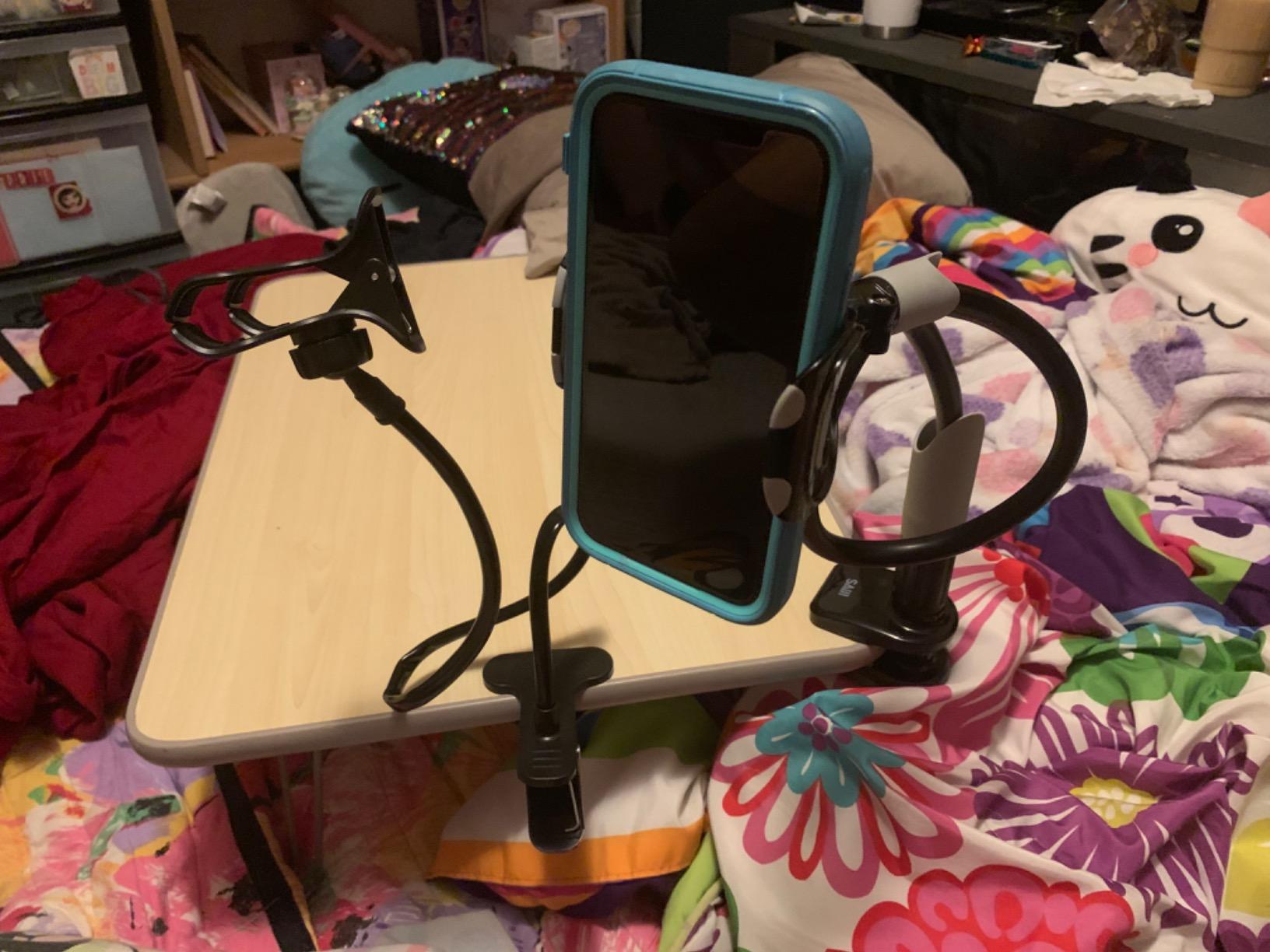
This shift shows up in unexpected contexts. Video calls from bed without propping the phone against a stack of books. Recipe apps in the kitchen, angled overhead to avoid splatter. FaceTime with aging parents who prefer a stable, centered frame instead of the jittery selfie-arm wobble. Even Switch gaming sessions streamed to friends, the phone acting as a makeshift document camera.
What makes this behavior notable isn’t the accessory itself—gooseneck mounts have existed for years—but the timing. iOS 18’s StandBy mode and Always-On display have made the iPhone more useful as a stationary object. Widgets surface information without interaction. Notifications stack vertically, readable at a distance. The phone, for the first time in its history, doesn’t need to be touched to justify its presence in a room.
SIMILAR
iPhone and MacBook users are compensating for a port problem Apple created
iPhone users are eliminating the tangled cable from every car charging session
iPhone users are transforming nightstands into silent charging infrastructure
Apple has never officially endorsed this use case, yet the software increasingly accommodates it. Lock screen customization, Live Activities, and Dynamic Island all perform better when the phone isn’t moving. The ecosystem is quietly rewiring itself to support a mode of engagement it didn’t originally design for.
Previously listed at $19.99, current listings hover around $13.98. That price point suggests commoditization—proof that the behavior has scaled beyond early adopters and into mainstream domestic routines.
The irony is that the iPhone, engineered for mobility and touch, now finds its most focused use when it’s clamped in place and left alone. What began as a tool for constant connection has become, for some, a tool for staying still.
"Note: Readers like you help support The Apple Tech. We may receive a affiliate commission when you purchase products mentioned on our website."