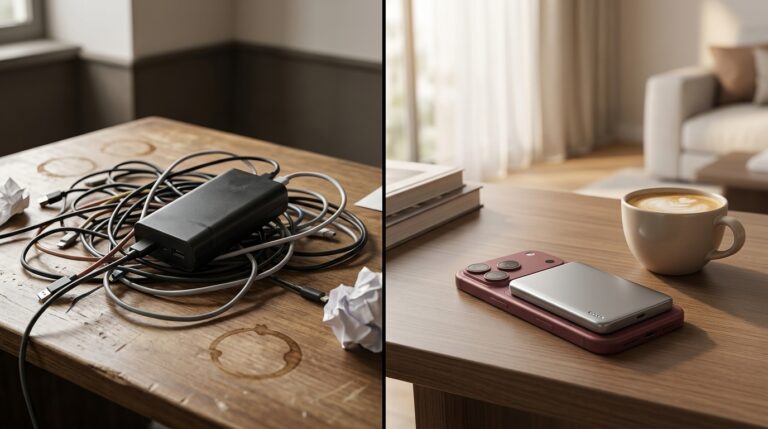
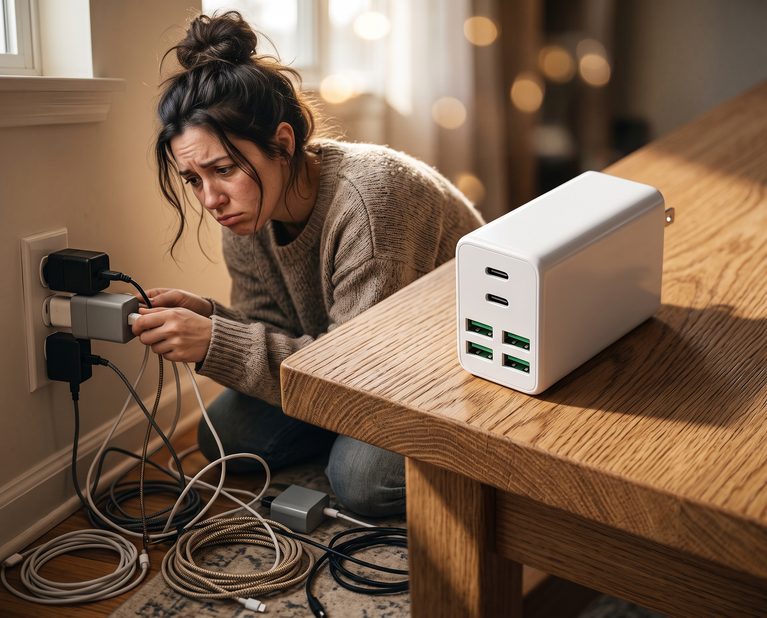
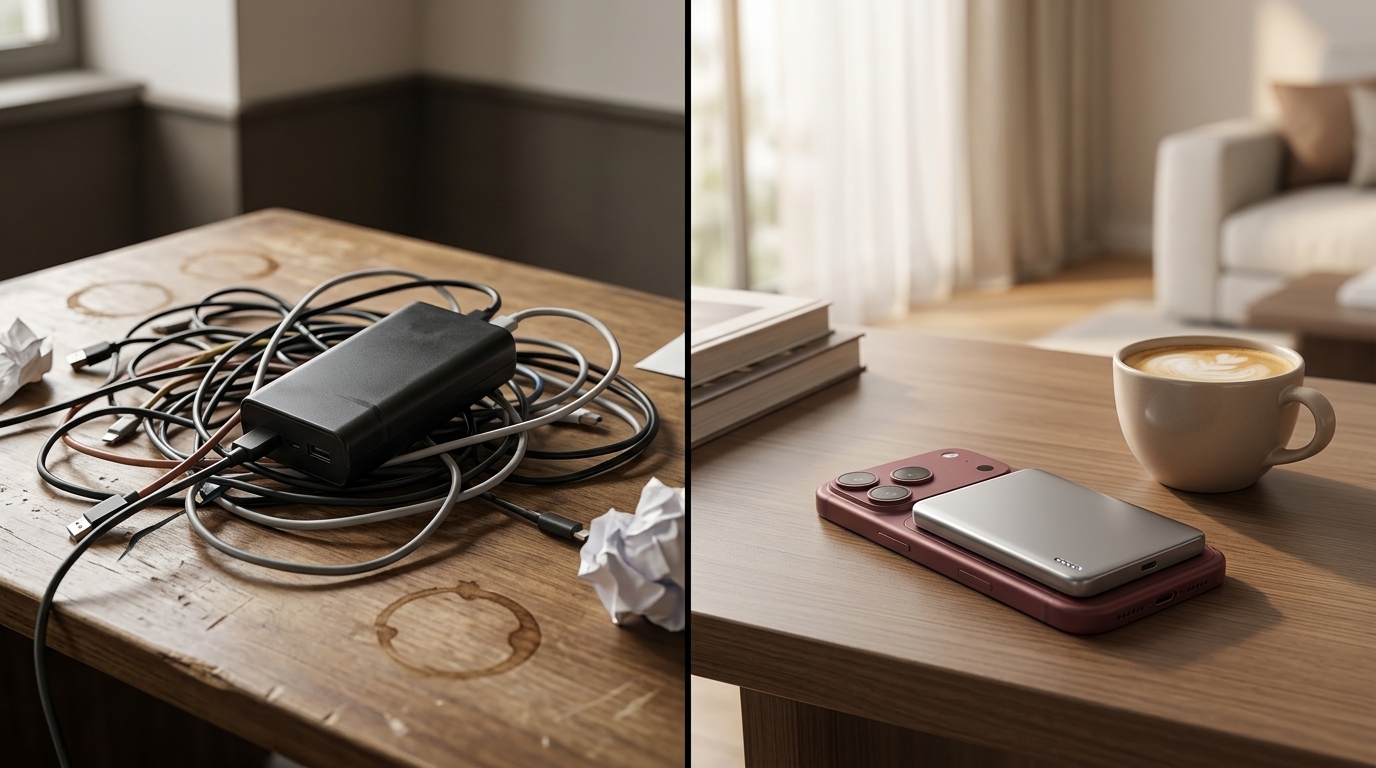
One charger, three ports, and the quiet negotiation over which device gets power first. The hierarchy reveals more than people realize.
There’s a small decision that happens every night in bedrooms and offices: which device gets plugged in first. It sounds trivial, but the presence of a multi-port charger has turned charging into a kind of triage. The laptop, the phone, the tablet—each one competes for the same block of wall space, and the order in which they’re connected often reflects an unspoken priority system that people don’t always examine.
For those embedded in the Apple ecosystem, this becomes even more layered. The MacBook can charge from the same USB-C port as the iPhone, but only one of them can pull full wattage at a time. The iPad sits somewhere in between, occasionally fast-charging, occasionally not. The charger itself doesn’t decide—it just distributes power based on what’s plugged in and when. The result is that people start strategizing, mentally calculating which device will drain first, which one they’ll need most tomorrow.
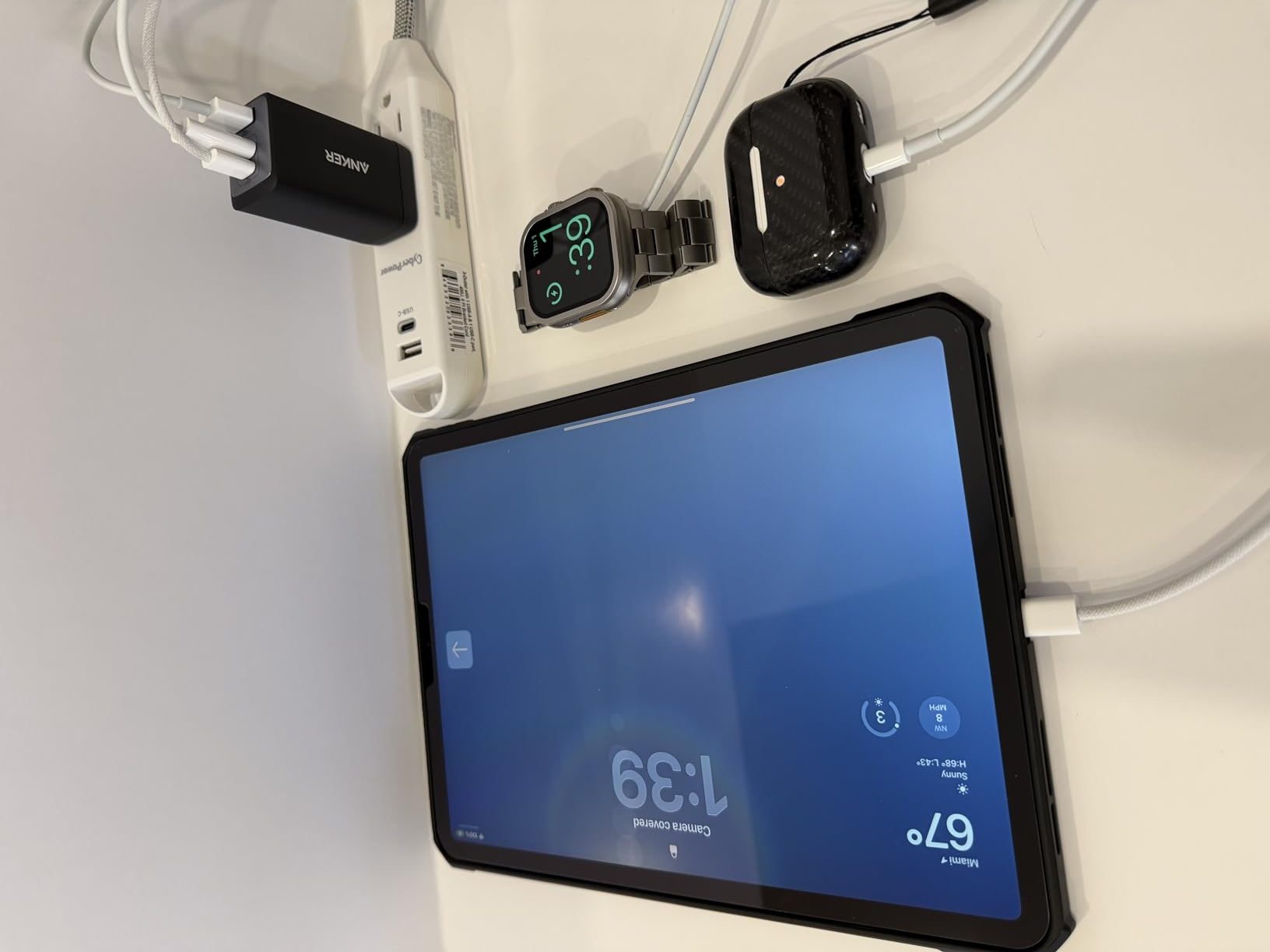
This has changed how people think about portability. A single-port charger used to mean traveling light. Now it means making sacrifices. The multi-port alternative is heavier, bulkier, but it eliminates the choice. You can plug everything in and let the charger figure it out. Except the charger doesn’t always figure it out in the way you’d expect. The laptop dominates, pulling most of the available wattage, while the phone sips what’s left. The iPad waits its turn.
The foldable prongs are another small change with outsized effects. They make the charger easier to pack, but they also make it easier to forget. It slips into a pocket, gets buried under other gear, and suddenly you’re digging through a bag at a coffee shop trying to remember which compartment you put it in. The compactness that makes it travel-friendly also makes it invisible.
SIMILAR
Apple Home users are managing smart outlets through competing voice assistants as HomeKit compatibility remains inconsistent
Why some Apple ecosystem users are quietly adding Windows machines to home offices
iPhone users are redesigning car charging setups as multiple devices compete for limited power during commutes
There’s also a behavioral shift around how people use devices while they charge. With a single-port charger, you’d plug in the phone and leave it alone. With a multi-port setup, you’re more likely to keep using the phone, because the laptop is charging too and you’ve already committed to staying near the outlet. The simultaneous charging creates a kind of gravitational pull—you don’t wander as far, you don’t disconnect as easily.
The wattage game has become its own subculture. People compare numbers, debate whether 65W is enough for a MacBook Pro, argue about whether the third port is even worth using. The language has shifted from “does it charge my phone” to “how fast does it charge my phone while also charging my laptop.” The baseline expectation has moved.
What’s emerging is a new kind of dependency, not on the devices themselves, but on the infrastructure that keeps them running. The charger becomes the anchor point, the thing that determines where you sit, how long you stay, whether you can work from that table in the corner or need to move closer to the outlet. Previously listed at $40, current listings hover around $25.99.
"Note: Readers like you help support The Apple Tech. We may receive a affiliate commission when you purchase products mentioned on our website."