

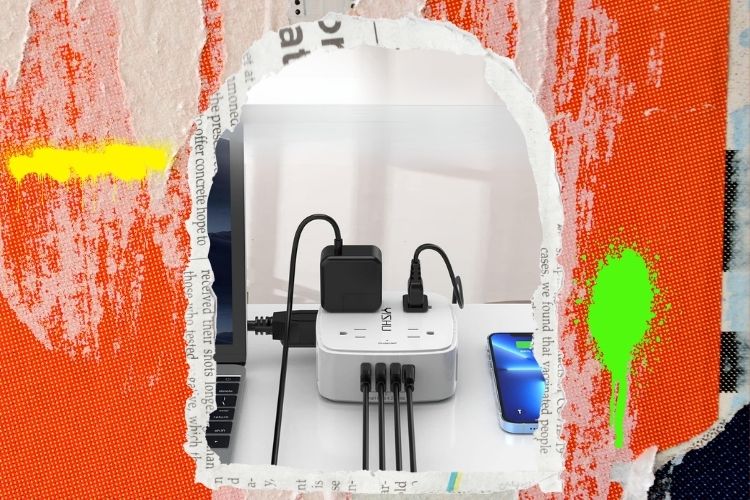
The modern iPad desk doesn’t look like the one in Apple’s marketing. There’s no minimalist white surface with a single device and a Pencil. There’s a power strip with six outlets occupied, USB ports feeding a keyboard and external drive, and a cable running along the baseboard because the nearest wall outlet is four feet away.
This infrastructure gap has become a quiet friction point for users who’ve embraced iPad as a primary device. The tablet itself can last all day, but the hub connecting it to an external display can’t. The wireless keyboard needs charging. The portable SSD draws power. The monitor requires a connection. The iPad floats untethered at the center of a web of wired dependencies.

Apple’s ecosystem assumes abundance—abundant battery life, abundant outlets, abundant USB-C ports. Real-world desks rarely provide all three. Users compensate with multi-outlet extenders, often mounted under desks or zip-tied to furniture legs, transforming minimal setups into managed cable systems.
The shift toward USB-C promised consolidation, but it mostly redistributed the problem. Instead of five different cables, there are five USB-C cables, each requiring negotiation with a finite number of ports. Power delivery specs vary. Some hubs pass through charging; others don’t. The iPad becomes a staging ground for a logistical puzzle.
SIMILAR
Why iPhone users are carrying standalone noise machines instead of relying on sleep apps
Apple Watch charging became a bedside ritual, here's why the placement matters more than expected
iPhone users are quietly giving up the cable and most dont realize why it happened so gradually over time
What’s revealing is how these configurations persist despite Apple’s wireless charging roadmap. MagSafe arrived for iPhone, but iPad remains wired for data and external displays. The accessories that unlock productivity—the ones Apple highlights in keynotes—can’t run on battery alone. The extension cord becomes load-bearing infrastructure.
Some users have developed rituals around power management: charging overnight, rotating devices, carrying backup batteries. Others just accept that the desk has a cord, that the setup isn’t portable in the way the marketing implies, that the iPad’s mobility comes with an asterisk.
The gap between the aspirational use case and the deployed reality suggests Apple’s ecosystem hasn’t fully solved for sustained creative work. The tools exist, but they require electrical scaffolding that the industrial design tries to hide.
Current listings for six-foot multi-outlet strips with USB ports, often in configurations designed for desk mounting, range from around $12 down to $9, reflecting commodification of a workaround that’s become standard.
"Note: Readers like you help support The Apple Tech. We may receive a affiliate commission when you purchase products mentioned on our website."