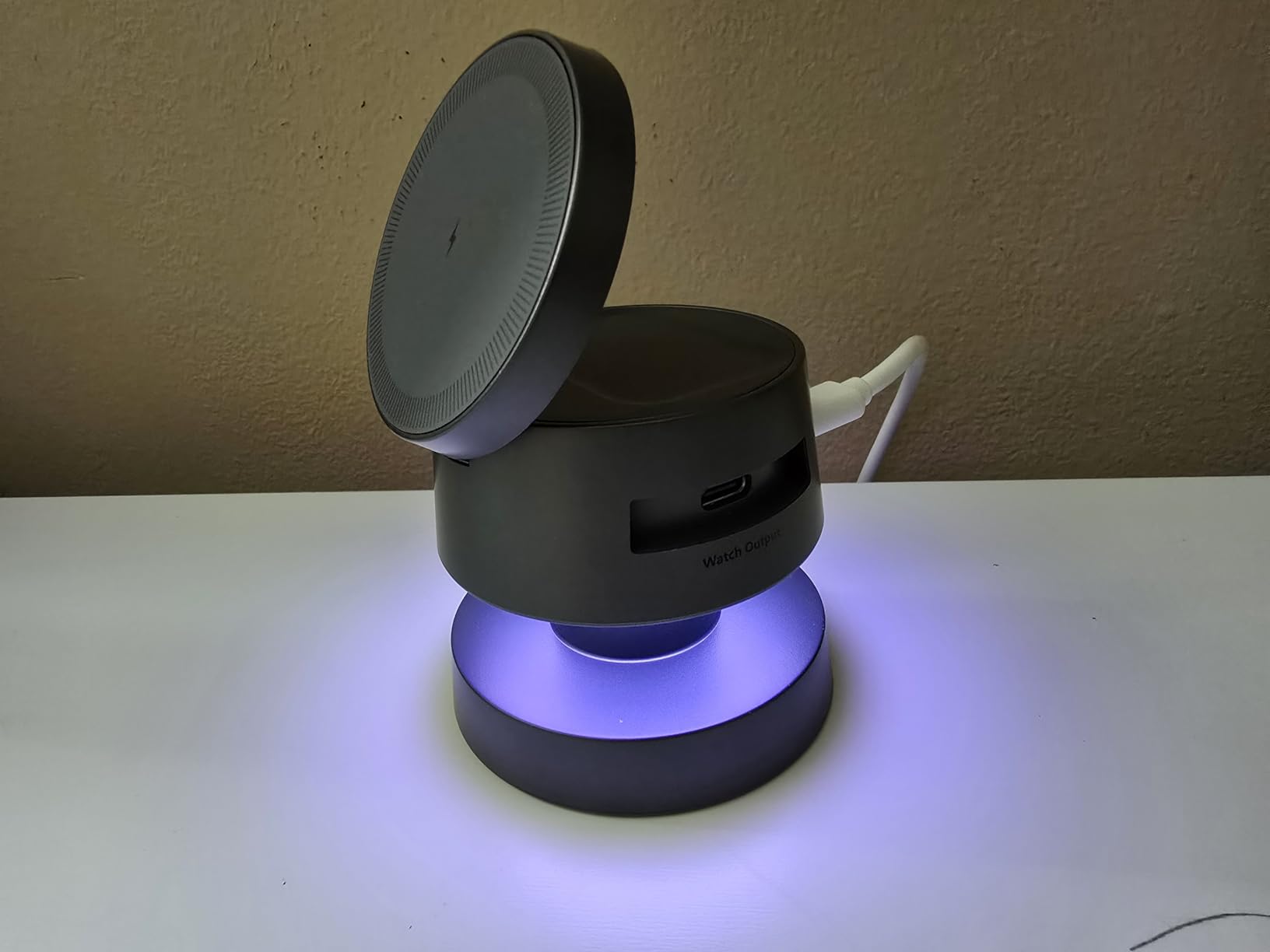
The charging worked the same way it did with Apple’s own accessories, which was the point—and also something new. For years, MagSafe was proprietary. Only Apple-certified accessories could deliver the full 15W charging speed with magnetic alignment. Third-party options existed, but they were slower or less reliable, creating a tiered ecosystem where Apple’s products performed best.
Qi2 certification changes that dynamic. It’s an open standard based on MagSafe’s magnetic ring technology, which means non-Apple chargers can now offer the same alignment, the same charging speeds, and the same user experience. The iPhone doesn’t distinguish between an Apple-branded MagSafe charger and a Qi2-certified third-party stand. They function identically.
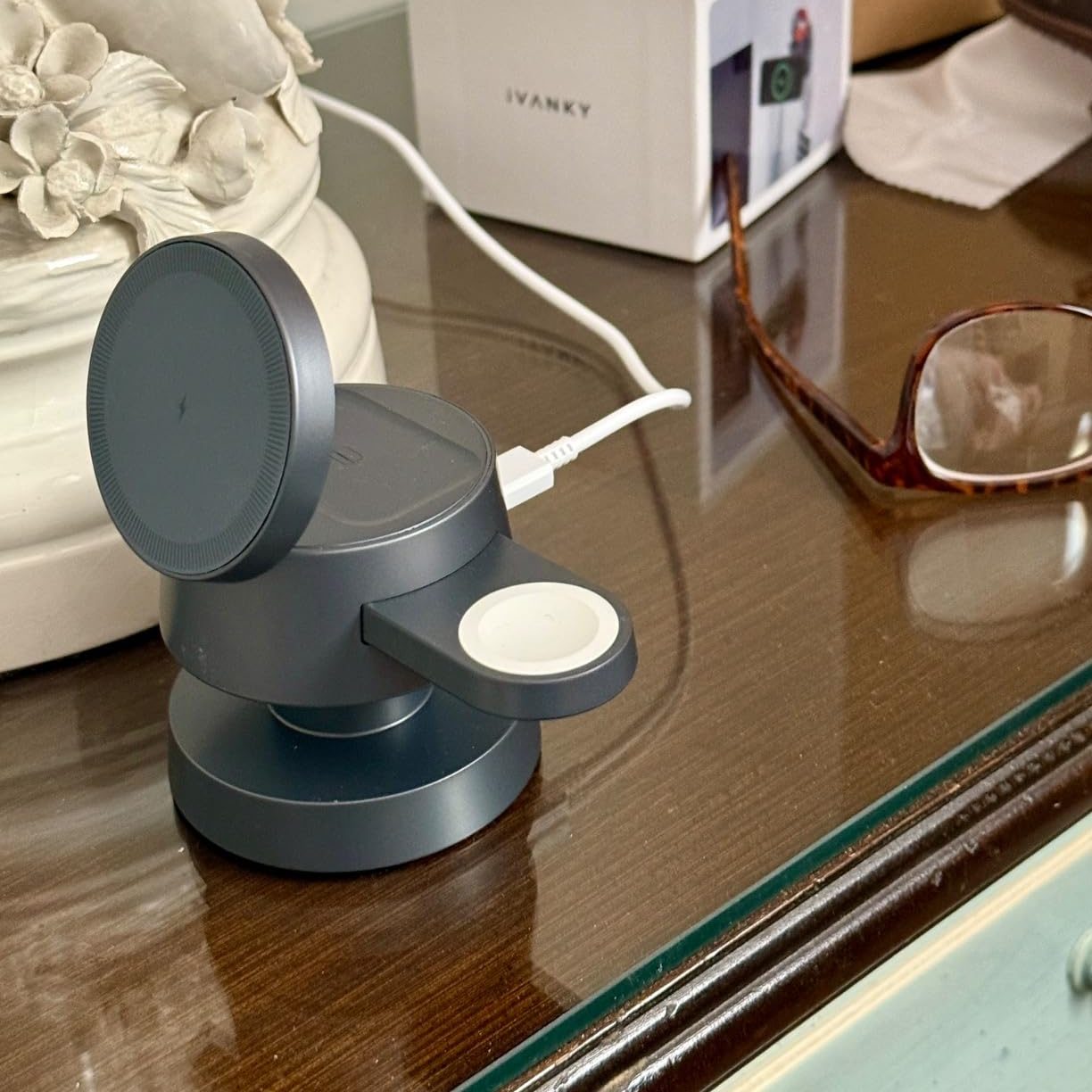
This has implications for how people build their charging infrastructure. Instead of investing exclusively in Apple accessories, users can mix and match based on price, design, or features. A Qi2 stand with an integrated night light might cost half what Apple’s equivalent would, and it works exactly the same way for the iPhone.
But standardization also reduces differentiation. When every Qi2 charger performs identically for core charging tasks, the decision shifts from “which one works best” to “which one looks best” or “which one has the features I want.” The night light becomes the distinguishing feature, not the charging capability itself.
What’s subtle here is how this shifts Apple’s role. By contributing MagSafe technology to the Qi2 standard, Apple ensured that its magnetic alignment approach would become the default for wireless charging. Even as third-party options proliferate, they’re all following Apple’s design language. The ecosystem expands, but Apple’s vision of how wireless charging should work becomes universal.
For users, this means less lock-in anxiety. You can buy a Qi2 stand knowing it’ll work just as well as Apple’s own hardware, and if you switch to a different phone in the future—one that also supports Qi2—the charger doesn’t become obsolete. It’s a small reduction in the cost of ecosystem participation.
Previously listed at $31.99, current listings hover around $19.99. The aggressive pricing reflects increased competition now that Qi2 has opened the market, but it also reflects the commoditization of what was once a premium feature.
"Note: Readers like you help support The Apple Tech. We may receive a affiliate commission when you purchase products mentioned on our website."