

Packing for an offsite session with MacBook, iPhone and AirPods often begins long before the bag closes. Each device carries its own cable, sometimes tangled together, sometimes intentionally coiled to save space. The ritual of gathering magnetic snaps and USB-C heads lingers at the edge of the journey: will the MacBook reach full power by midday? Will the AirPods case sit idle with only a trickle of current? These uncertainties turn familiar preparation into a moment of quiet recalibration, as routines bend around the low hum of multiple chargers.
In airport lounges, a row of power stations becomes a landscape of adapters vying for outlets. Travelers lean in, twisting USB-A tips into cramped sockets, or readjusting an iPhone pad for a better grip. A modest sigh follows each misaligned plug. Conversations pause when someone reaches across a cluster of cables, seeking a freer socket. These fleeting inconveniences draw attention to the ecosystem’s silent demands and the subtle choreography required to keep devices at ready.
In a hotel room’s half-light, fingers search through a mesh pocket for the tangled knot of cables. There is a weight to each coil, a memory of past trips where one cord delivered enough juice and another barely met the threshold. Drawing a deep breath, the user unravels the charger, places the MacBook on the desk, and guides the USB-C connector toward its port. The MacBook hisses as it takes power; the iPhone rests nearby, waiting for its cable to snap on.
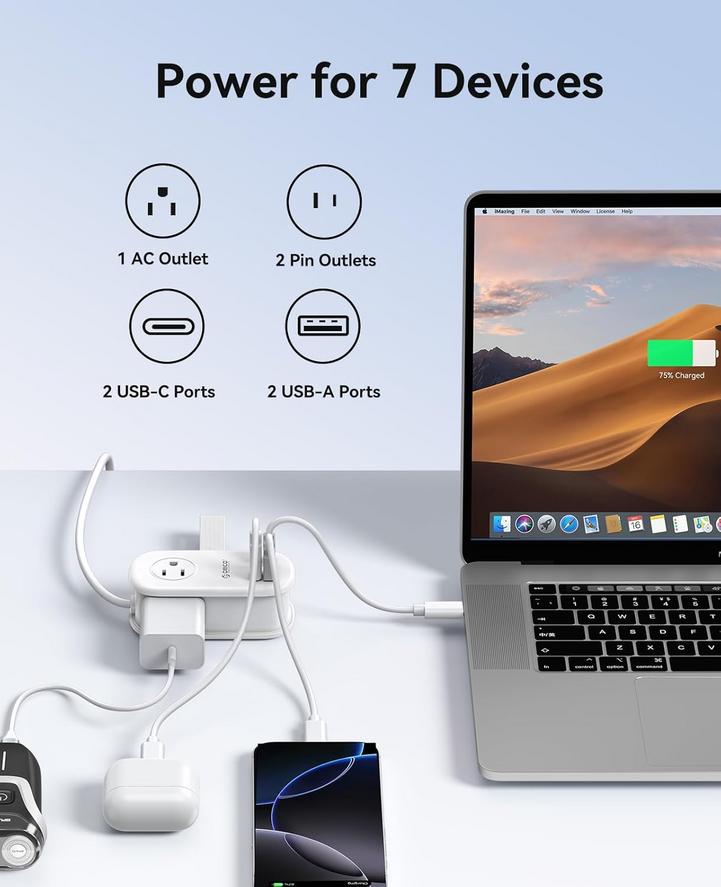
On subsequent trips, a compact multiport power strip enters the scene. Its blocky silhouette sits between laptop and nightstand lamp, offering a small oasis of order. Seven outlets line its sides, and a 65W USB-C port promises enough output to awaken a MacBook. The strip’s presence alters the ritual: instead of juggling three separate plugs, devices settle around a single anchor. The visual clutter recedes, replaced by a momentary calm as each cord finds its place.
In coworking spaces, the same tool reshapes midday pauses. A MacBook, freshly charged, unfolds to reveal desktop icons; an iPhone rests on its USB-C dock; AirPods charge beside a notebook. Rather than scanning the table edge for a spare outlet, users lean back, watching the charging LEDs glow in unison. The device trio—once scattered—now occupies a compact footprint, and the desk gains a reassuring symmetry that mirrors the rhythm of work.
Stashed in a carry-on, the strip’s extra outlets lie dormant until a café table or airport lounge demands attention. Its relatively modest bulk feels purposeful against stray cables that once claimed pockets of luggage. Unpacking every device becomes a single gesture: set the block down, plug in the adapter, distribute the cables. Even during short layovers, the familiar click as a USB-C connector slides into place offers a form of continuity, a reminder that the ecosystem is portable, not just digital.
Recent listings reflect a 27% reduction compared with earlier availability—an unassuming nod to the quiet role of such hubs in daily routines. There is no proclamation of revolutionary design or dramatic performance. Instead, the modest shift in usage patterns is acknowledged by a lower price tag, hinting at how small frictions—tangled cords and scarce outlets—have influenced demand.
This product is available on Amazon.
Check current availability here
Is this strip compatible with MacBook charging?
Yes, the 65W USB-C port supports MacBook models that accept USB-C power delivery, while the additional outlets accommodate Apple Watch docks or standard adapters.
Can it regulate charging across multiple devices?
The strip’s design distributes power to each outlet based on device draw, but it relies on each device’s internal battery management system for optimized charging cycles.
Does USB-C power delivery work for iPhone fast charging?
When connected to a USB-C to Lightning cable, the 65W USB-C port can deliver fast charging to compatible iPhone models following Apple’s power delivery standards.
Is it practical for packing in a travel backpack?
Its compact form and integrated cable pass-throughs reduce loose cords, making it easier to organize alongside a MacBook and accessories in a carry-on.
Verdict
By consolidating multiple cables and outlets into a single block, travelers and professionals observe how low-level friction shapes routines. This shift from scattered chargers to a unified hub subtly reframes our relationship with battery anxiety, turning a recurring chore into a brief pause. The strip’s understated presence highlights the ecosystem’s quiet demands and the small accommodations we make in transit. Ultimately, it reveals how minor design choices ripple through daily habits, making the act of charging less of a logistical hurdle and more of an unobtrusive ritual.
"Note: Readers like you help support The Apple Tech. We may receive a affiliate commission when you purchase products mentioned on our website."