
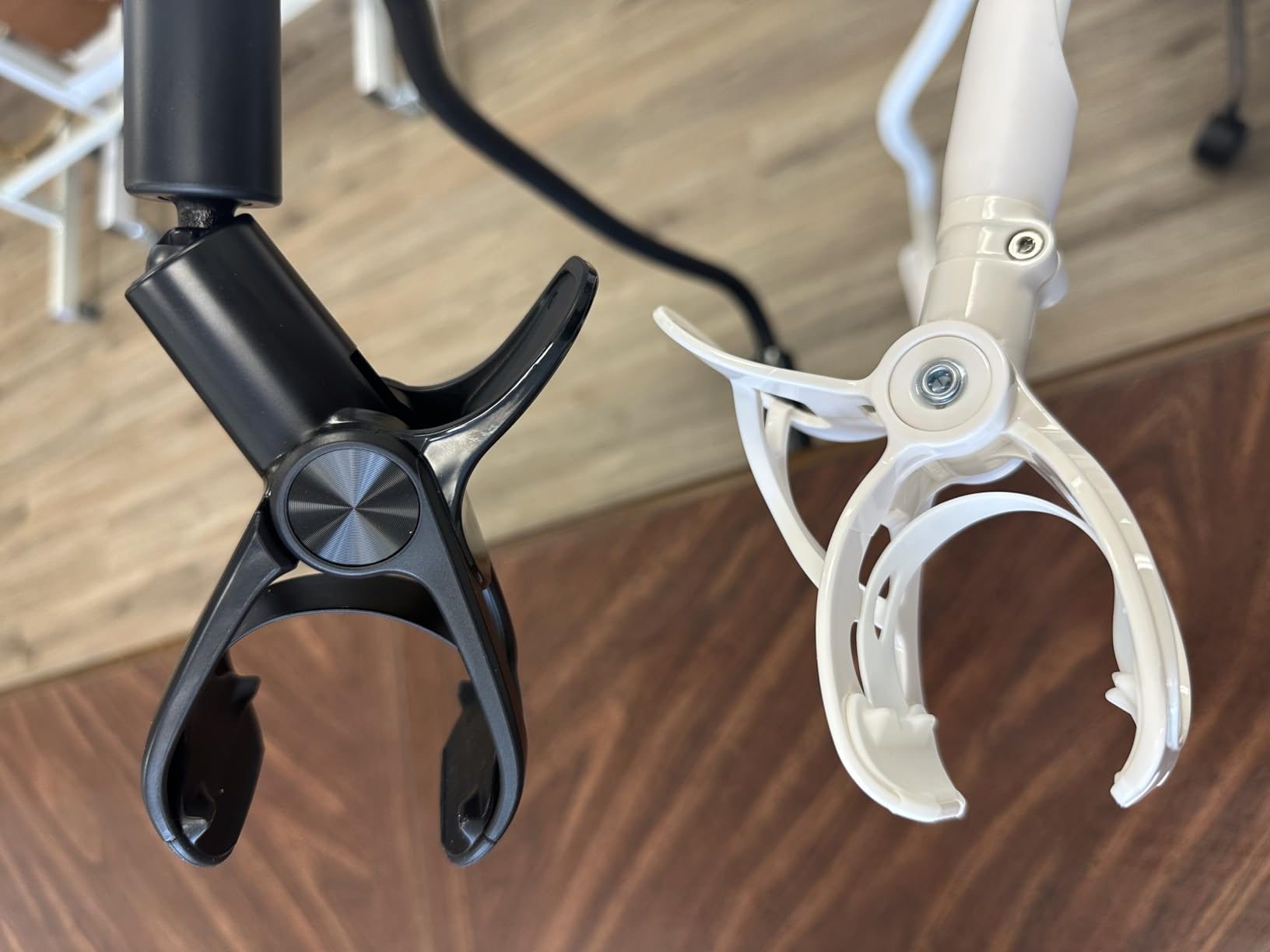
The phone floated in position above the bed, requiring no hands to hold it, which changed how long people could comfortably watch. Holding an iPhone at viewing distance for extended periods creates arm fatigue, especially with Pro Max models that approach half a pound. Users either prop phones against pillows—creating unstable viewing angles—or accept that their arms will tire before the content ends.
Gooseneck mounts eliminate this physical constraint by clamping to bedframes, nightstands, or desks and positioning the iPhone at any angle through flexible arms. The phone stays exactly where you position it, hands-free, for as long as you’re watching. This removes the natural limiter on bedtime screen time: physical discomfort.
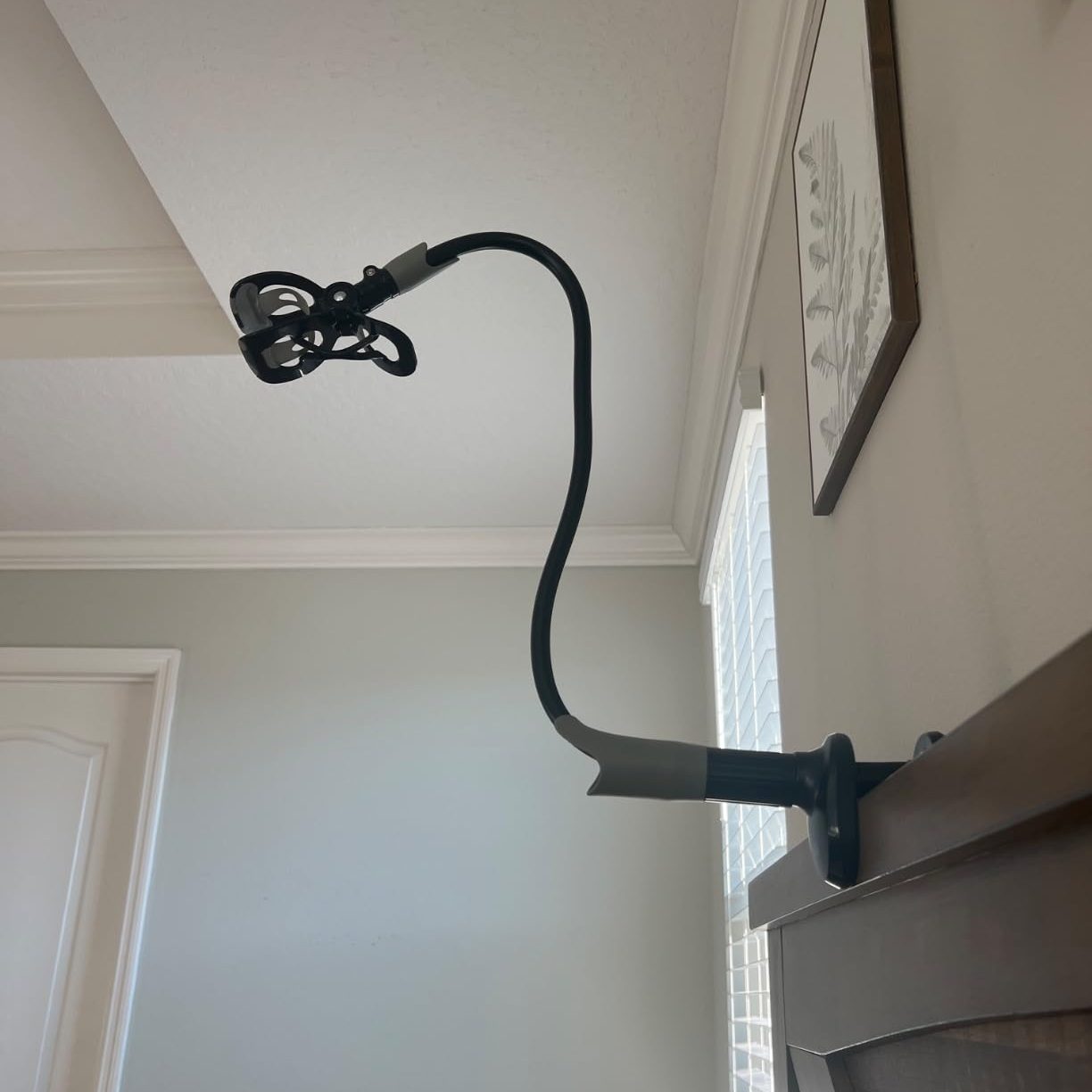
The flexibility matters because viewing contexts vary. Lying flat on your back requires the phone positioned directly overhead. Lying on your side needs a different angle. Sitting propped against pillows calls for yet another position. Fixed stands force you to adapt your body to the device’s position. Flexible arms adapt the device to wherever your body happens to be.
But this convenience carries behavioral implications. When holding the phone created natural fatigue, it enforced breaks. Your arm would tire, you’d set the phone down, maybe fall asleep. Mounted phones remove this friction, making it easier to watch for hours without the physical feedback that might otherwise prompt stopping.
The document camera reference in product descriptions hints at pandemic-era remote work adaptations that have persisted. Parents helping with homework needed overhead views of worksheets. Remote teachers needed to show physical demonstrations. What started as video call necessity has become general-purpose overhead mounting for various tasks beyond pure entertainment.
What’s revealing is how these mounts have migrated from desk-only accessories to bedroom furniture. The willingness to clamp a phone mount to a headboard or nightstand suggests people have accepted that phones are bedroom fixtures, not temporary visitors. The infrastructure has formalized what was already happening informally.
Previously listed at $19.99, current listings hover around $13.98. The low price point makes experimenting with mounted phone viewing accessible, removing the financial barrier to trying a setup that might feel initially excessive but quickly becomes normalized.
"Note: Readers like you help support The Apple Tech. We may receive a affiliate commission when you purchase products mentioned on our website."