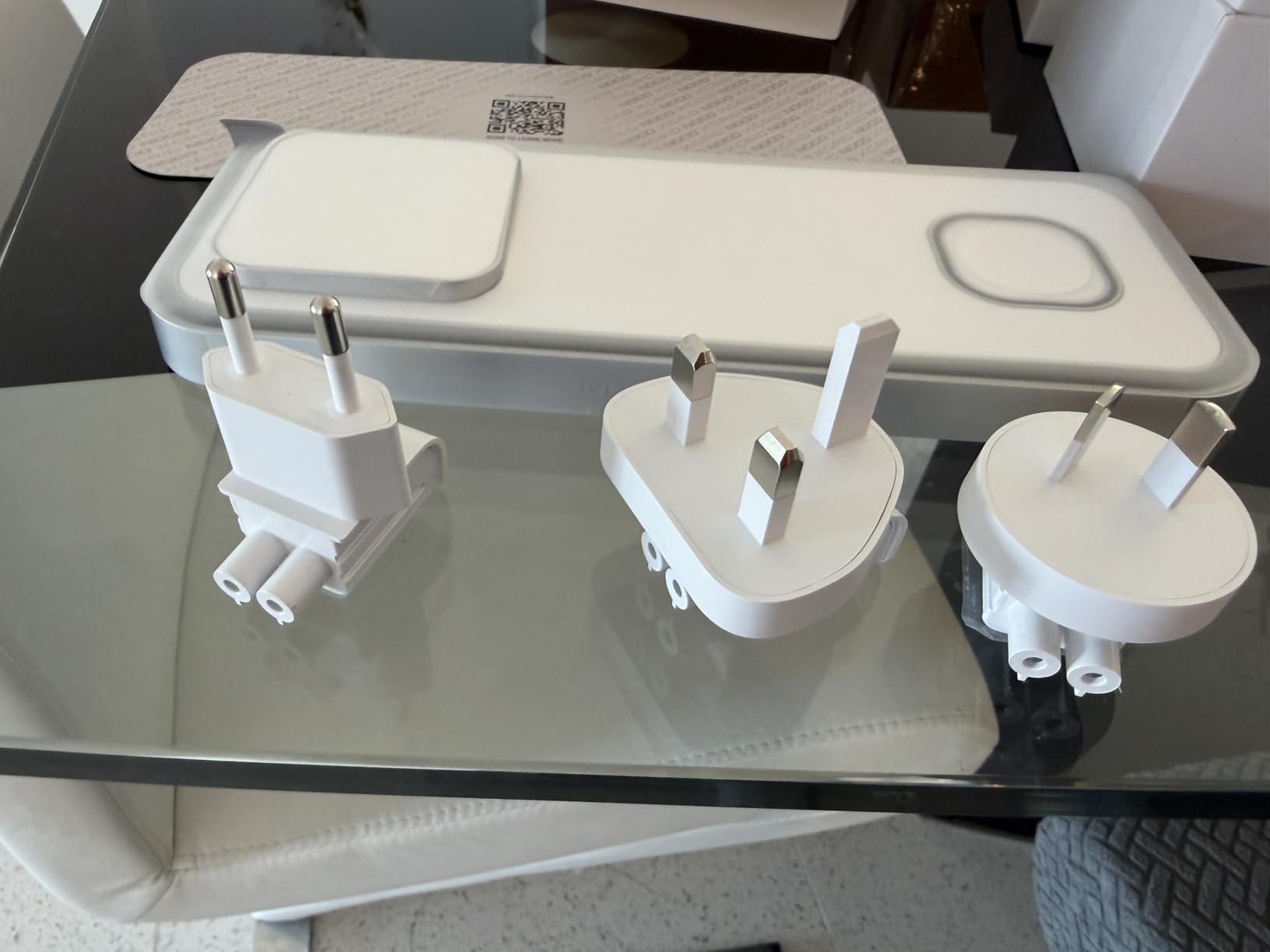
The pad kept everything horizontal, which meant the nightstand looked less like a technology display and more like a surface where phones happened to rest. Vertical charging stands make devices prominent, turning them into always-visible screens that demand attention. Flat pads allow devices to recede into the environment, lying unobtrusively on surfaces the way phones traditionally have.
The three-device configuration—iPhone, Apple Watch, and AirPods—handles the same ecosystem as vertical stands but with different spatial philosophy. Devices spread horizontally across the pad rather than stacking vertically. This requires more surface area but creates less vertical presence.
The Qi2 certification ensures current wireless charging standards compliance, though the practical benefit of certification becomes clear primarily when problems arise with uncertified accessories. Most users never experience the edge cases that certifications protect against, making the value proposition somewhat abstract.
The included power adapter and long cable mirror the premium stand version, providing complete installation package. This bundling has become expected at higher price points, as users have been frustrated by wireless chargers that require hunting for compatible power adapters or discovering existing chargers don’t deliver sufficient wattage.
What’s notable is how charging pad versus stand preference correlates with different philosophies about phone presence during sleep. Stand users want phones visible for glancing at time or notifications. Pad users want phones present but unobtrusive, available if needed but not demanding attention.
MagSafe compatibility matters as much for pads as stands—the magnetic alignment ensures phones land correctly without precise positioning. But on pads, the magnetic snap is less about secure holding against gravity and more about eliminating the careful placement that early wireless chargers required.
Previously listed at $129.95, current listings hover around $104.00. The pricing matches the vertical stand despite different form factors, suggesting the cost drivers are components and certification rather than physical design.
"Note: Readers like you help support The Apple Tech. We may receive a affiliate commission when you purchase products mentioned on our website."