
The vent clip was convenient. It slid onto the horizontal slats of the air vent, required no adhesive, and could be repositioned easily. But it had a fatal flaw: it loosened. Every bump, every sharp turn, every temperature change that expanded or contracted the plastic weakened the grip. The phone would tilt, then wobble, then eventually fall. The vent clip couldn’t keep pace with the size and weight of newer iPhones.
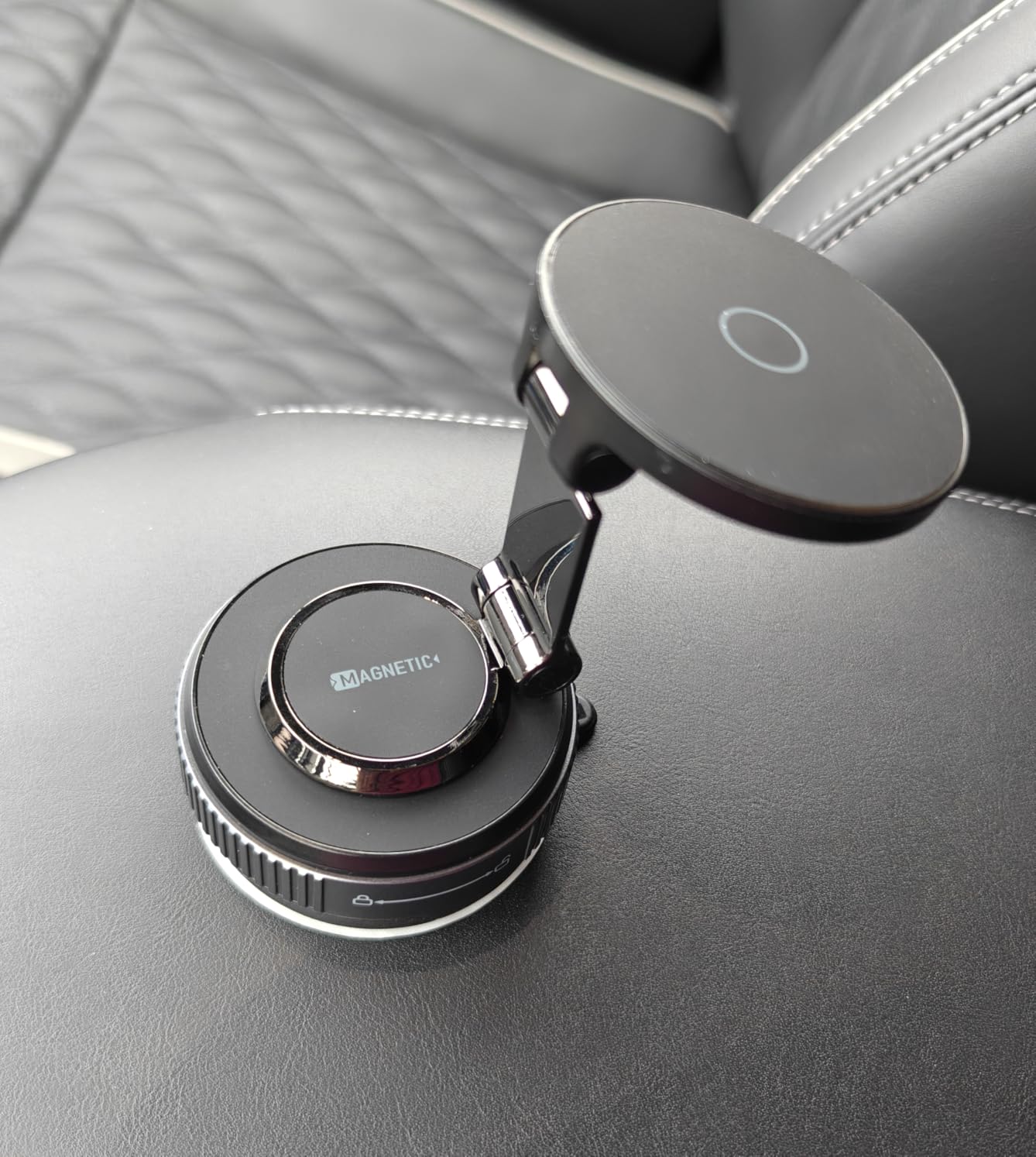
The vacuum suction mount solves this through brute force. Instead of clipping onto an existing structure, it adheres directly to the windshield or dashboard using a suction mechanism that creates a seal strong enough to hold the phone in place during aggressive braking or potholed roads. The mount doesn’t shift. It doesn’t loosen. It stays exactly where it was placed until deliberately removed.

The 360-degree adjustability allows the mount to rotate the iPhone into any orientation—portrait for navigation, landscape for video playback while parked—but the critical feature is the stability. The mount absorbs road vibration without transmitting it to the phone, which means the screen remains readable even on rough surfaces. Navigation instructions stay sharp. Incoming calls don’t blur.
The metal stand rotor mentioned in some product descriptions adds mechanical durability. Earlier plastic mounts would crack or strip over time, especially in vehicles exposed to temperature extremes. Metal withstands the expansion and contraction that comes with parking in direct sunlight or freezing overnight. The mount becomes a semi-permanent fixture, as reliable as the rearview mirror.
What’s changed is the driver’s willingness to commit to a specific mounting location. The suction mount isn’t temporary. Removing it leaves a mark, sometimes a residue, and repositioning it requires cleaning the surface and reapplying the suction cup. It’s not a casual accessory. It’s infrastructure, and it demands a level of intentionality that vent clips never required.
The mount’s compatibility with MagSafe is critical for iPhone 12 and later models. The magnetic alignment ensures the phone snaps into the correct position every time, without manual adjustment. The driver doesn’t fumble with placement. The phone clicks into position, held by both the suction mount’s mechanical grip and the magnetic pull of MagSafe. It’s a dual-layer security system that makes accidental detachment nearly impossible.
There’s also a safety argument, though it’s nuanced. A stable mount keeps the phone at a consistent viewing angle, reducing the need to glance away from the road to check if the screen is still visible. But the permanence of the mount also means the phone is always present, always in peripheral vision, always tempting interaction. The mount solves one problem—phone stability—while potentially exacerbating another: driver distraction.
Previously listed at $36.99, current listings hover around $20.69. The price drop reflects market saturation, but the behavioral shift is more significant. Drivers are abandoning lightweight, temporary mounting solutions in favor of heavy-duty systems that treat the phone as a permanent dashboard component. The mount isn’t just holding the iPhone. It’s anchoring it to the vehicle itself, turning the phone into part of the car’s interior architecture rather than a visitor to it.
"Note: Readers like you help support The Apple Tech. We may receive a affiliate commission when you purchase products mentioned on our website."