
The windshield versus vent debate has quietly divided Apple users who refuse to let their phones disappear into cup holders during commutes.
The car remains one of the few environments where the iPhone’s design language loses its authority entirely. Apple spent years refining MagSafe as an elegant charging and mounting standard, yet the average vehicle interior offers no native acknowledgment of it. What results is a landscape of aftermarket solutions, each claiming to solve a problem that feels increasingly fundamental: where, exactly, should an iPhone live during a drive?
The friction isn’t technical. Most newer iPhones support wireless charging and MagSafe attachment. The issue is spatial and behavioral. Drivers who’ve grown accustomed to Siri, CarPlay, and turn-by-turn navigation now treat their devices as dashboard instruments, not pocket objects. But dashboards weren’t designed for this. Neither were air vents, cup holders, or the small storage nets automakers optimistically include near gearshifts.
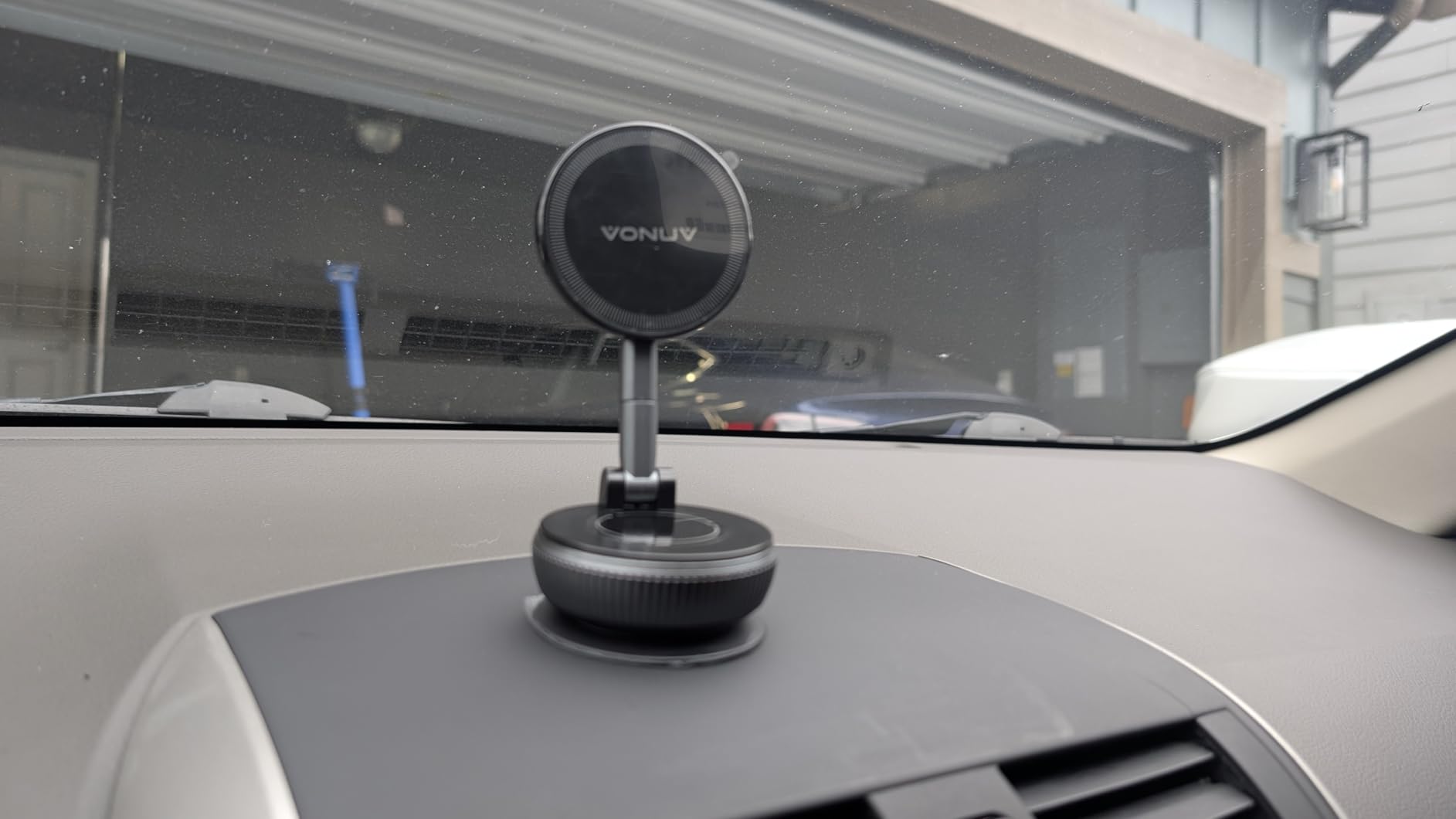
What’s emerged is a mounting culture shaped more by adhesive strength than Apple’s ecosystem vision. The typical solution involves suction cups rated in pounds of force, magnets measured in grams, and adjustable arms that promise 360-degree rotation. These numbers—96 pounds, 2,800 grams—suggest an engineering problem that CarPlay alone can’t solve. The iPhone needs to stay put, and the car offers no help.
Some users default to the windshield, treating their phones like standalone GPS units from a previous decade. Others prefer vent clips, which block climate controls but keep the screen closer to eye level. A smaller group places devices on dashboard surfaces, where they slide during turns unless held by something stronger than gravity. None of these feel native. All of them require deciding, each time you enter a vehicle, whether the phone should be visible or not.
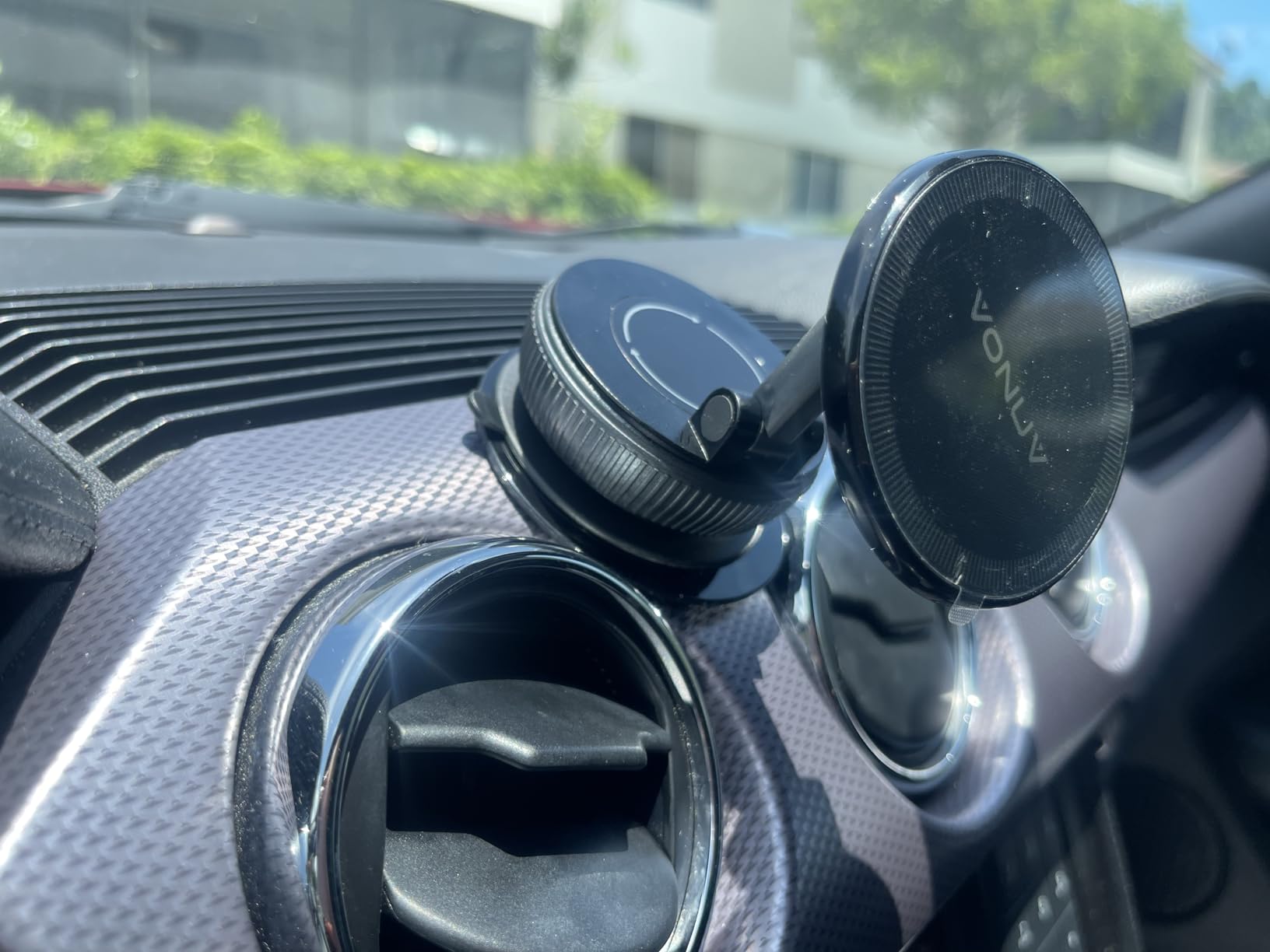
The accessories themselves have become status-neutral objects. Gender-tagged marketing aside, a magnetic mount is just a mount. What varies is the ritual: the snap of MagSafe engagement, the twist of an adjustable neck, the small recalibration required when the phone’s weight shifts the angle. These are micro-behaviors that didn’t exist five years ago, now repeated millions of times daily across highways and parking lots.
Apple has made no meaningful gesture toward solving this. CarPlay assumes the phone is connected but not necessarily seen. MagSafe works in cars only when a third party builds the mounting hardware. The result is a rare gap in the ecosystem—a moment where iPhone users must look beyond Cupertino for an answer to a problem Cupertino created by making the phone indispensable during transit.
What remains is a dashboard accessory market that fluctuates wildly in price and consistency. Previously listed at $20,current listings hover around $8 (CODE WJ5Y3AZ9) for magnetic mounting systems that promise multi-pound suction and adjustable viewing angles. The variance suggests a category still finding its equilibrium, caught between commodity pricing and the premium associations iPhone users bring to every adjacent purchase.
"Note: Readers like you help support The Apple Tech. We may receive a affiliate commission when you purchase products mentioned on our website."