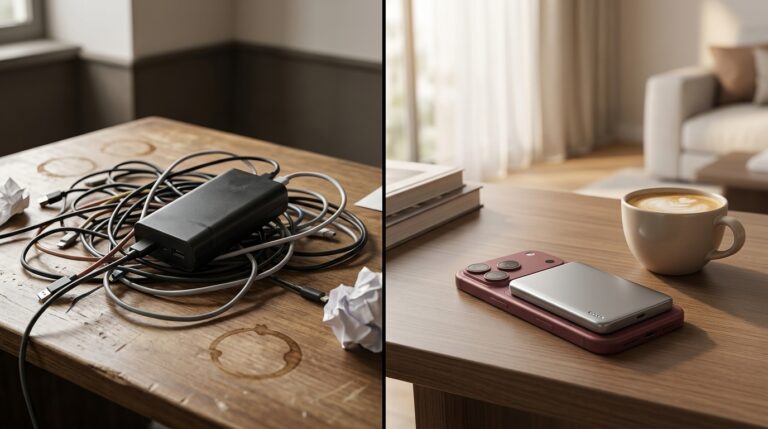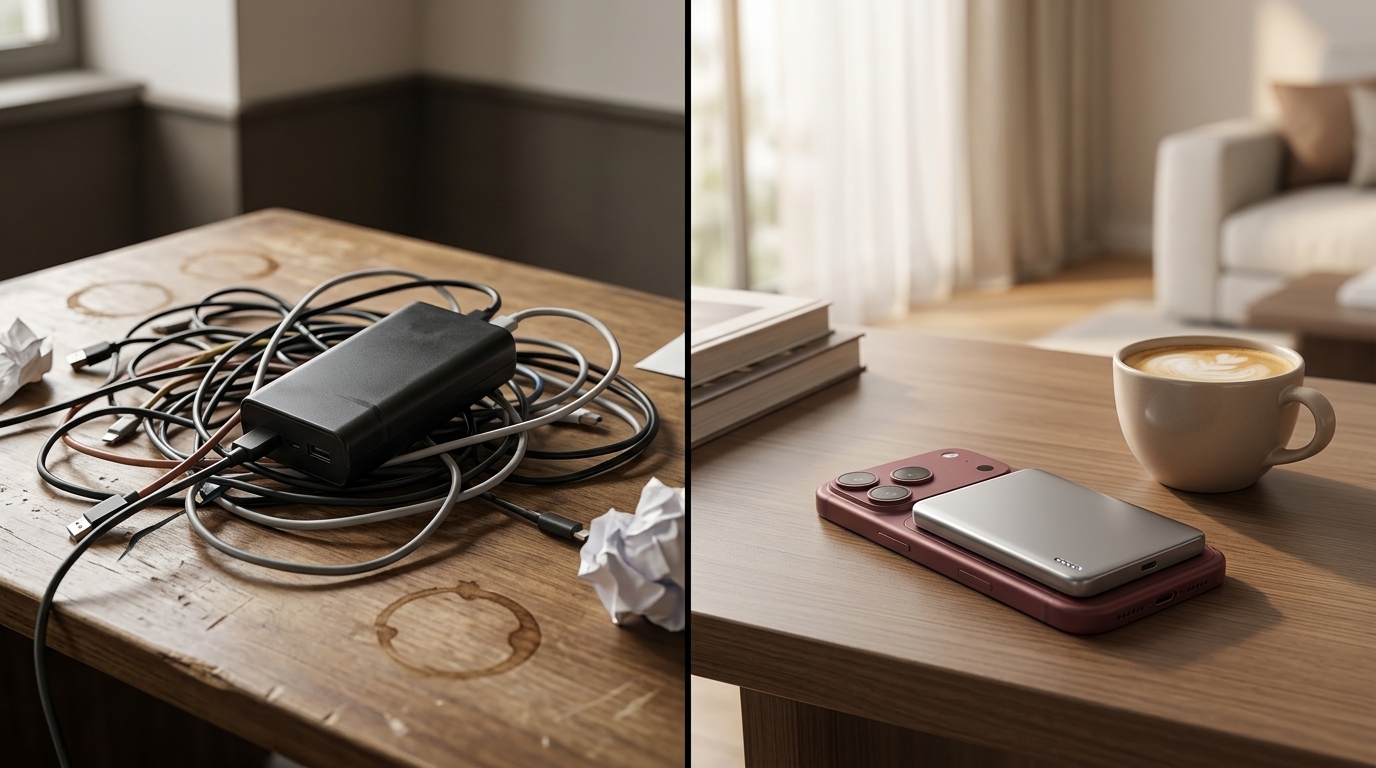

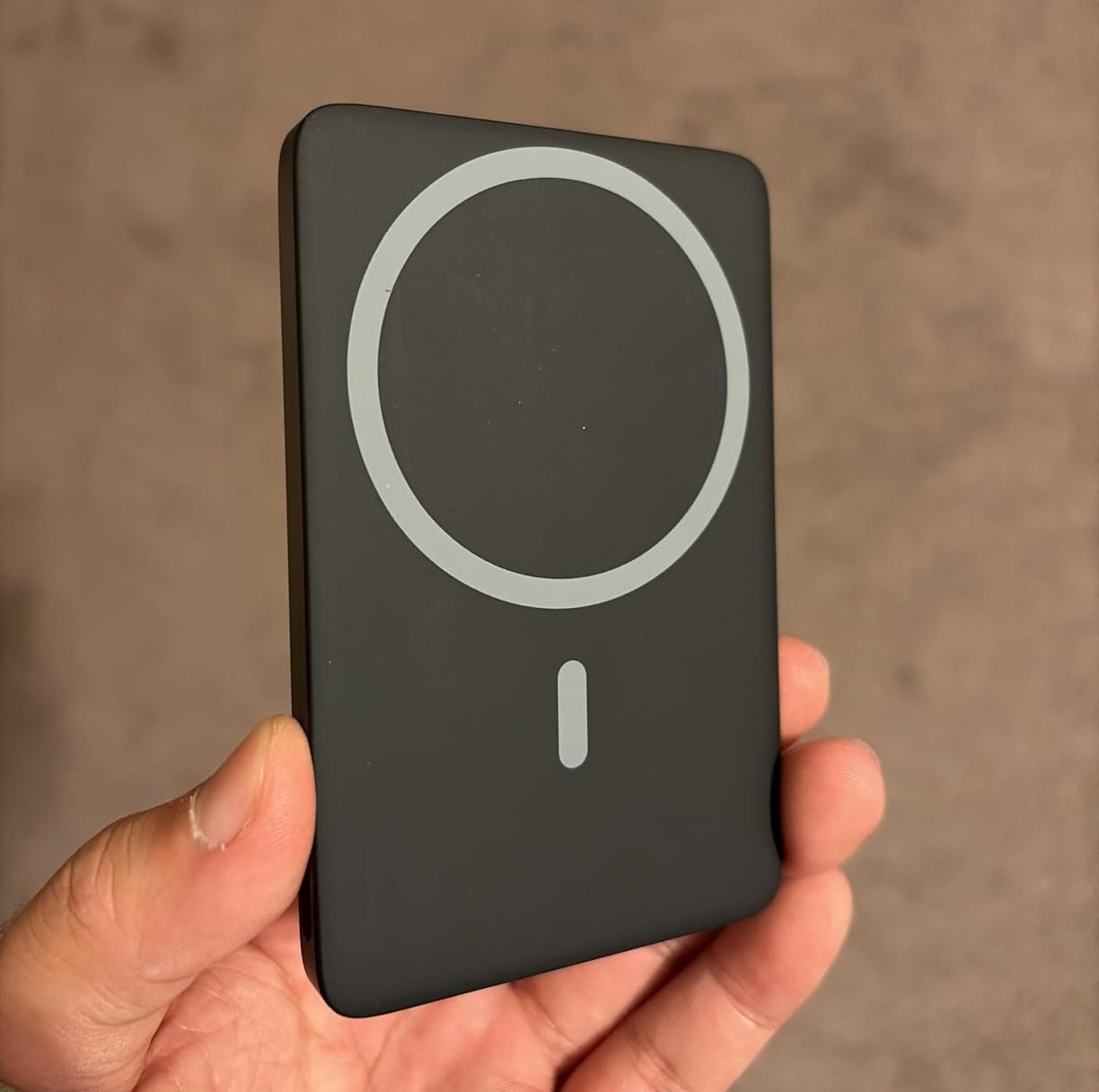
The paradox of modern iPhone battery accessories is that they’re shrinking while the phones themselves grow heavier and more power-hungry. A 5000mAh power bank from three years ago was a chunky rectangle. Today’s versions measure a third of an inch thick and attach magnetically to the back of the phone. The capacity hasn’t doubled. The technology inside hasn’t fundamentally changed. But the form factor has become the entire selling point.
This shift reflects something more interesting than engineering progress. It’s a response to how people actually carry things. Survey data might suggest users want maximum charging capacity, but behavioral evidence tells a different story. Thin batteries get carried. Thick ones stay home. The difference between 0.3 inches and 0.6 inches is the difference between a daily accessory and a travel-only backup.
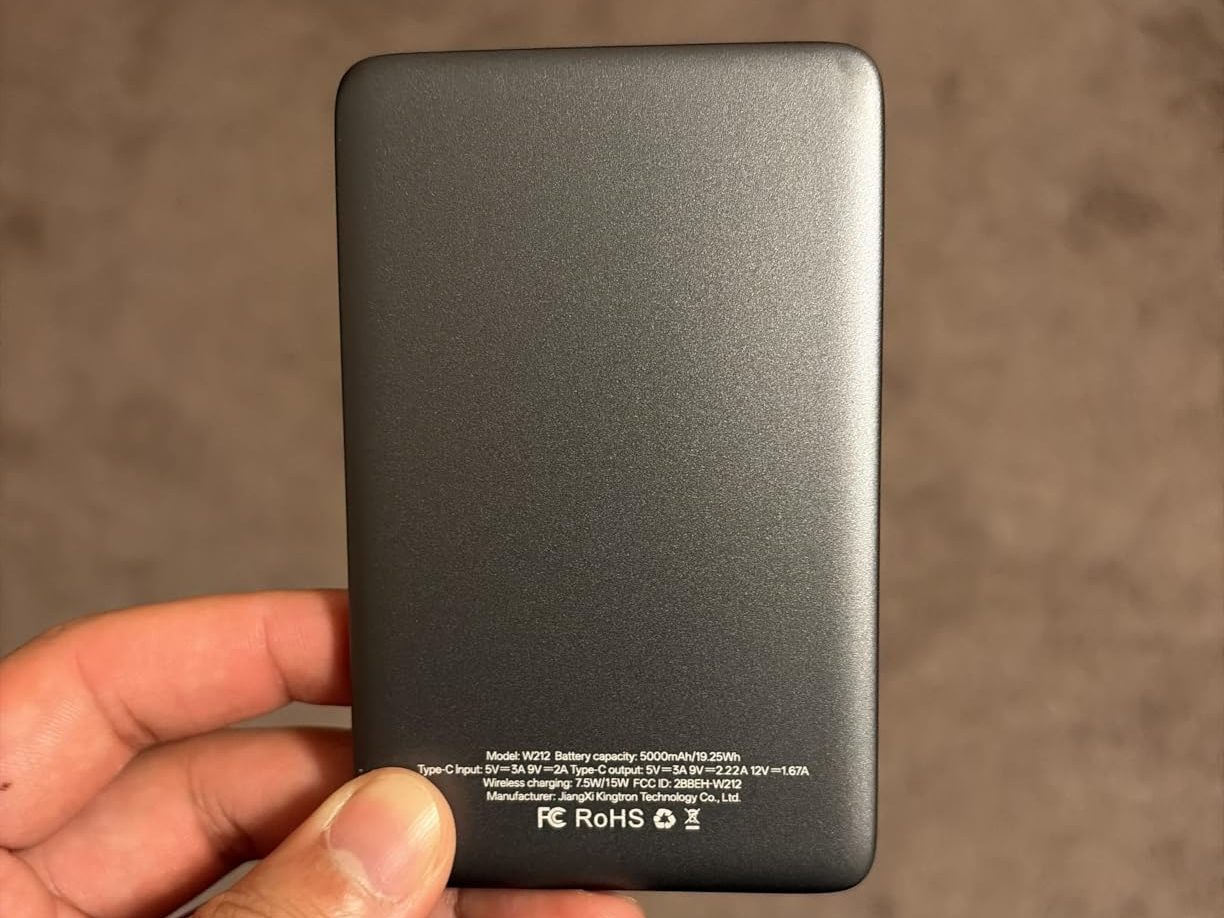
MagSafe introduced a new spatial relationship between phone and charger. Instead of connecting via cable, the battery becomes an extension of the phone itself, magnetically locked to the back. This changes the physical calculus. A bulky battery attached to a phone creates an unwieldy object that won’t sit flat on a table. A thin one preserves the phone’s usability while charging. Users tolerate the extra weight if the profile stays slim.
The consequence is a strange market where capacity becomes secondary. A 10000mAh battery that adds significant thickness loses to a 5000mAh version that disappears into a pocket. The math seems irrational until you consider how often people actually drain their phone completely. Most external battery usage happens in short bursts—a meeting that runs long, an unexpected commute delay, a navigation session that eats through charge. A partial top-up is usually enough.
Apple’s ecosystem quietly encourages this behavior. The iPhone’s battery optimization features mean most people end their day with 20 to 40 percent remaining. The external battery isn’t replacing a full charge cycle. It’s filling a gap, bridging the distance between current charge and the next opportunity to plug in. In that context, an ultra-slim 5000mAh pack makes more sense than a brick that delivers twice the power.
SIMILAR
This 71-inch iPhone tripod with wireless remote drops to $12.74 from $44.99
iPhone 17 Pro Max clear cases fall to $11 as users debate protection trade-offs
Apple Watch braided band pricing hits $7.59, testing user replacement patterns
What’s less visible is how this changes charging patterns throughout the day. People who carry slim magnetic batteries start using them preemptively rather than reactively. The phone hits 50 percent, and the battery snaps on during a commute or while working at a desk. It’s no longer emergency equipment. It’s continuous power management, a way to keep the phone perpetually topped up without seeking outlets.
The design convergence is striking. Nearly every magnetic iPhone battery now targets the same physical dimensions, the same credit-card-inspired aesthetic, the same attachment mechanism. Differentiation happens at the margins—charging speed, build materials, price. But the core product has standardized around a form factor that prioritizes pocketability over capacity.
Previously listed at sixteen dollars, current listings hover around thirteen dollars fifty-nine, suggesting this category has reached commodity status. The price compression indicates manufacturers have optimized production around a specific template, one where thinness is the non-negotiable feature and everything else adjusts accordingly.
"Note: Readers like you help support The Apple Tech. We may receive a affiliate commission when you purchase products mentioned on our website."