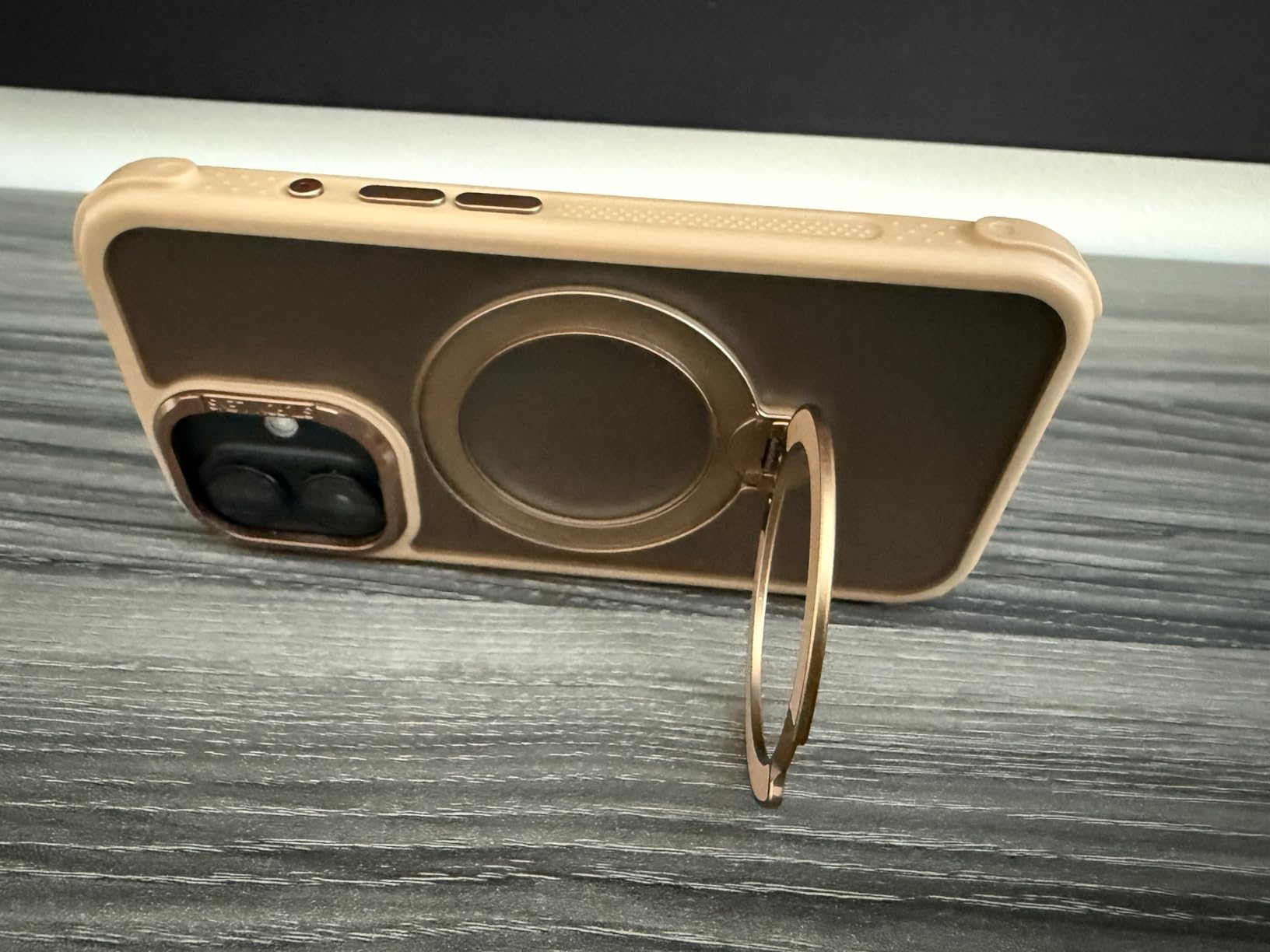
The stand is there when you need it and invisible when you don’t, which feels like solving two contradictory problems at once. iPhone Pro Max users face a persistent tension: the phone is large enough to consume media comfortably, but too large to hold comfortably while watching. A kickstand solves the viewing problem but traditionally adds bulk and visual clutter.
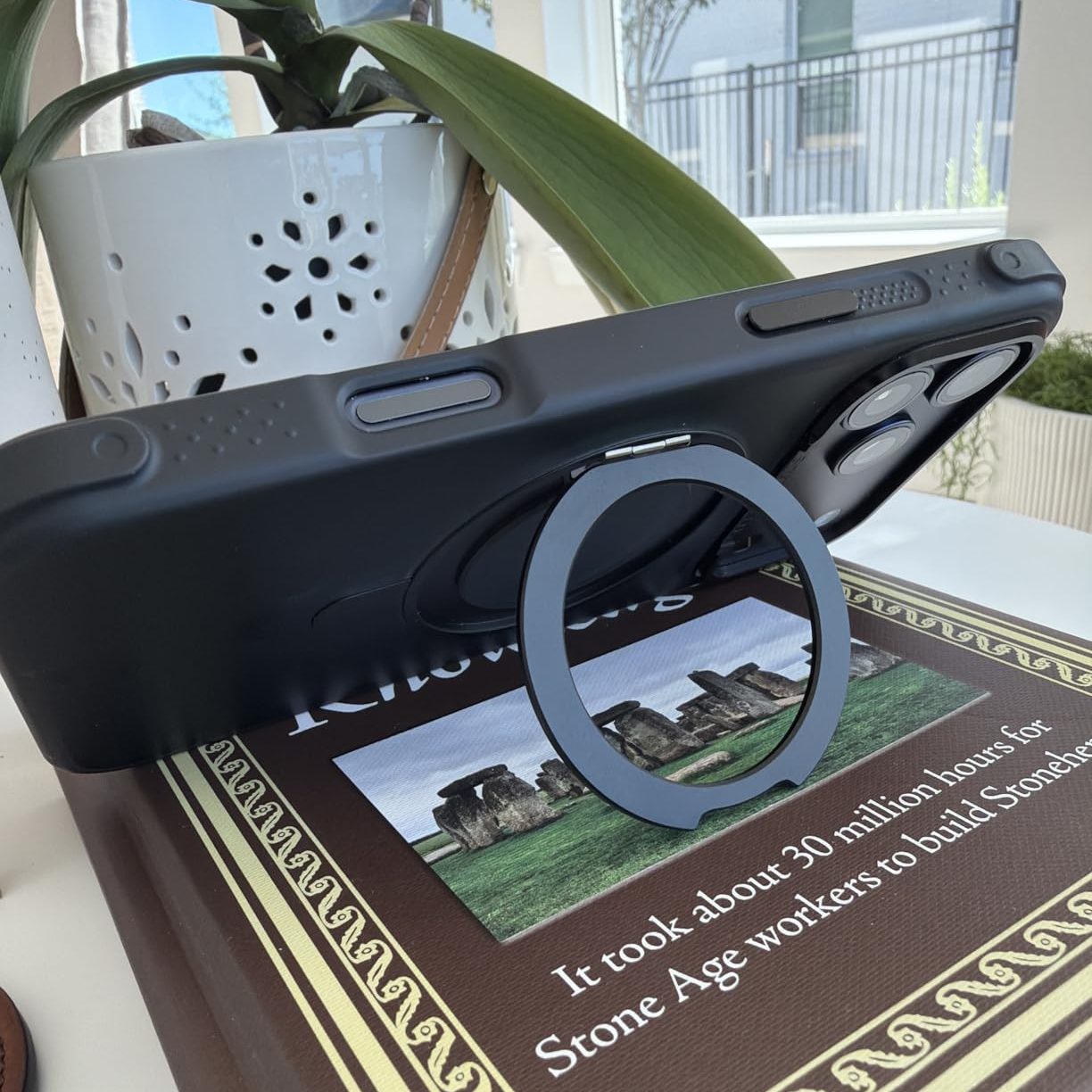
Invisible rotating ring stands attempt to resolve this. They embed a thin magnetic ring into the case back, flush with the surface when closed, but capable of rotating 360 degrees and propping the phone at various angles when needed. From the outside, the case looks like a standard translucent cover. The functionality is hidden until it’s required.
This design philosophy reflects a broader shift in how people think about phone cases. For years, cases were purely protective—thick, obvious, designed to absorb impact. But as phones became more expensive and more central to daily life, cases started serving multiple functions: protection, yes, but also grip enhancement, wallet integration, and now media consumption support.
The rotation matters more than it seems. A fixed-angle kickstand works well for one specific use case—usually video watching on a table. But a rotating ring can be positioned for FaceTime calls at eye level, for reading recipes while cooking, or for following workout videos propped on the floor. The flexibility extends the utility beyond passive media consumption.
Yet there’s a trade-off in durability. The rotating mechanism introduces a moving part, which means a potential failure point. Some users report that after months of daily use, the ring becomes loose or stops clicking firmly into position. The invisibility comes at the cost of long-term mechanical reliability.
What’s revealing is how MagSafe compatibility has become non-negotiable. The ring doesn’t interfere with magnetic charging or accessory attachment, which suggests that case designers now treat MagSafe as essential infrastructure rather than optional feature. Any case that blocks MagSafe is effectively disqualified from consideration.
Previously listed at $25.99, current listings hover around $19.99. The price reflects the category’s maturation: what was once a novelty feature is now expected, and competition has driven costs down.
"Note: Readers like you help support The Apple Tech. We may receive a affiliate commission when you purchase products mentioned on our website."