There’s a particular kind of friction that emerges when your iPhone becomes the center of your daily routine. It’s not about the battery percentage dropping to single digits—it’s about the uncertainty of where you’ll be when it does.
For years, portable chargers were marketed as emergency tools. Small, sleek, designed to get you through a late night or a long flight. But something shifted. The batteries got larger. The capacities became absurd. And the people buying them weren’t just travelers or digital nomads—they were office workers, parents, students. People who, on paper, had no reason to carry a week’s worth of backup power.
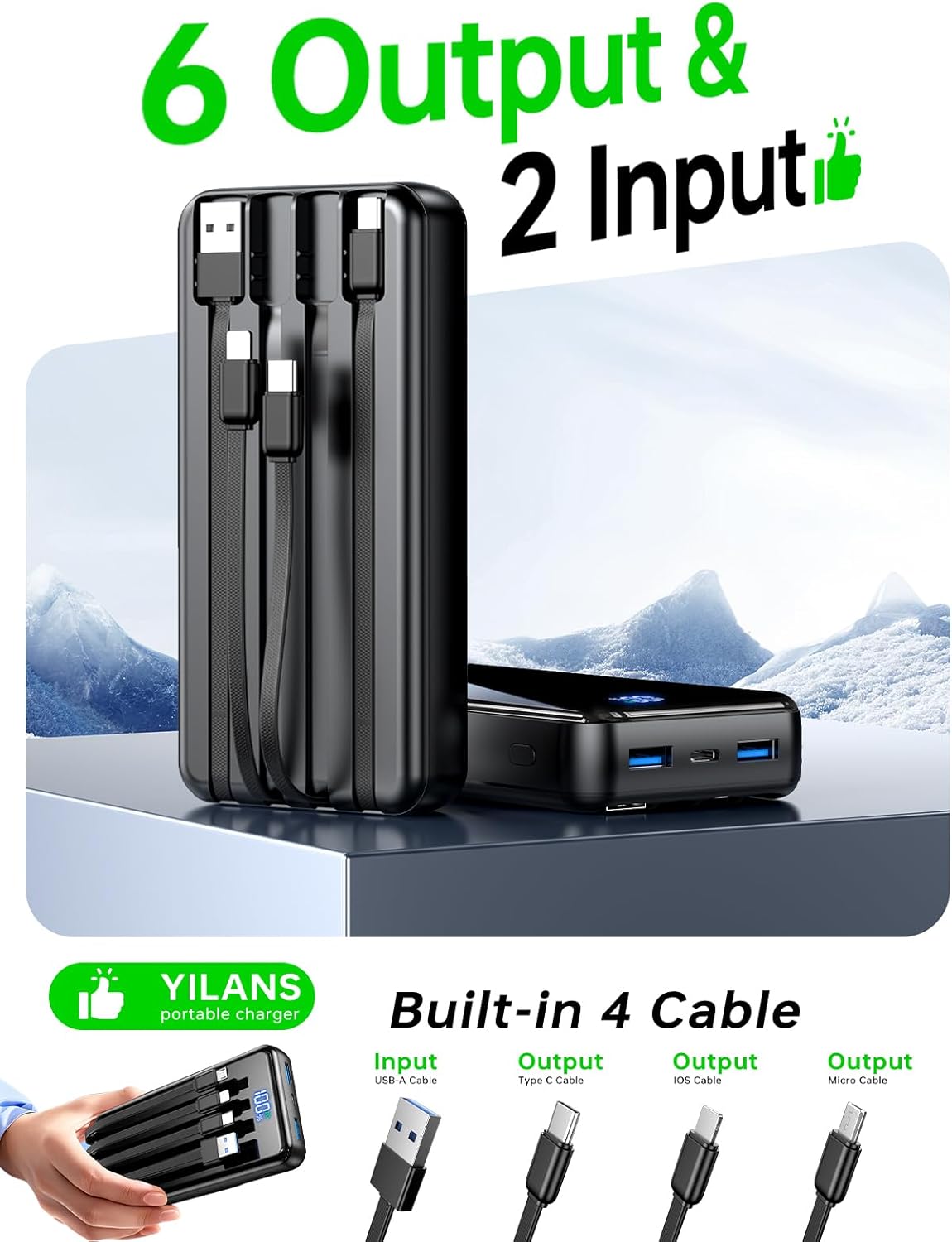
The behavior reveals something quieter. It’s not that iPhones die faster than they used to. It’s that the iPhone has become the device people can’t afford to lose access to. Not because of calls or texts, but because of the invisible infrastructure layered on top of it. Boarding passes. Two-factor authentication. Parking meters. Digital car keys. The list is long, and none of it degrades gracefully when the screen goes dark.
Carrying a high-capacity power bank doesn’t solve the problem—it just pushes the anxiety further down the timeline. Instead of worrying at twenty percent, you start worrying when the backup itself drops below half. The math changes, but the feeling doesn’t.
SIMILAR
iPhone and MacBook users are compensating for a port problem Apple created
iPhone users are eliminating the tangled cable from every car charging session
iPhone users are transforming nightstands into silent charging infrastructure
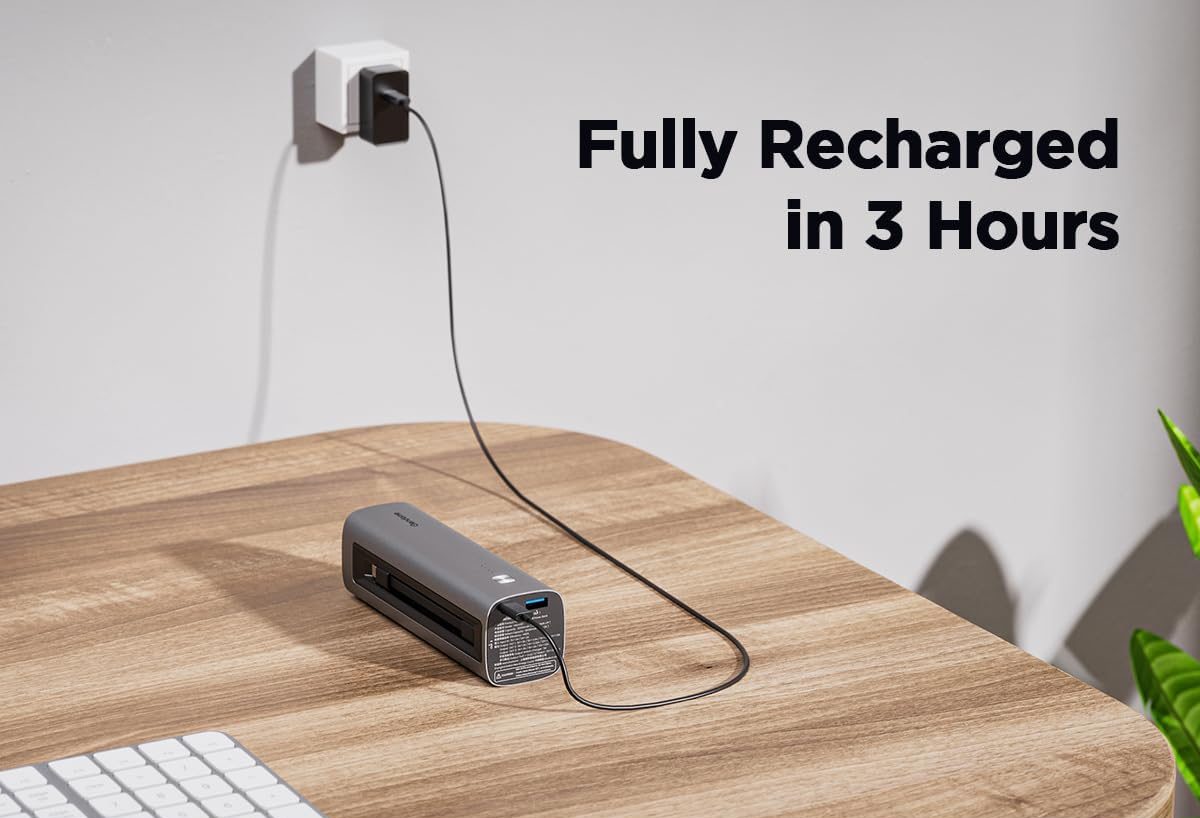
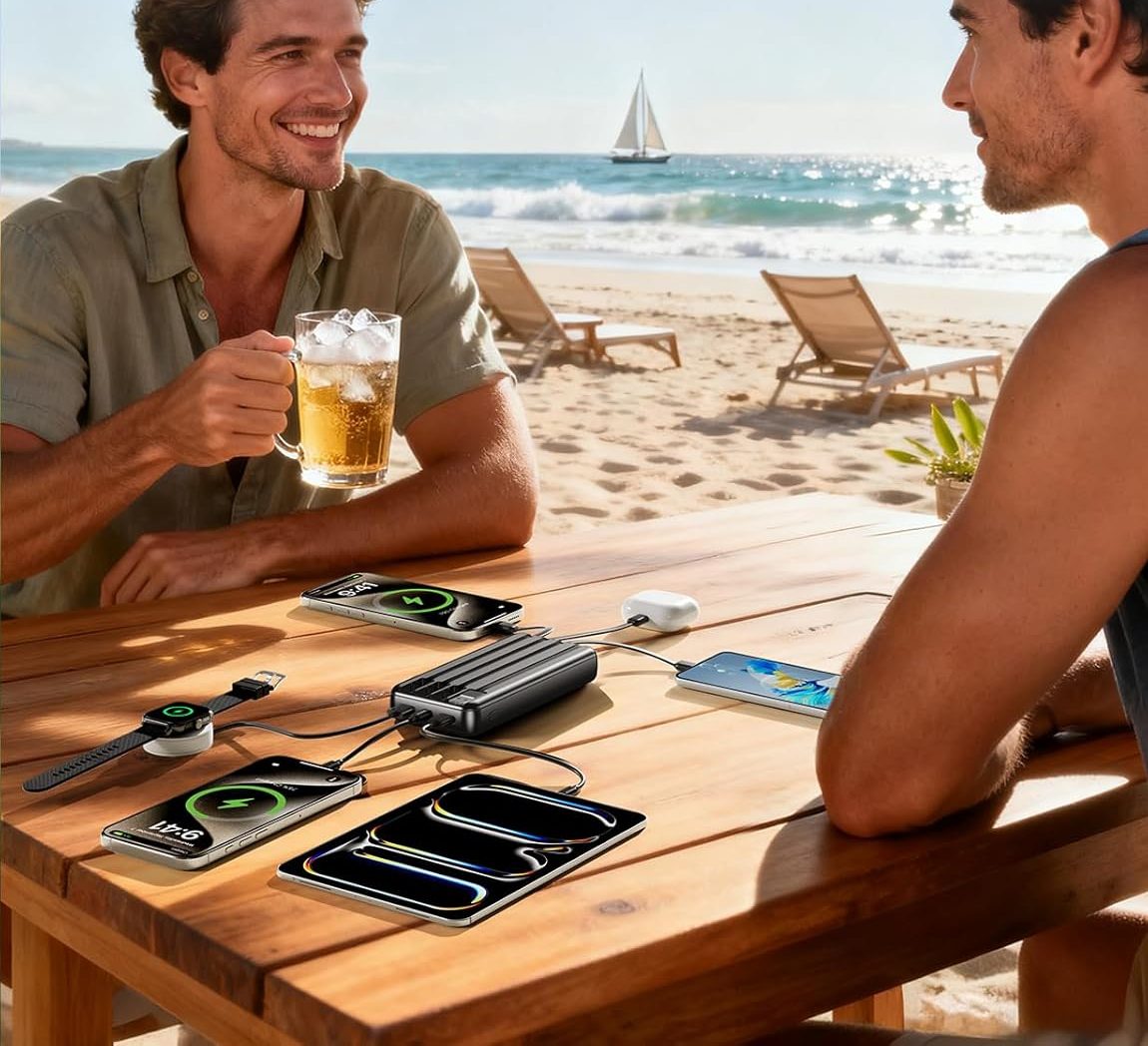
There’s also a spatial element. Wall outlets still exist, but they’re not always where you are. Conference rooms, airports, parks, cars idling in carpool lanes—these are the places where people actually spend their days. A cable doesn’t help if there’s nowhere to plug it in. A portable battery, especially one with built-in cables, removes the dependency on architecture.
What’s striking is how little this has to do with actual usage patterns. Most people don’t drain their iPhone in a single day. But the fear of being caught without power—especially when travel plans shift, meetings run long, or a child’s school calls unexpectedly—has created a new category of everyday carry. It’s not preparedness in the survival sense. It’s preparedness in the logistical sense.
The pricing has dropped enough that these devices have moved from niche gadget to unremarkable accessory. Previously listed around $54, current listings now appear closer to $33. At that threshold, the purchase isn’t a decision—it’s a hedge against a scenario that may never happen but feels too costly to risk.
"Note: Readers like you help support The Apple Tech. We may receive a affiliate commission when you purchase products mentioned on our website."