The return of dedicated audio devices for sleep reflects unresolved tension between iOS battery management and overnight usage patterns. People trust hardware they can forget about more than phones requiring daily charging.
Sleep and focus apps on iPhone can generate white noise, rain sounds, or ocean waves indefinitely. But running audio all night drains battery at a rate that makes most people uncomfortable. Even with Low Power Mode enabled, an iPhone playing sound for seven or eight hours will lose 30-40% charge—enough to create anxiety about whether the alarm will actually sound in the morning. That psychological friction has driven some iOS users back to standalone hardware.
Portable noise machines have re-emerged not as replacements for iPhones but as devices that handle one specific task the phone can’t be trusted with: running continuously without consequence. The machines are battery-powered, rechargeable, and designed to operate for days or weeks between charges. They’re single-purpose in a way that feels almost anachronistic next to a smartphone, but that limitation is precisely what makes them reliable.
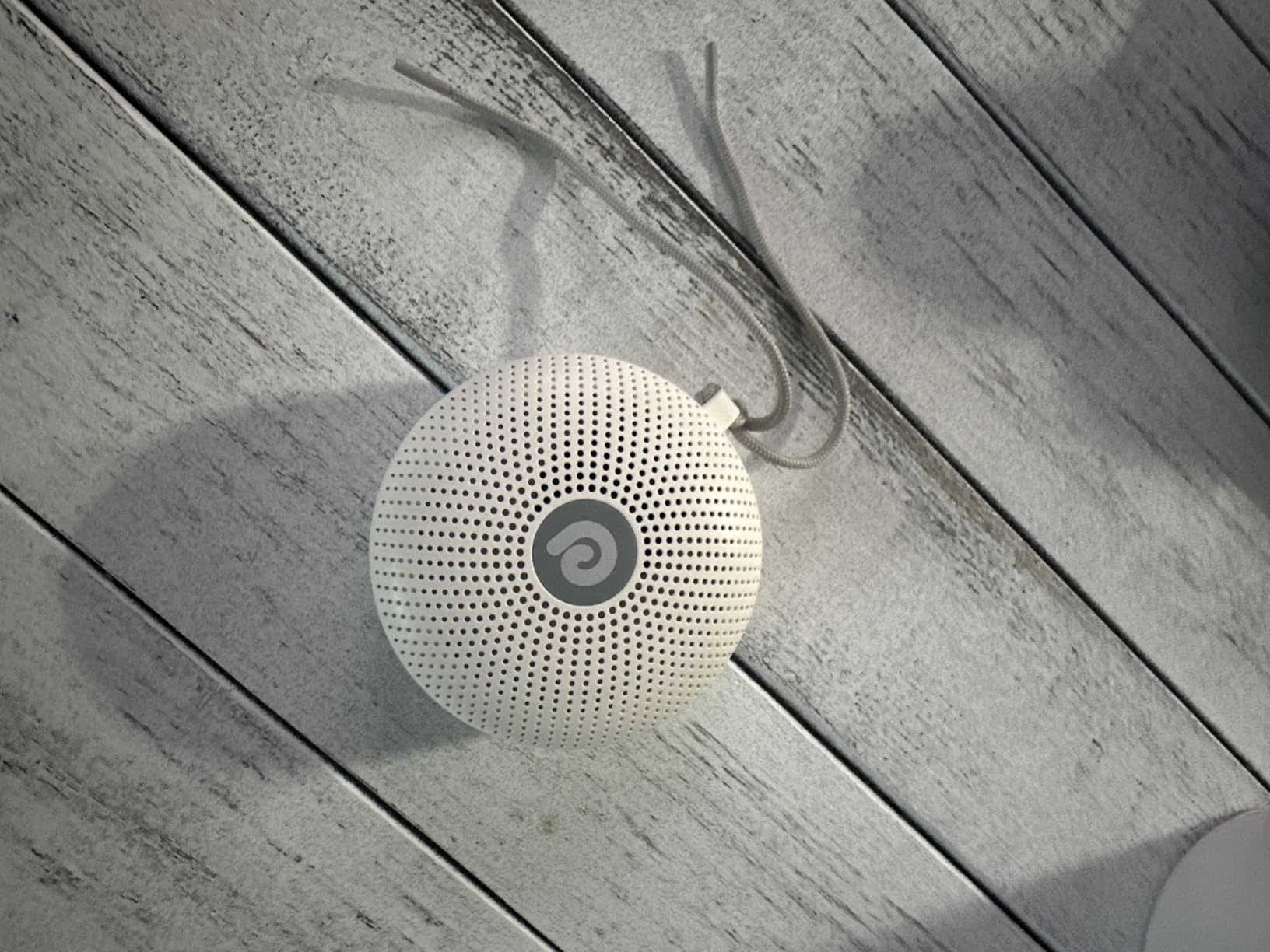
The shift is most visible among parents using white noise for infant sleep. An iPhone playing sound all night means the device can’t be moved, can’t receive calls without interrupting audio, and might not have enough charge left for morning tasks. A dedicated machine stays in the nursery, runs indefinitely, and doesn’t compete with the phone for attention or power. The separation of concerns eliminates friction that app-based solutions can’t solve.
What’s notable is how many people describe these machines as “backup devices” rather than primary sleep tools. The iPhone still handles alarms, morning routines, and bedtime wind-down. The noise machine handles only the overnight audio, freeing the phone to charge on a nightstand or remain available for emergency calls. That division of labor reflects a practical assessment of what each device does reliably.
SIMILAR
This 71-inch iPhone tripod with wireless remote drops to $12.74 from $44.99
iPhone 17 Pro Max clear cases fall to $11 as users debate protection trade-offs
Apple Watch braided band pricing hits $7.59, testing user replacement patterns
The 21 sound options address a problem with most sleep apps: they offer either too few choices or too many. Too few means you’re stuck with sounds that might not work for you. Too many creates decision paralysis every night. A fixed library of 21 sounds hits a threshold where most people find something that works without needing to browse through hundreds of options or download additional sound packs.
Office use represents another context where dedicated noise machines outperform phone apps. Playing white noise from an iPhone at a desk means the phone is occupied, the speaker is draining battery, and incoming notifications either interrupt the sound or get muted entirely. A separate device maintains ambient sound without affecting the phone’s availability for actual work tasks.
The portability factor matters during travel. Hotel rooms have unpredictable ambient noise—hallway conversations, air conditioning hum, street traffic. A noise machine that fits in a carry-on and runs for multiple nights without charging becomes essential infrastructure for people who’ve discovered they can’t sleep well in unfamiliar environments without acoustic masking.
Pricing for portable noise machines has compressed dramatically as the category has shifted from medical device positioning to consumer commodity. Models that launched near $30 current listings hover around $9.80(CODE DMWFYMJY), reflecting both manufacturing scale and the recognition that these devices compete primarily with free iPhone apps rather than other hardware.
"Note: Readers like you help support The Apple Tech. We may receive a affiliate commission when you purchase products mentioned on our website."