
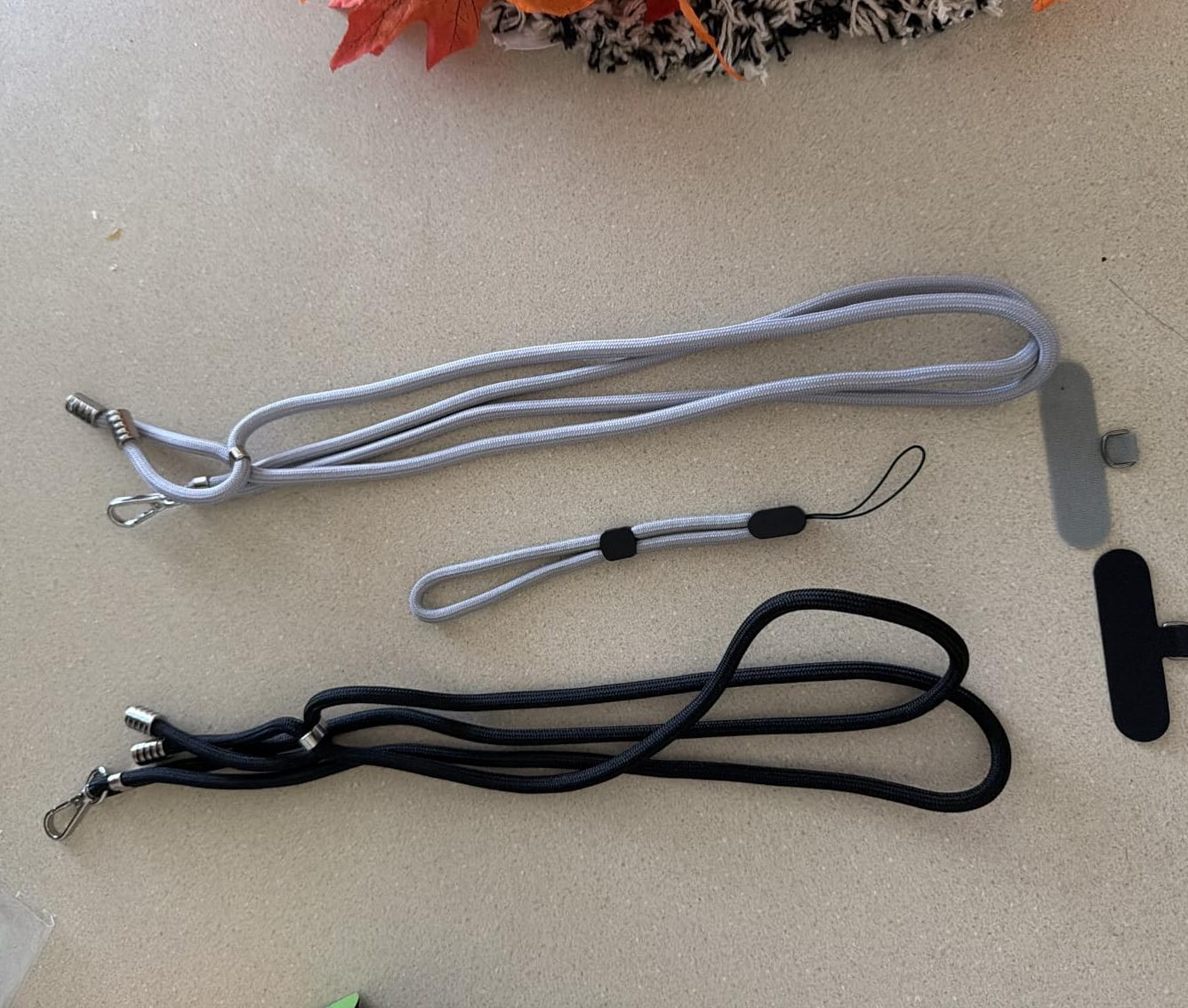
The phone lanyard has returned, but it’s nothing like the chunky beaded chains that dangled from flip phones in the early 2000s. This version is adjustable nylon, crossbody style, designed to keep the iPhone accessible without occupying a hand or pocket. It’s functional to the point of invisibility, and it’s becoming standard equipment for a growing segment of users.
What the lanyard addresses is a specific kind of friction: the need to constantly relocate the phone. In a pocket, it’s secure but inaccessible. In a hand, it’s accessible but precarious. In a bag, it’s neither. The lanyard solves this by keeping the device suspended at chest or hip level, where it can be lifted, checked, and released without ever leaving the body.

This matters most in environments where hands are occupied or pockets are impractical. Commuters holding coffee and bags. Parents wrangling children and strollers. Travelers navigating airports with luggage. Runners and hikers who don’t want the phone bouncing in a pocket or armband. The lanyard transforms the iPhone into something closer to a wearable, part of the outfit rather than an item carried separately.
There’s also a security dimension. A phone on a lanyard can’t be easily snatched. It can’t be forgotten on a table or left behind in a restroom. It’s tethered, literally, to the person. That tether creates a physical boundary that didn’t exist when the phone was loose in a pocket or bag. It’s harder to lose, harder to steal, harder to misplace.
The inclusion of wrist straps in some packages reflects a secondary use case: situations where a crossbody lanyard is too conspicuous or cumbersome, but a loose phone is still risky. The wrist strap loops through the charging port or case attachment point, creating a short tether that prevents the phone from slipping out of hand. It’s a fallback, less intrusive than the lanyard but more secure than nothing.
What’s revealing is how the lanyard changes the phone’s visibility. When it’s in a pocket, the iPhone is hidden. When it’s on a lanyard, it’s on display. That shift has social implications. The phone becomes part of the presentation of self, visible to others in the same way a watch or piece of jewelry is. It’s no longer private. It’s public, and that publicness affects how it’s used.
Previously listed at $9.99, current listings hover around $7.59 for a two-pack with interchangeable straps. The price is negligible, but the adoption reflects something deeper: a loss of faith in pockets, or perhaps in the ability to keep track of the phone without physical attachment. The lanyard isn’t a fashion statement. It’s an infrastructure solution to a problem that has quietly become universal—the phone is too important to risk losing, even for a moment.
"Note: Readers like you help support The Apple Tech. We may receive a affiliate commission when you purchase products mentioned on our website."