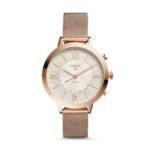


There’s a gesture most iPhone owners know by muscle memory: the pocket reach. Something buzzes, you pull out the phone, you check the screen. It happens dozens of times a day, so automatic you barely register doing it. But for people who’ve started wearing an Apple Watch, that gesture has started to fade. The buzz still happens, but now it’s on the wrist, and the response is different—a glance down, a quick read, a decision about whether the phone needs to come out at all.
It’s a small behavioral shift, easy to miss unless you’re the one experiencing it. But it’s changed the relationship between the phone and its owner in ways that ripple through the day. The phone stays in the pocket more. It comes out less often for trivial checks—the time, the weather, a notification that doesn’t require a response. The watch handles those moments now, filtering the stream of information into something that can be processed without breaking stride.
What’s notable is how quickly the habit forms. People who’ve worn an Apple Watch for even a few weeks often describe the same experience: they stop pulling out their phone as much, not because they’ve decided to, but because the watch has intercepted most of the reasons they used to. A text arrives, they read it on the watch, decide it can wait. A calendar alert pops up, they dismiss it from their wrist. The time is always visible, no longer requiring a deliberate action to check. The phone is still there, still essential, but it’s no longer the only way to know what’s happening—and that’s changed how often it leaves the pocket.
The shift is most pronounced in moments where the phone would have been awkward to use anyway. Walking, driving, carrying something, mid-conversation—these are the times when pulling out a phone feels disruptive, when the watch’s presence on the wrist makes it the easier option. The information is right there, requires no fumbling, no unlocking, no context switch. It’s passive in a way the phone never quite is, always ready without needing to be summoned.
But there’s a tension beneath the convenience. The watch doesn’t just filter notifications—it also ensures you never miss them. The always-on display means information is constantly visible, even when you’re not actively looking. The taps on the wrist are gentle, but they’re persistent, a steady reminder that something is happening somewhere, that there’s always more to check. For some people, that creates a new kind of ambient awareness, a background hum of connectivity that never quite turns off. For others, it just moves the anxiety from the pocket to the arm.
There’s also the question of dependency. People who forget their Apple Watch at home often describe feeling oddly incomplete, more so than if they’d forgotten other accessories. It’s not quite the same as forgetting the phone—that’s still the bigger loss—but it’s close enough to be noticeable. The watch has become part of the routine, part of the infrastructure of staying connected, and its absence creates small gaps throughout the day. You can’t glance down to check a notification. You have to pull out the phone again, break the habit that’s been forming, remember what it was like before the watch was there.
The device is currently available with a 25 percent discount on Amazon, which has made it accessible to more people than when it first launched at full price. That pricing shift has coincided with a broader normalization of wrist-worn tech—what once felt like an optional luxury now reads, for many iPhone users, as a natural extension of the ecosystem, something that fills a gap they didn’t realize existed until it was gone.
Not everyone feels the pull. Plenty of iPhone owners still don’t wear a watch, don’t see the need, prefer the phone for everything. But for those who do, the shift in behavior is consistent enough to suggest something deeper than just convenience. It’s about where attention goes, how often it’s demanded, and what happens when the tools we carry start to shape the rhythms of the day in ways we didn’t choose but can’t quite undo.
"Note: Readers like you help support The Apple Tech. We may receive a affiliate commission when you purchase products mentioned on our website."