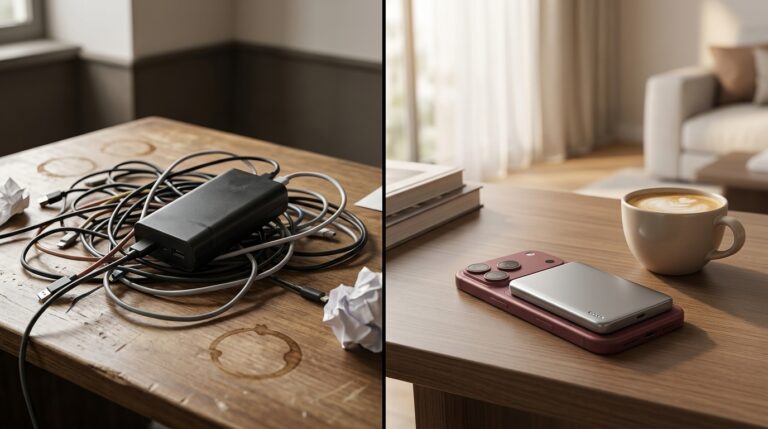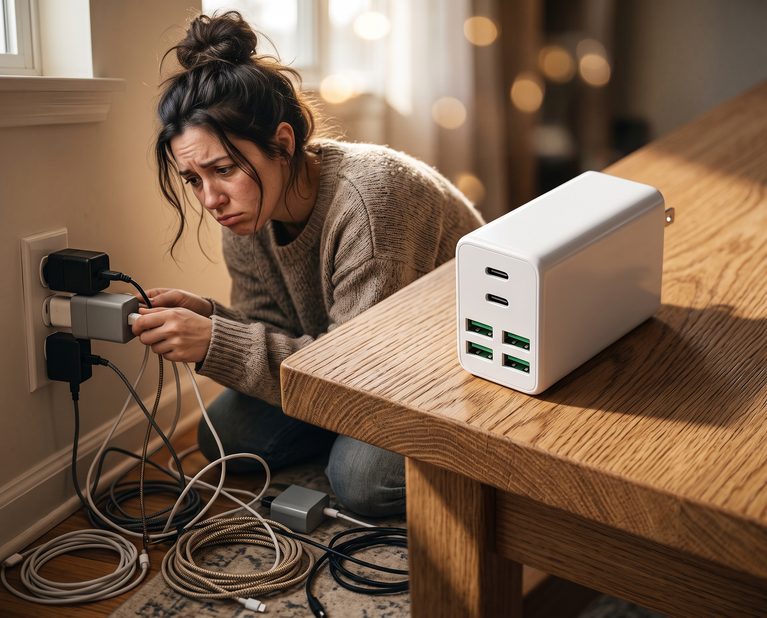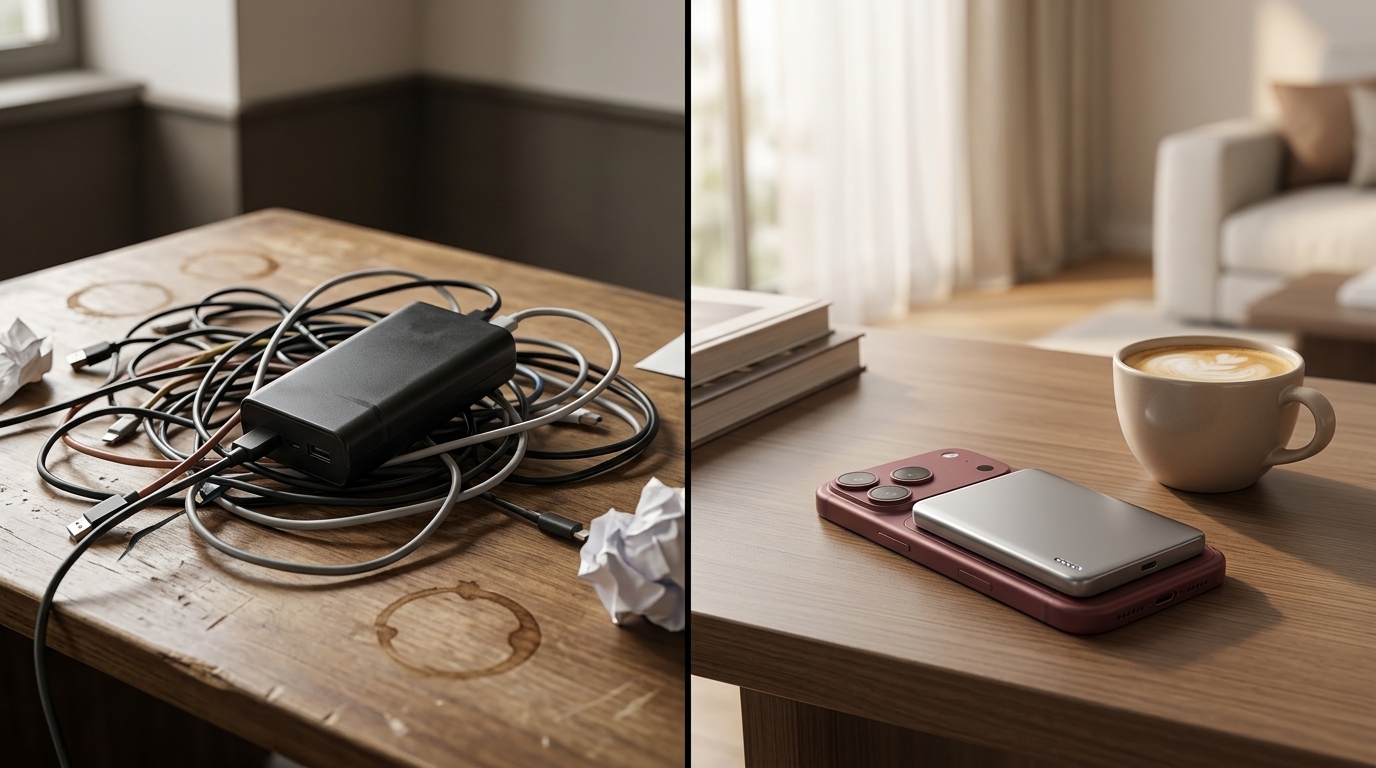

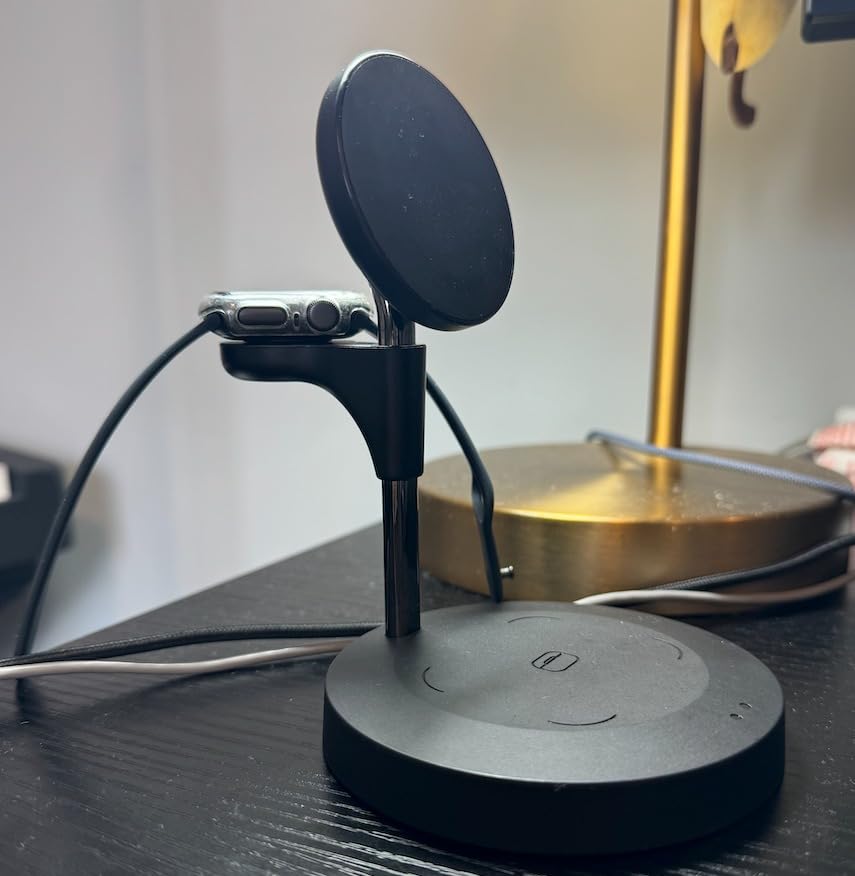
Bedside tables used to accumulate charging cables organically. One cord for the phone, another for the watch, maybe a third for earbuds. They draped over edges, tangled behind lamps, and competed for outlet space with alarm clocks and reading lights. The setup worked, barely, but it always felt temporary.
Three-in-one charging stations formalize what was previously improvised. They turn the chaotic nest of cables into a single object with defined slots for each device. The change isn’t just about tidiness—it’s about establishing a nightly routine that has a physical anchor. The station sits in the same spot, devices return to the same positions, and the ritual becomes muscle memory rather than a search for the right cable in the dark.
This matters most in households where multiple people share charging infrastructure. The all-in-one stand creates boundaries. Your iPhone goes here, your partner’s goes on their side, and there’s no confusion about whose AirPods case is whose. It’s a small organizational victory in spaces where personal technology and shared living arrangements constantly negotiate for resources.
The magnetic alignment feature—designed to work with MagSafe-compatible iPhones—adds another layer of behavioral reinforcement. The phone snaps into place with tactile feedback, confirming proper connection without requiring visual confirmation. People report that this haptic cue has changed how confidently they set their phones down at night. There’s no morning anxiety about whether the device actually charged or just sat near the charger all night.
The nightstand has become less about convenience and more about containment—a designated zone where devices go to sleep alongside their owners. It’s a subtle psychological shift. The charging station isn’t just powering devices; it’s marking the end of the digital day. When all three items are docked, the workday is officially over.
What’s notable is how quickly this setup has moved from luxury to expectation, particularly among iPhone users who’ve fully committed to the ecosystem. Once someone experiences the consolidated charging workflow, reverting to separate cables feels like a downgrade. The organizational overhead of managing multiple charging points becomes visible only in its absence.
The design also exposes Apple’s influence on third-party accessory behaviors. These stations wouldn’t exist without the predictable constellation of iPhone, Apple Watch, and AirPods—three devices that many users own simultaneously and charge nightly. The accessory market has evolved to treat this trio as a given, building products that assume all three are present and need concurrent power. Previously listed at $30, current versions hover near $19.
"Note: Readers like you help support The Apple Tech. We may receive a affiliate commission when you purchase products mentioned on our website."