

The display showed precisely how much battery remained—sixty-three percent, not just “half full”—which changed planning around whether to start charging devices or wait. Four-LED indicators provide rough guidance: fully charged, mostly charged, half charged, nearly dead. But they don’t answer the critical question of whether the battery has enough capacity for your specific needs over the next hours.
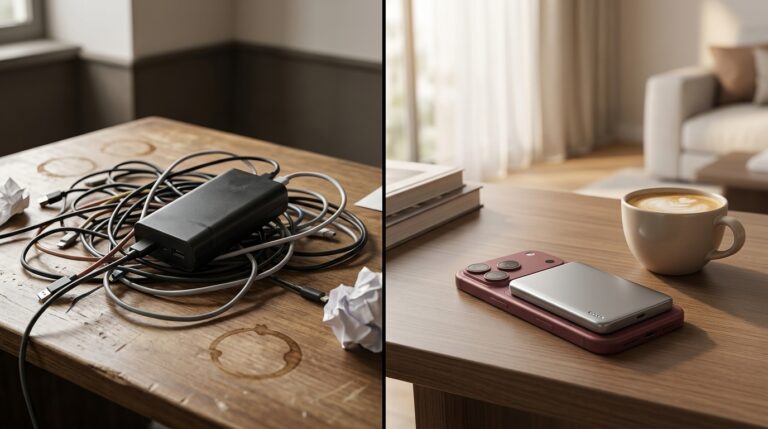
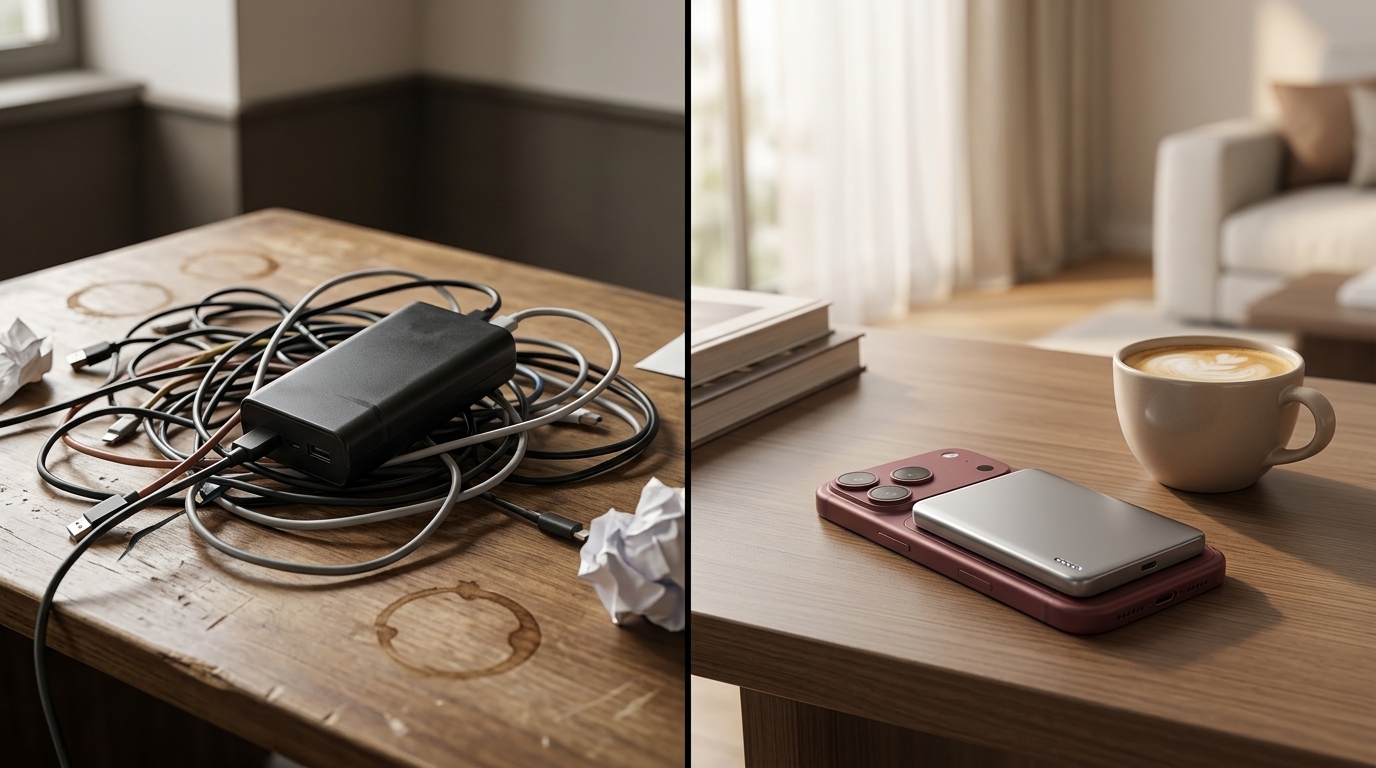
The 10,000mAh capacity at slim profile reflects the market standard that has emerged for daily-carry battery packs. Large enough for meaningful charging—roughly two full iPhone charges—but compact enough to slip into bags without conscious accommodation of the battery’s presence.

The built-in Type-C cable addresses the cable-forgetting problem while maintaining wired charging’s speed and efficiency advantages. The cable folds against the battery body when not in use, preserving portability while ensuring connection capability is always present.
The 22.5W fast charging enables rapid power delivery within the capacity constraints. Since 10,000mAh provides limited total energy, maximizing charging speed ensures that energy transfers quickly enough to be useful in time-constrained situations like brief breaks or commutes.
What’s notable is how LED displays have migrated from premium feature to standard inclusion even at budget price points. Users have apparently decided that knowing exact battery percentage is worth paying for, pushing manufacturers to include displays across price tiers rather than reserving them for expensive models.
The slim battery bank designation signals prioritization of portability over maximum capacity. These aren’t meant to sustain multi-day off-grid living but to fit into daily routines where backup power might become necessary unexpectedly.
Previously listed at $25.99, current listings hover around $17.99. The pricing positions LED-display battery packs as mainstream rather than premium, making precise power monitoring accessible rather than luxury feature.
"Note: Readers like you help support The Apple Tech. We may receive a affiliate commission when you purchase products mentioned on our website."