

There’s a particular threshold in gaming where equipment stops being about playing better and starts being about playing differently. A racing game works fine with a controller. The cars steer. The lap times count. But a force-feedback wheel with a three-pedal setup and a manual shifter transforms the same game into something closer to practice than entertainment. And when that transformation drops 34% in price as a bundle, it stops feeling like enthusiast excess and starts feeling like a delayed commitment you’ve been circling for months.
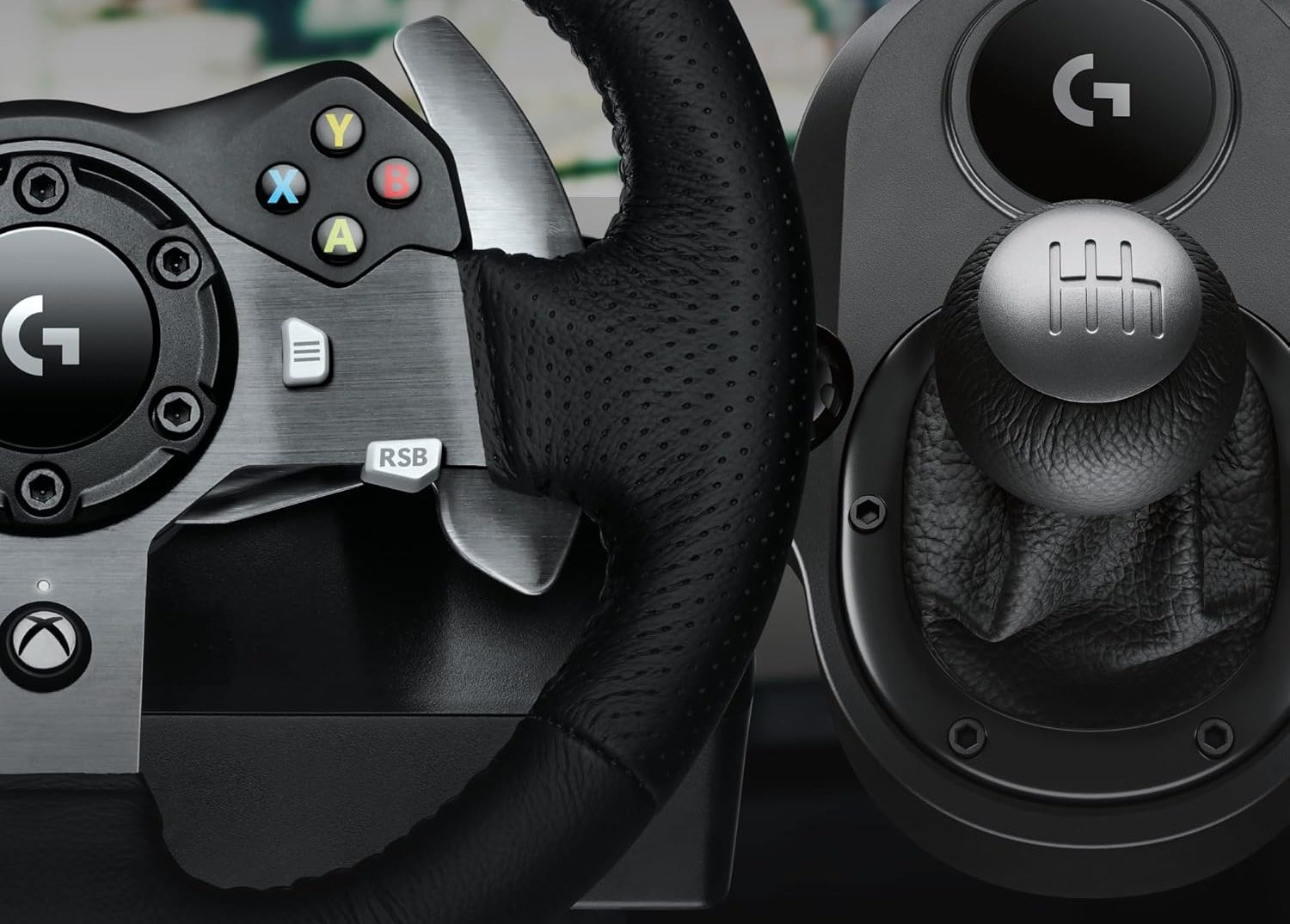
The Logitech G920 bundle includes a force-feedback racing wheel, a full pedal set with clutch, and a separate gear shifter compatible with Xbox and PC. It’s designed for people who’ve moved past arcade racing and want simulation—engine braking, heel-toe downshifting, tire grip feedback through the wheel. The appeal isn’t better scores. It’s authenticity. The discount doesn’t make the equipment necessary for playing racing games. It makes it cheaper than the mental barrier of admitting you care enough about virtual driving to dedicate desk space and learning curve to it.
What’s notable is how the markdown reframes the entire decision. Shoppers aren’t asking whether they enjoy racing games. They’re asking whether they enjoy them enough to justify equipment that most players will never use. The 34% reduction doesn’t change the wheel’s force-feedback motors, but it lowers the threshold for what counts as reasonable hobby investment. Suddenly, buying a full sim rig isn’t obsessive—it’s catching the right moment to stop half-engaging with something you’ve been playing casually for years.
There’s also a bundle-specific dynamic that creates pressure around completeness. The wheel and shifter are sold together at a discount, which means buying one without the other feels like leaving value on the table. You don’t need the shifter for most games—many racing sims work fine with paddle shifters on the wheel. But the bundle pricing suggests that if you’re serious enough to buy the wheel, you should be serious enough to buy the full setup. The discount didn’t make racing games more fun—it made the permission to take them seriously feel less ridiculous.
Shoppers are also pausing to consider space and commitment. A racing wheel setup isn’t portable. It requires a dedicated desk or rig, permanent mounting or repeated setup, and the willingness to actually learn manual transmission mechanics in a game. The discount makes the initial investment cheaper, but it also raises the question: will you use this enough to justify the space it occupies when you’re not racing? That tension between aspiration and realistic usage is slowing what might otherwise feel like straightforward value.
The markdown also highlights a broader shift in how people think about gaming equipment. There’s less stigma around buying specialized peripherals if they deepen engagement with a genre you already play. A racing wheel isn’t competing with a controller—it’s competing with the accumulated hours of settling for approximation when precision was available. The discount simply makes that upgrade feel financially defensible instead of self-indulgent.
In the end, the price drop on a racing wheel bundle reveals less about the equipment and more about how people are negotiating hobby escalation in a moment when every purchase feels like it should prove its worth. The discount appeared. The controller still works. And somewhere in that gap, people are deciding whether simulation is passion or pretension—and whether 34% off is the permission they needed to stop playing casually and start playing seriously.
"Note: Readers like you help support The Apple Tech. We may receive a affiliate commission when you purchase products mentioned on our website."



