

The earliest MagSafe battery packs did one thing: they clamped onto the back of an iPhone and added a few hours of charge. That simplicity was the appeal. No cables, no positioning, just magnetic attachment and power flow. Then someone realized the back of the battery pack was unused real estate and started adding features. A kickstand first, for hands-free video watching. Then a ring light, for better selfie illumination. The battery pack stopped being just about power—it became a portable lighting rig that also happened to charge your phone.
The five-thousand-milliamp-hour capacity sits in an awkward middle ground. It’s not enough to fully recharge most iPhones twice, but it’s more than a single emergency top-up. That means people use these packs differently than they do traditional portable chargers. The larger battery banks stay in bags, pulled out when the phone hits red. The smaller MagSafe packs attach preventively, added to the phone at seventy percent battery before a long day out. The behavior shift is subtle—it’s less about rescuing a dead phone and more about avoiding the anxiety of watching the battery drain in the first place.
The selfie ring light introduced a new consideration: do you want the battery pack visible in photos and videos, or do you remove it when you’re actually creating content? Some people leave it attached, accepting the added bulk in exchange for consistent lighting. Others snap it on for the light, shoot the content, then remove it immediately. That attach-detach rhythm didn’t exist with traditional battery packs—you plugged them in and forgot about them until charging finished. The MagSafe version demands more active management because it’s visible, front-facing, part of the composition.
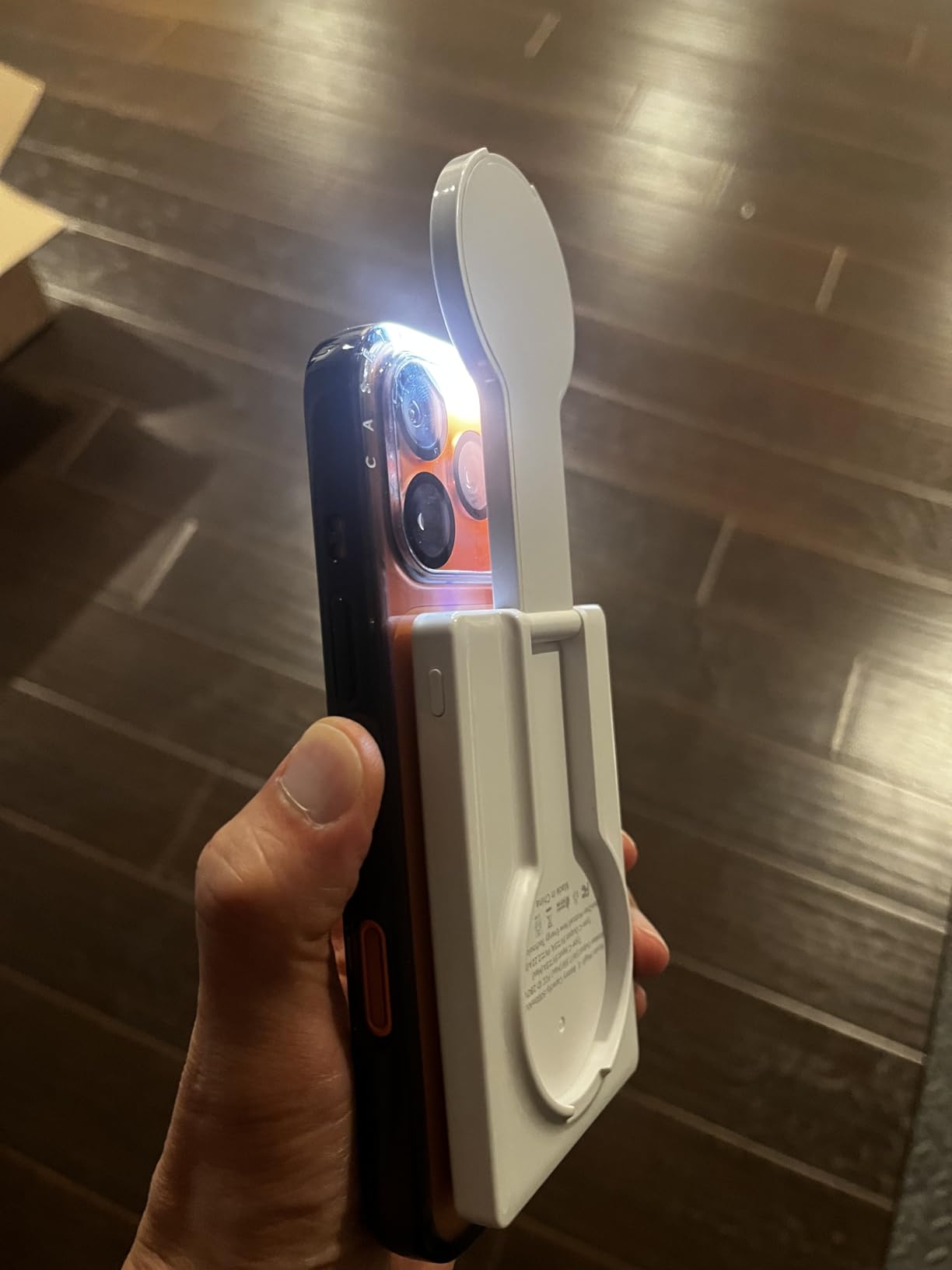
The stand function changed how people consume media on their phones in transit. Airport lounges, coffee shop tables, hotel nightstands—anywhere you’d normally prop the phone against something improvised, the built-in stand now serves that purpose. But the stand only works when the battery pack is attached, which means people started leaving it on even when the phone didn’t need charging. The accessory became semi-permanent, added in the morning and removed at night, a daily ritual that traditional battery packs never inspired because they weren’t magnetic.
The fill light’s color temperature and brightness aren’t adjustable on most models, which means it’s either on or off, flattering or harsh, with no middle ground. That binary operation works for quick selfies but falls apart for anything requiring nuance. Content creators who care about lighting still use dedicated ring lights or softboxes. The built-in light is a backup, a convenience feature for moments when better equipment isn’t available. It’s not replacing professional tools—it’s filling the gap between no light and proper lighting.
The wireless charging capability means the pack can charge the iPhone without requiring a cable, but the pack itself still needs a cable to recharge. That asymmetry creates a small logistical burden. You carry the MagSafe pack, but you also need a USB-C cable and a power adapter to refill it. The magnetic convenience only applies in one direction. The other direction—keeping the pack itself charged—remains as manual and cable-dependent as ever.
Previously listed at fifty dollars, current versions of these combination battery-light-stand MagSafe packs appear around thirty-six dollars, a price point that positions them between basic battery packs and dedicated content creation accessories. The cost reflects their hybrid nature—they’re more than a charger but less than a specialized tool. The pack doesn’t excel at any single function, but it handles three functions adequately, which is enough for people who need occasional help with power, lighting, and stability but don’t want to carry separate devices for each.
"Note: Readers like you help support The Apple Tech. We may receive a affiliate commission when you purchase products mentioned on our website."