

Bedside tables used to hold alarm clocks, books, and maybe a lamp. Now they hold charging infrastructure—cables snaking toward the bed, adapters plugged into power strips, devices stacked on top of each other. The three-in-one charging stand collapsed that chaos into a single vertical structure: iPhone magnetically attached at eye level, Apple Watch docked on a side arm, AirPods resting on a base pad. Everything in its place, charging overnight, ready by morning. The stand didn’t just organize devices—it created a spatial routine where putting the phone down became the signal that the day was ending.
The foldable design addressed travel, but it also changed how people thought about the stand at home. Knowing it could collapse flat made it feel less permanent, more like something that could be moved between rooms or taken on trips without hassle. That portability meant some people kept it in a bedroom during the week and relocated it to a home office on weekends, or packed it for hotels and Airbnbs where outlet configurations were unpredictable. The stand wasn’t anchored to one location the way traditional charging cables were, which made it more adaptable but also less stable as a permanent fixture.
The Qi2 certification ensured compatibility with MagSafe iPhones, but it also represented a broader standardization effort that Apple participated in without leading. Qi2 was an open standard based on Apple’s MagSafe technology, which meant third-party manufacturers could build compatible chargers without Apple’s direct involvement. That openness benefited users—more options, lower prices—but it also diluted the ecosystem’s distinctiveness. The charging experience felt less uniquely Apple and more like a generic wireless charging implementation that happened to work with iPhones.
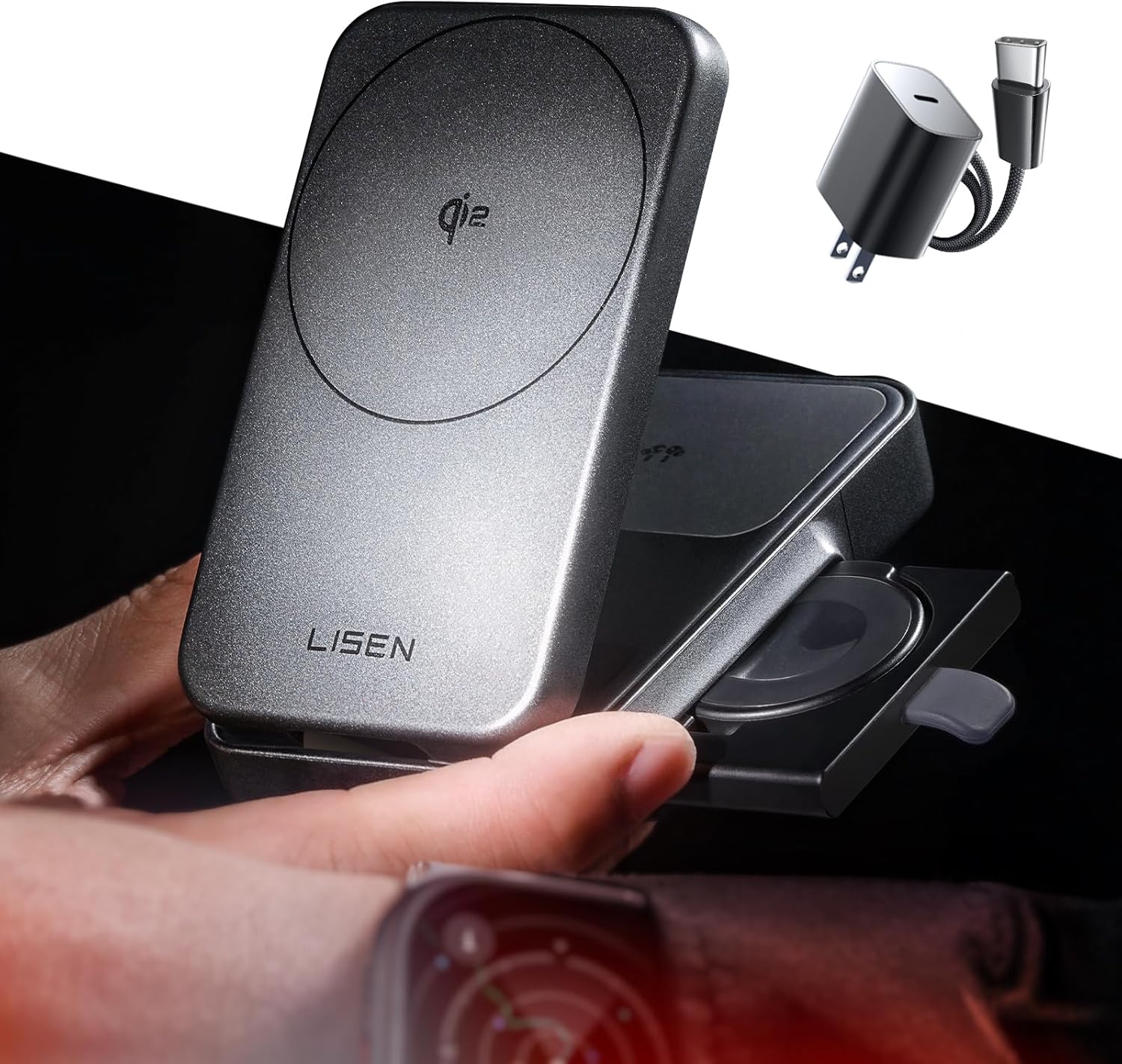
The fifteen-watt charging speed was fast enough for overnight use but slower than wired charging, which created a subtle calculus. If someone needed a quick charge before leaving the house, plugging in a cable was more efficient. If they were settling in for the night, the stand’s convenience outweighed the slower speed. That split usage pattern meant the stand served a specific temporal window: the hours between getting ready for bed and waking up. Outside that window, cables often remained more practical.
The charging stand became the physical marker for the end of the day, the place where devices went to rest, which made it feel less like a utility and more like a ritual. Placing the iPhone on the stand, setting the Apple Watch on its charger, dropping the AirPods case onto the pad—each action signaled disengagement from the digital world, at least in theory. In practice, people still reached for their phones in the middle of the night, disrupting the magnetic connection and sometimes forgetting to reattach properly. The ritual was more aspirational than absolute.
The nightstand location meant the stand occupied prime real-space, often displacing books, glasses, or other bedside essentials. Some people rearranged their entire nightstand to accommodate the charging stand, prioritizing device charging over other nighttime needs. That spatial negotiation revealed how central phones, watches, and earbuds had become to daily routines—they weren’t just charged overnight, they were given the most accessible position in the bedroom, closer than anything else except maybe a glass of water.
Previously listed at forty-four dollars, current versions of these three-in-one foldable MagSafe charging stands appear around twenty-two dollars when promotional codes (OA97ZAFY) are applied, a price point that makes them accessible impulse purchases rather than carefully considered investments. The cost sits below Apple’s official MagSafe accessories, which positions these third-party stands as the practical choice for people who want the functionality without the premium branding. The stand doesn’t offer anything the individual charging cables couldn’t provide, but it packages them in a way that feels more intentional, more designed, more like something that belongs on a nightstand instead of something that just ended up there.
"Note: Readers like you help support The Apple Tech. We may receive a affiliate commission when you purchase products mentioned on our website."