

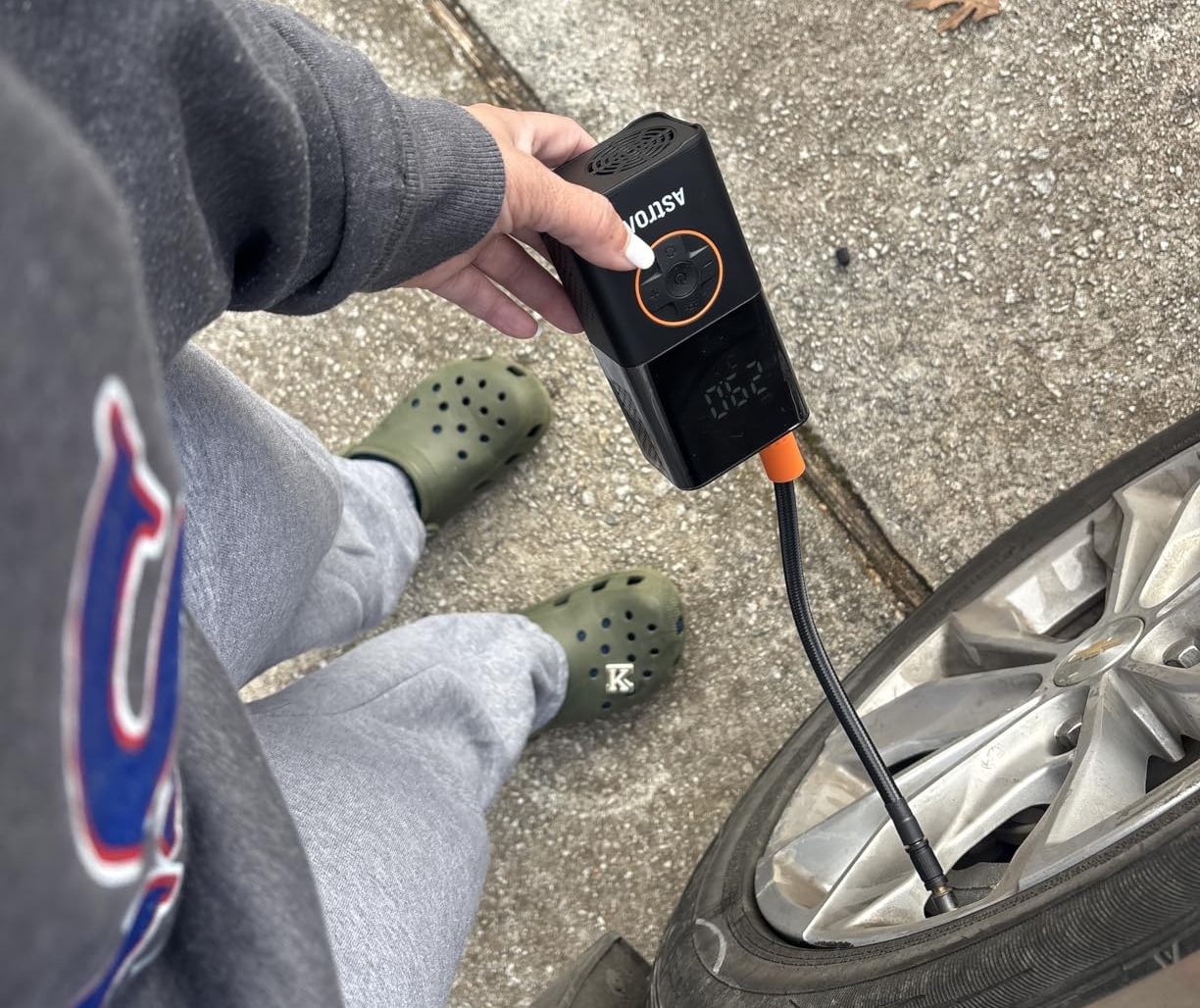
The iPhone surfaces low tire pressure alerts through CarPlay, but resolving the issue still requires finding air, accessing a compressor, and manually inflating—a gap between notification and action.
The tire pressure warning appears on the CarPlay display. It’s right there, clear and specific: one tire is at 28 PSI when it should be at 35. The iPhone knows. The car knows. What neither of them knows is where you can find air, whether it’s free, or how to fix the problem without driving to a gas station and hoping their compressor works.
This disconnect is characteristic of how Apple’s ecosystem integrates with cars. CarPlay brings iOS to the dashboard, mirroring apps and notifications from the iPhone. It’s excellent at displaying information—maps, music, messages, calls. But it doesn’t extend control to the car’s mechanical systems. The car reports its status through CarPlay, but solving problems requires getting out and doing something physical, which is where the digital interface ends.
Portable tire inflators exist to close this gap. You keep one in the trunk, and when the tire pressure warning appears, you pull over, connect the inflator, and fix it without needing to find a gas station or wait in line for the air pump. The process takes five minutes and requires no specialized knowledge—the inflator displays the current pressure and stops automatically when it reaches the target.
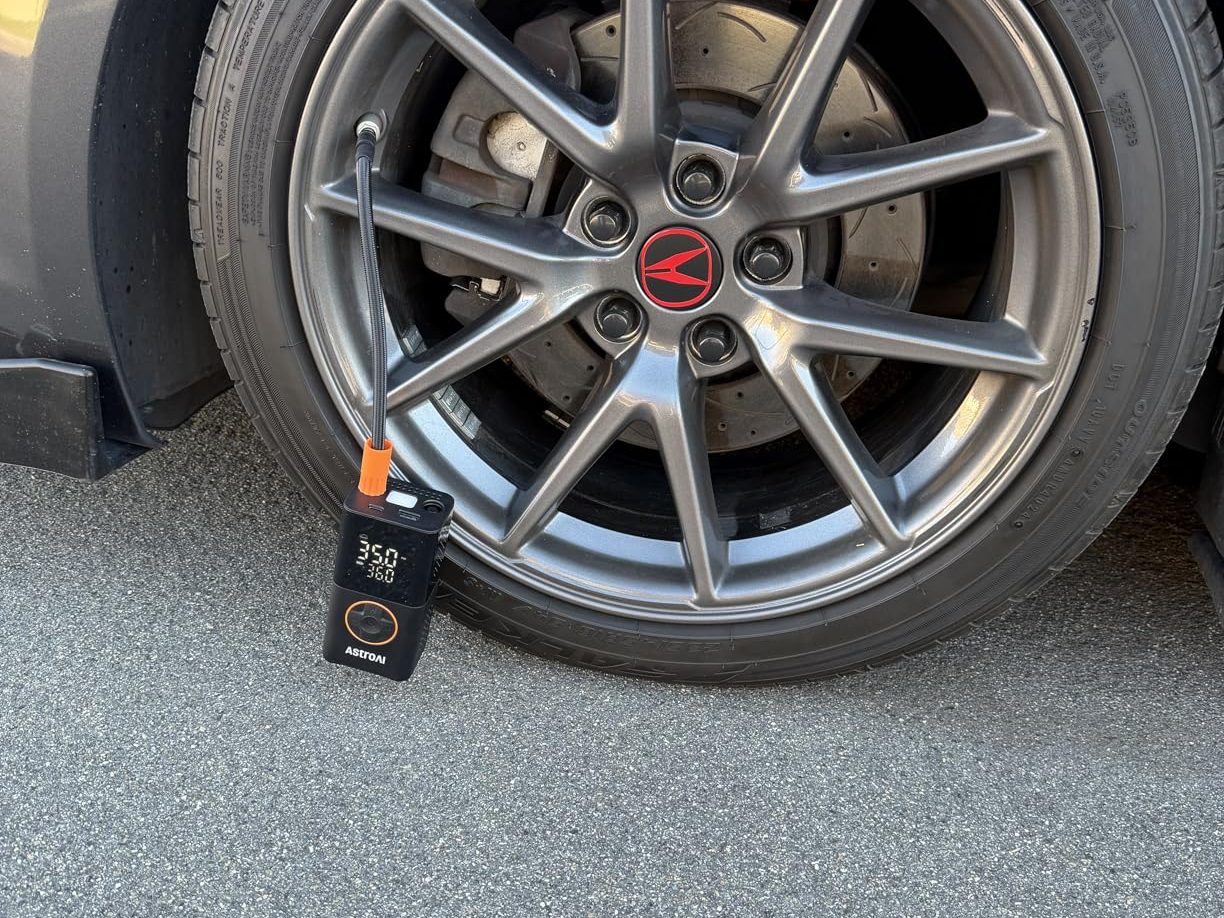
The iPhone could theoretically coordinate this. It knows the target pressure for each tire. It could display instructions, track the inflation process, confirm when the tire is properly inflated. But it doesn’t, because the inflator operates independently. It has its own display, its own controls, its own pressure gauge. The iPhone’s role ends at notification. The actual work happens through a device that has no connection to iOS, no app, no data sync.
Cordless operation matters because the inflator needs to reach all four tires without relocating the car. A corded model would require positioning the car so each tire is within cable reach of the 12V outlet, which is awkward in parking lots or on the side of the road. A battery-powered inflator goes to the tire, not the other way around. This independence from the car’s power system also means you can use it for bikes, sports equipment, or anything else that needs air.
LED lighting addresses a practical constraint: tire pressure problems don’t happen exclusively during daylight. A flat or low tire discovered at night, in a poorly lit parking lot or on a dark road, becomes harder to address without a flashlight. An integrated light eliminates the need to hold a phone flashlight while simultaneously operating the inflator—a small ergonomic improvement that makes the task less frustrating.
The gauge provides redundancy. The car’s tire pressure monitoring system tells you there’s a problem, but it doesn’t always tell you the exact pressure after you’ve added air. The inflator’s gauge confirms the number independently, which matters when you’re trying to match the manufacturer’s specification. The iPhone could display this data if the inflator were smart enough to connect via Bluetooth and report pressure readings to iOS, but that integration doesn’t exist. The inflator remains a standalone tool, as separate from the iPhone as a wrench or a jack.
Previously listed at $40, current listings hover around $20 for cordless models with digital displays and automatic shutoff. The price point has made these common enough that they’re shifting from emergency equipment to routine maintenance tools. The iPhone can tell you when your tire pressure is wrong, but it can’t fix it, and the gap between notification and resolution remains something you address with hardware that exists entirely outside Apple’s ecosystem. The integration ends at awareness. Action is still manual.
"Note: Readers like you help support The Apple Tech. We may receive a affiliate commission when you purchase products mentioned on our website."