Focus mode silences notifications and filters interruptions on the iPhone, but it can’t eliminate environmental sound that disrupts concentration in open offices, shared spaces, or while traveling.
Focus mode on iOS lets you define when and how the iPhone interrupts you. Work mode silences personal texts. Sleep mode dims the screen and filters notifications. Do Not Disturb blocks almost everything. These settings give you control over digital distractions, creating pockets of time when the phone respects your need for concentration. But they don’t address the problem of ambient noise.
You’re working in a coffee shop, or an open office, or on a plane. The iPhone is in Focus mode. Notifications are silenced. But conversations around you continue. Machinery hums. Background music plays. The digital interruptions are gone, but the physical environment remains distracting. The iPhone can control what reaches you digitally, but it has no mechanism to dampen the physical world’s volume.
AirPods Pro offer active noise cancellation, which works well for constant, predictable sounds like airplane engines or air conditioning. They’re less effective against intermittent noises—conversations, footsteps, sudden sounds. Transparency mode lets environmental sound through when you need awareness, but there’s no middle ground for people who want to hear nothing at all without playing audio. The AirPods either isolate you with music or podcasts, or they let the world in. They don’t offer pure silence.
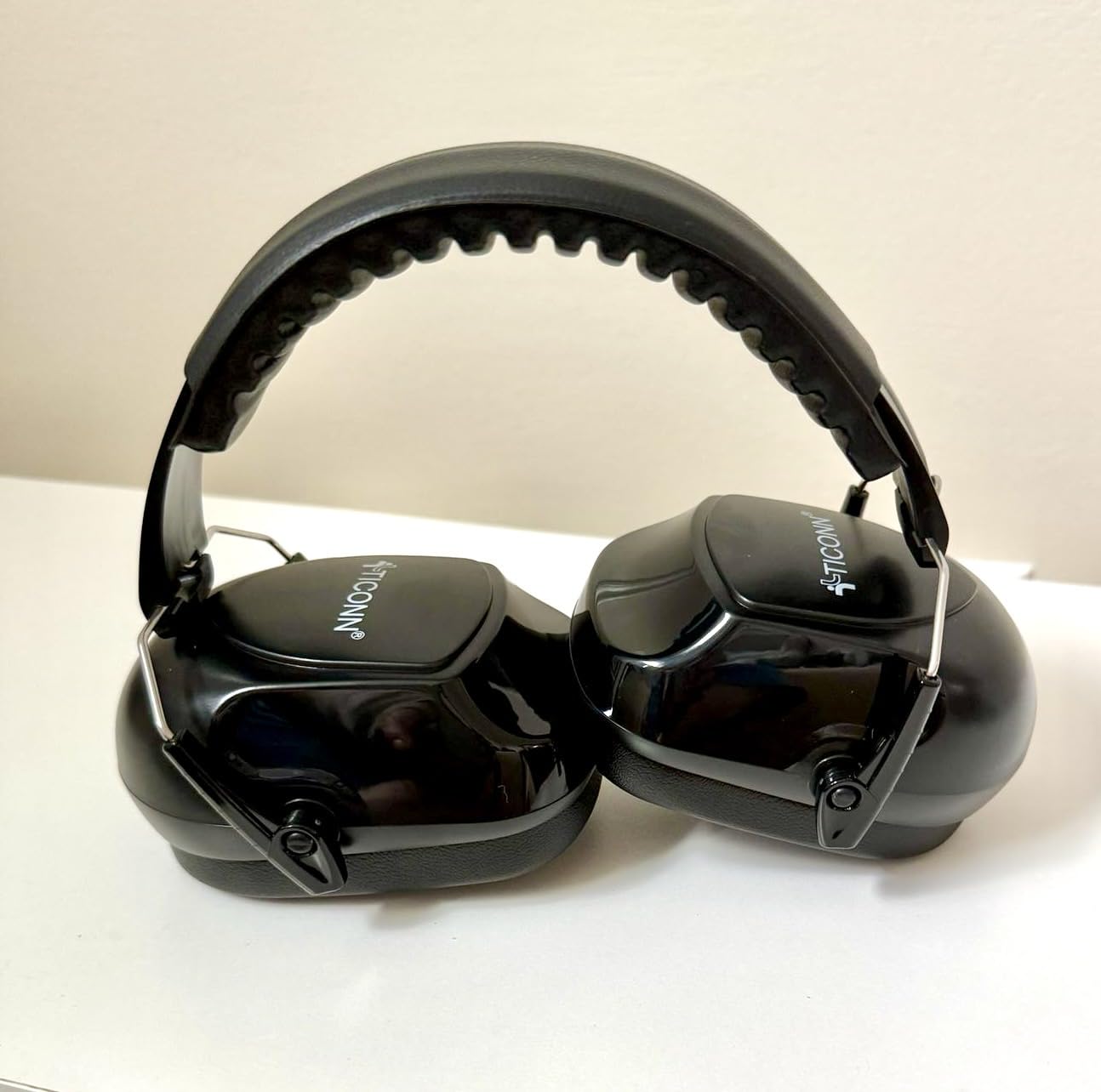
Passive noise reduction through physical ear protection addresses this gap. Heavy-duty ear muffs block sound mechanically, using foam and sealant to create a barrier that doesn’t rely on batteries, algorithms, or active processing. They’re not elegant. They’re bulky and conspicuous. But they provide a level of noise reduction that active noise cancellation can’t match, particularly for sharp, sudden sounds or high-decibel environments.
The use case extends beyond industrial settings. People working from home in noisy households use them to create quiet while focusing. Commuters wear them on trains or buses to eliminate chatter. Students use them in libraries or dorm rooms when silence isn’t naturally available. The ear muffs don’t connect to the iPhone. They don’t stream audio. They simply block sound, which is a form of control that exists entirely outside Apple’s ecosystem.
This represents a different approach to managing attention. Focus mode manages information flow—what notifications arrive, which apps can interrupt, who can reach you. Passive noise reduction manages sensory input—what sounds reach your ears, independent of digital content. The iPhone handles the former comprehensively. The latter requires hardware that has no integration with iOS, no app, no settings screen. You put them on. Sound diminishes. You take them off. Sound returns.
The absence of audio playback is both a limitation and a feature. You can’t listen to music or take calls while wearing passive ear protection designed for maximum noise reduction. But you also don’t drain the iPhone’s battery streaming audio, don’t worry about Bluetooth connectivity, and don’t need to charge another device. The ear muffs are entirely self-contained, functioning without any dependency on the phone that sits in your pocket or on your desk.
Previously listed at $15, current listings hover around $9 (CODE FL6X956U) for models with measurable noise reduction ratings. The low price point positions these as utilitarian tools rather than tech accessories. They solve a problem the iPhone and AirPods don’t address—blocking environmental sound without requiring active noise cancellation, audio playback, or battery management. Focus mode creates digital quiet. Passive ear protection creates physical quiet. The iPhone’s ecosystem handles one. The other remains outside its reach.
"Note: Readers like you help support The Apple Tech. We may receive a affiliate commission when you purchase products mentioned on our website."