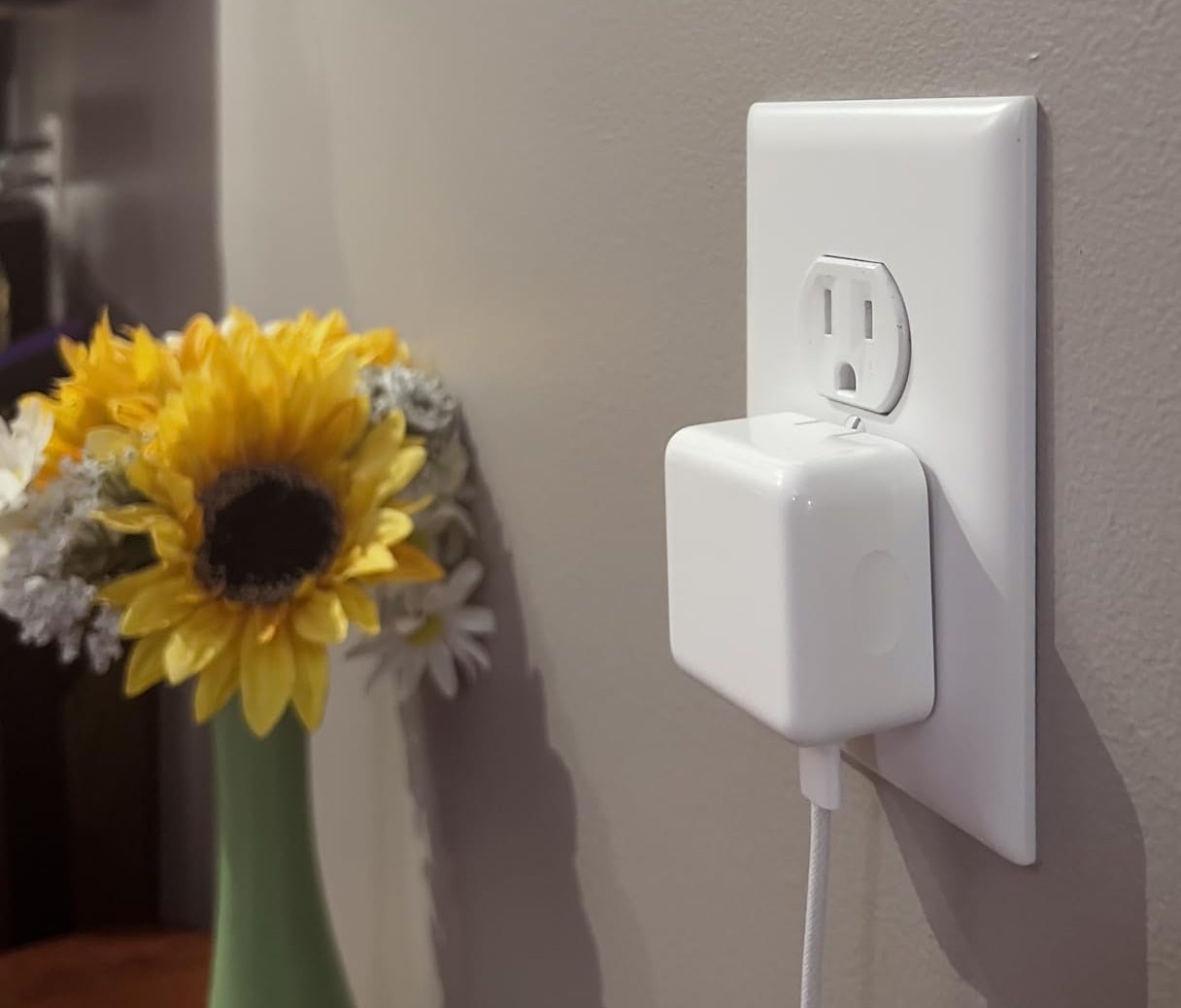
The proliferation of USB-C devices across Apple’s product lineup has made dual-port wall adapters essential infrastructure rather than optional upgrades for homes managing multiple iPhones, iPads, and accessories.
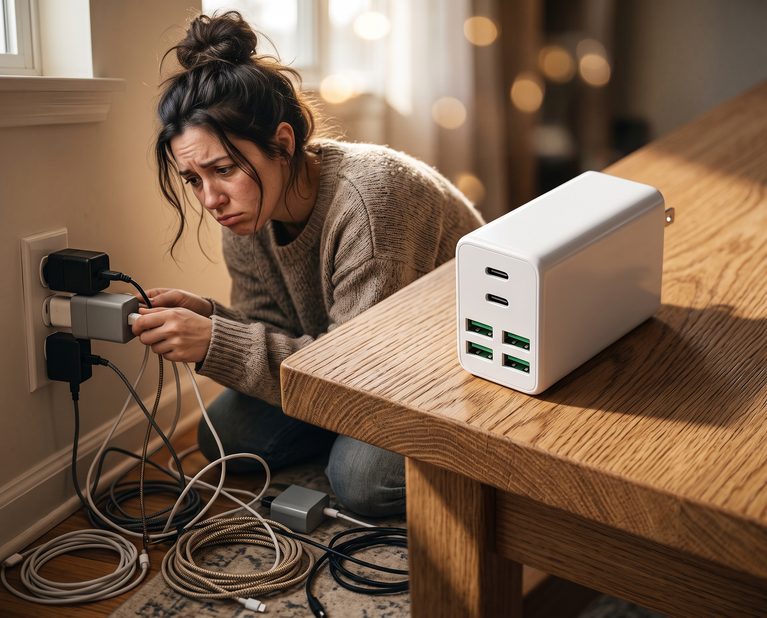
The single-port charger made sense when most households had one or two devices that needed charging. You plugged in your iPhone overnight, maybe your iPad every few days, and that was sufficient. The rhythm was predictable. Now most people carry an iPhone, wear an Apple Watch, use AirPods, and have an iPad. Some households have multiples of each. The outlet that used to handle one iPhone now needs to charge two iPhones, an iPad, AirPods, and an Apple Watch, all before morning.
Apple’s decision to ship iPhones without charging adapters transferred the responsibility for power infrastructure entirely to users. You get a USB-C cable, but the adapter—the thing that plugs into the wall—is something you’re expected to already own or acquire separately. This policy pushed users to either reuse old adapters, many of which are lower wattage and slower than current devices support, or to buy new adapters that match the charging speeds modern iPhones can handle.
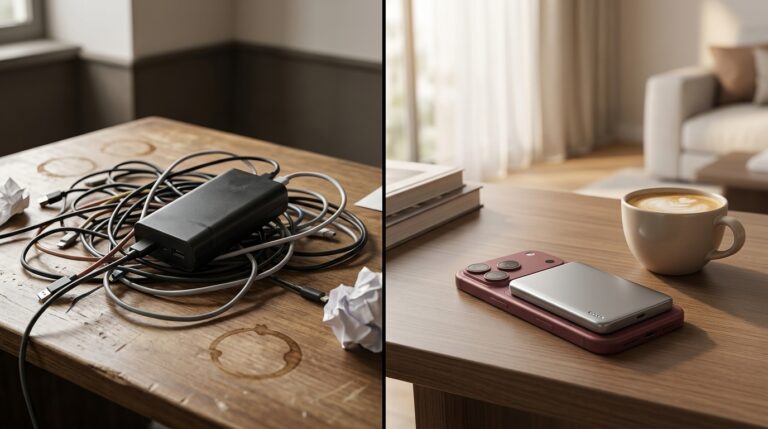
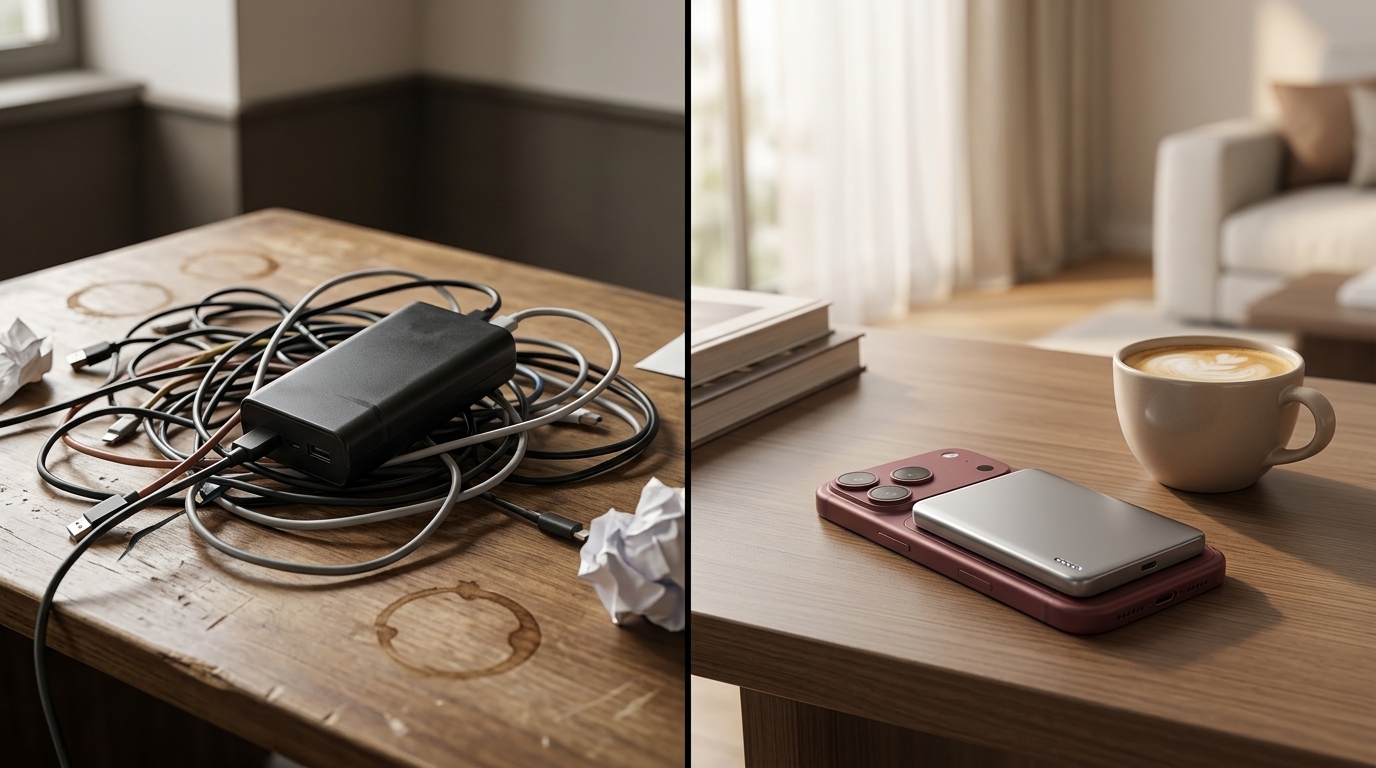
Dual-port adapters address the most common scenario: two devices need charging simultaneously. Both ports deliver sufficient wattage to fast-charge an iPhone, or one port can charge an iPhone while the other handles an iPad or AirPods case. The adapter replaces two single-port chargers, which frees up an outlet and reduces cable clutter. The consolidation is modest but meaningful in bedrooms where outlet access is limited and multiple devices compete for the same power source.

Power distribution becomes a consideration when both ports are active. A 35-watt dual-port adapter can deliver full power to one device, or split power between two devices depending on their charging needs. If you plug in two iPhones, they both charge at reasonable speeds. If you plug in an iPhone and an iPad, the iPad draws more power and the iPhone charges more slowly. The adapter negotiates this automatically, but the result is that charging times vary depending on what else is connected.
The compact form factor matters because these adapters travel. They’re not just bedside infrastructure—they go in laptop bags, in travel kits, in car consoles. A smaller adapter is easier to pack and less likely to block adjacent outlets in hotels or airports. Apple’s official adapter prioritizes size, resulting in a charger that’s noticeably smaller than many third-party alternatives with similar wattage. The compactness comes at a cost—the prongs don’t fold, which means the adapter takes up slightly more space in a bag than foldable designs.
USB-C unification across Apple’s devices means a single dual-port adapter can handle almost everything in the ecosystem. The iPhone charges via USB-C. So does the iPad, the AirPods case, and increasingly, accessories like keyboards and mice. The Apple Watch still requires its own magnetic charger, but everything else can pull power from the same adapter. This universality simplifies travel and reduces the number of different chargers you need to keep track of, though it doesn’t reduce the total number of charging events—you’re still managing battery levels across multiple devices daily.
The adapter’s official Apple branding carries weight for users who prioritize compatibility and warranty support. Third-party chargers can deliver equivalent or higher wattage at lower prices, but they introduce uncertainty about long-term reliability and whether they’ll work correctly with future iOS updates or device models. Apple’s adapter costs more, but it guarantees compatibility with the ecosystem in ways that generic USB-C chargers don’t always promise.
Previously listed at $59, current listings hover around $39 for Apple’s official dual USB-C adapter. The pricing reflects Apple’s positioning of charging infrastructure as a necessary component of ecosystem participation—not included with devices, but essential to their operation. The dual-port configuration acknowledges the reality that most Apple users now manage multiple devices simultaneously, making single-port chargers insufficient for households where charging has evolved from an occasional task to a nightly choreography of managing battery levels across an interconnected collection of products.
"Note: Readers like you help support The Apple Tech. We may receive a affiliate commission when you purchase products mentioned on our website."