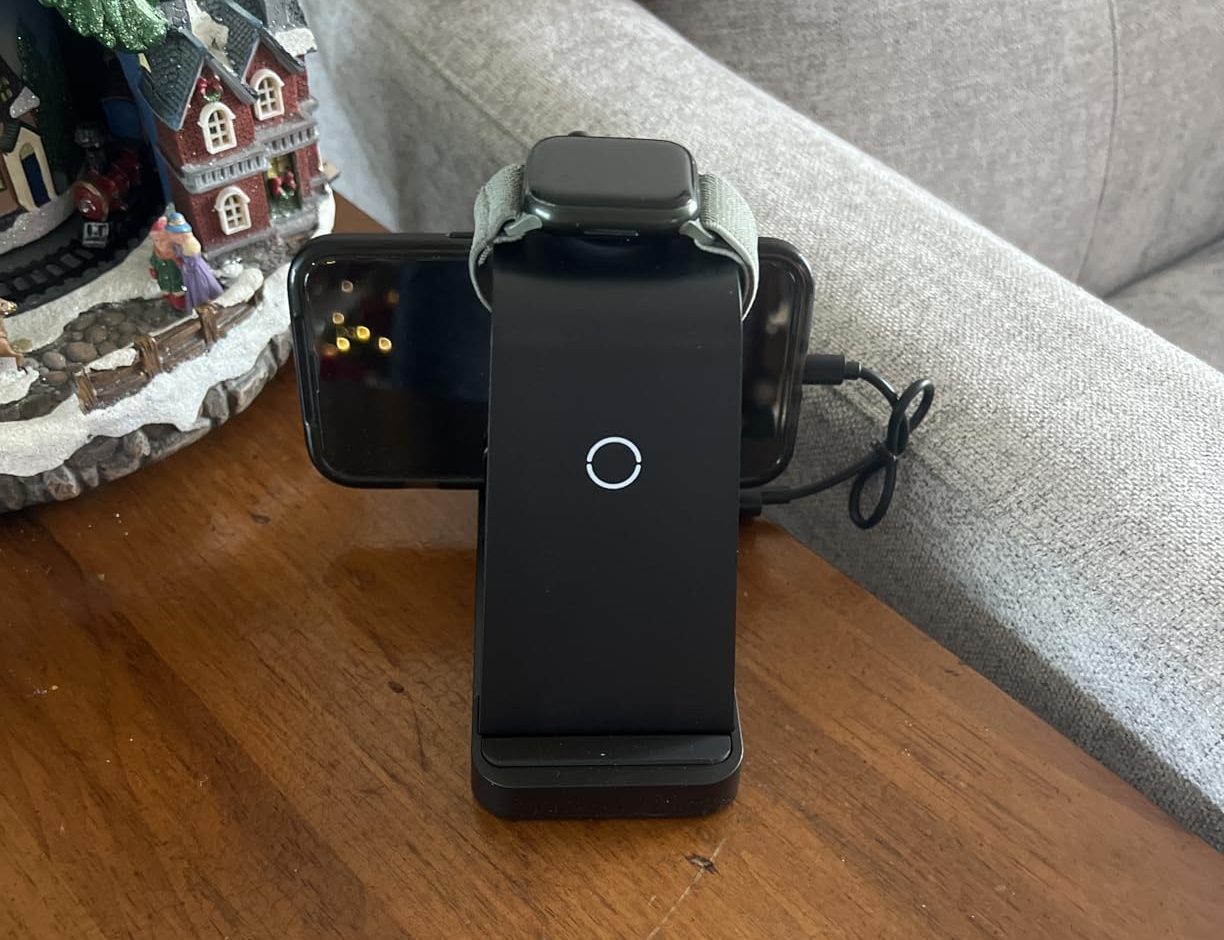
The five-device charging station emerged not from luxury but from accumulation. Apple ecosystem expansion created a household infrastructure problem disguised as a convenience product.
Nightstands have become technology staging areas. iPhone, Apple Watch, AirPods, iPad, sometimes a second set of AirPods or a MagSafe battery pack. Each device has its own charging requirements, its own cable, its own optimal placement. The five-in-one station promises to consolidate this chaos into a single footprint, but what it actually does is formalize the device accumulation that most users didn’t consciously plan for.
The “fast wireless charging” claim requires context. Wireless charging maxes out around 15W for iPhones, compared to 20W or higher via cable. Fast is relative. What the station actually offers is simultaneous charging, which matters more than speed when you’re asleep for eight hours. All devices reach 100% by morning, which creates the illusion of efficiency even though each device charged slower than it would have individually with wired connections.
Placement hierarchy emerges through trial and error. The iPhone goes in the most accessible spot because it’s the device you grab first in an emergency. The Apple Watch needs to be visible if you use it as an alarm. AirPods go wherever there’s space. This isn’t design—it’s negotiation with the physical constraints of the station and your nightstand geography.
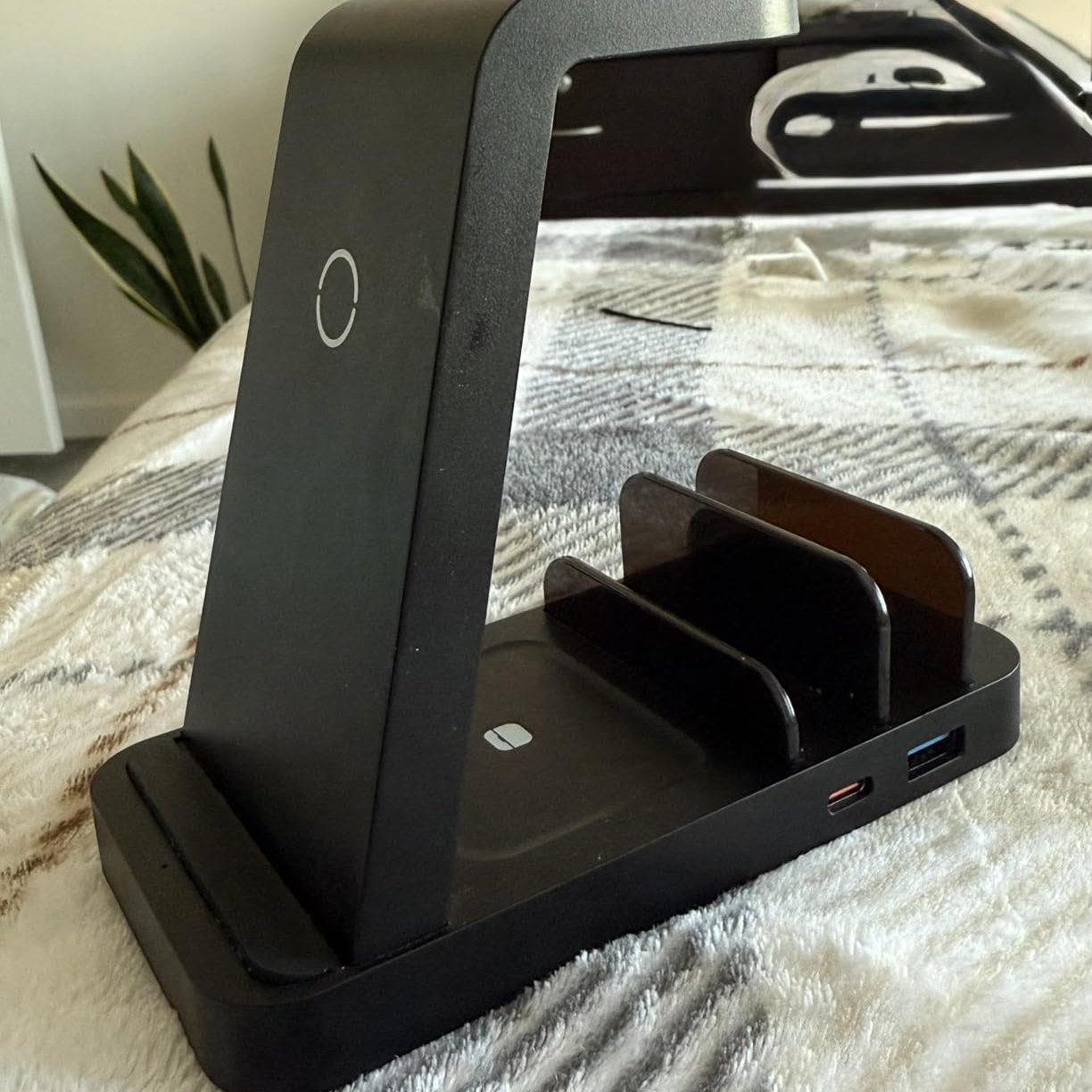
Cable management becomes a secondary problem. The station itself requires power, which means at least one cable running to the wall outlet. If the station doesn’t support all devices wirelessly—and most don’t fully replace every charging need—additional cables accumulate. The promised simplification produces a different kind of clutter: one large object surrounded by backup cables for devices that don’t fit the station’s exact specifications.
Travel exposes the station’s limitations. It stays home, which means reverting to individual chargers and cables when away from the primary charging location. Some users maintain duplicate charging setups—one at home, a portable kit for travel. Others accept that trips mean returning to the pre-station chaos of multiple cables and outlet negotiations in hotel rooms.
The aesthetic appeal shouldn’t be dismissed. A well-designed charging station looks intentional, like someone has their technology life under control. This appearance of control matters even when the underlying reality—five devices requiring nightly charging—suggests the opposite. The station doesn’t reduce device dependency, but it makes that dependency look deliberate rather than accidental.
What’s revealing is how quickly these stations become obsolete. Buy one designed for iPhone 12, and it works fine until you upgrade to iPhone 15. The MagSafe alignment might be slightly off, or the charging speed doesn’t optimize for newer batteries. The station isn’t broken, but it’s no longer ideal. Replace it, and the cycle begins again, each iteration accommodating a slightly different device configuration. Previously listed at $40, current listings hover around $24.17.
"Note: Readers like you help support The Apple Tech. We may receive a affiliate commission when you purchase products mentioned on our website."