
Owning an iPhone used to mean carrying one cable. Adding an Apple Watch meant two. AirPods made three. Each device required its own charging location, its own outlet, and its own mental tracking. Hotel rooms with limited outlets became staging areas for cable management rather than places to rest.
Magnetic alignment created new expectations about how charging should work. Devices that snap into position feel more secure than those balanced on cables. That small improvement in connection reliability changed what people tolerate. Cables that require precise insertion now feel outdated compared to magnetic guidance that works in the dark.
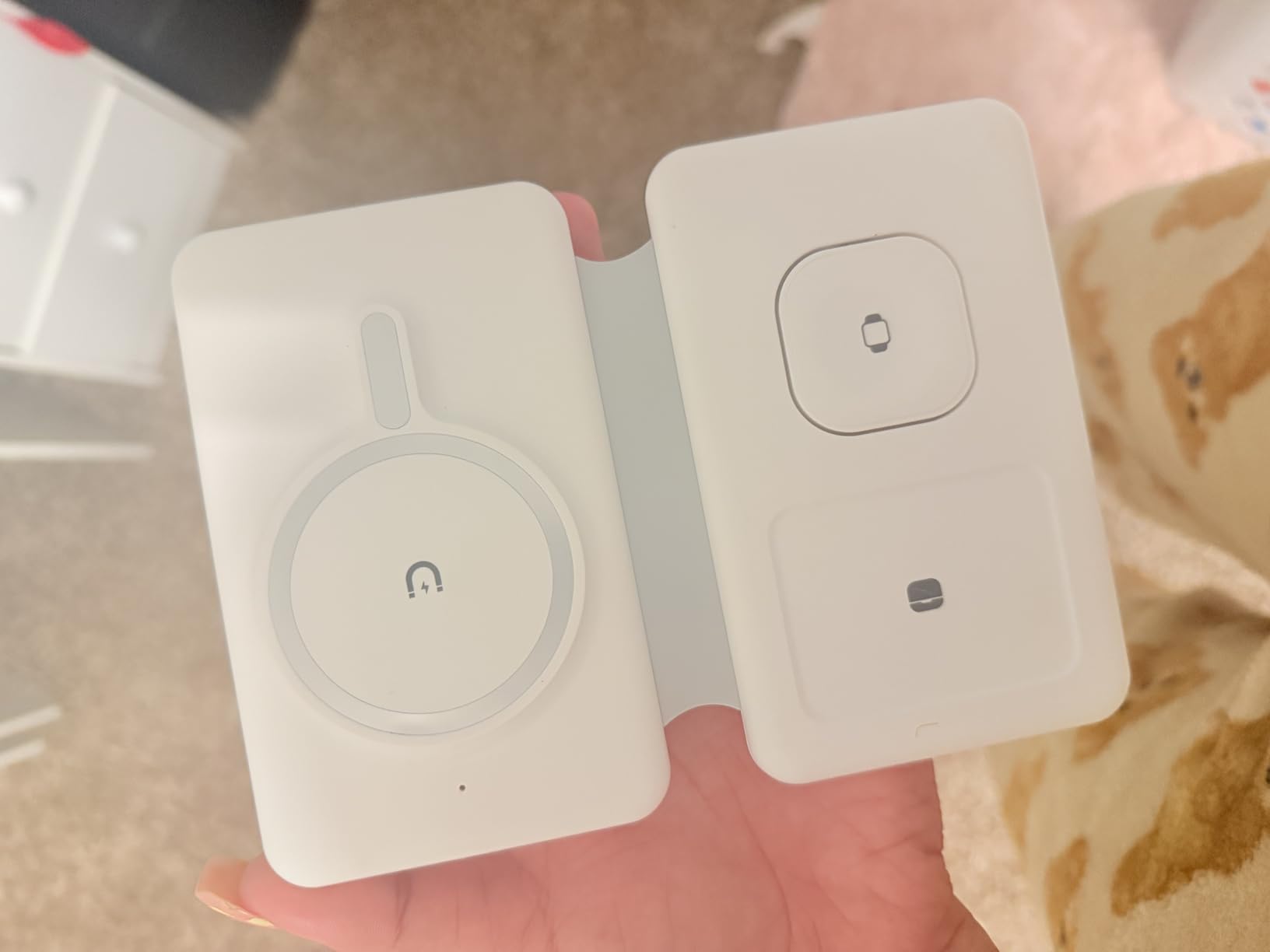
The three-device configuration reflects Apple’s ecosystem design. The company sells phones, watches, and earbuds as a coordinated system, but charging them together required third-party solutions. Apple’s own charging approaches—MagSafe, Watch magnetic puck, Lightning or USB-C—don’t share a unified design language that makes simultaneous charging straightforward.
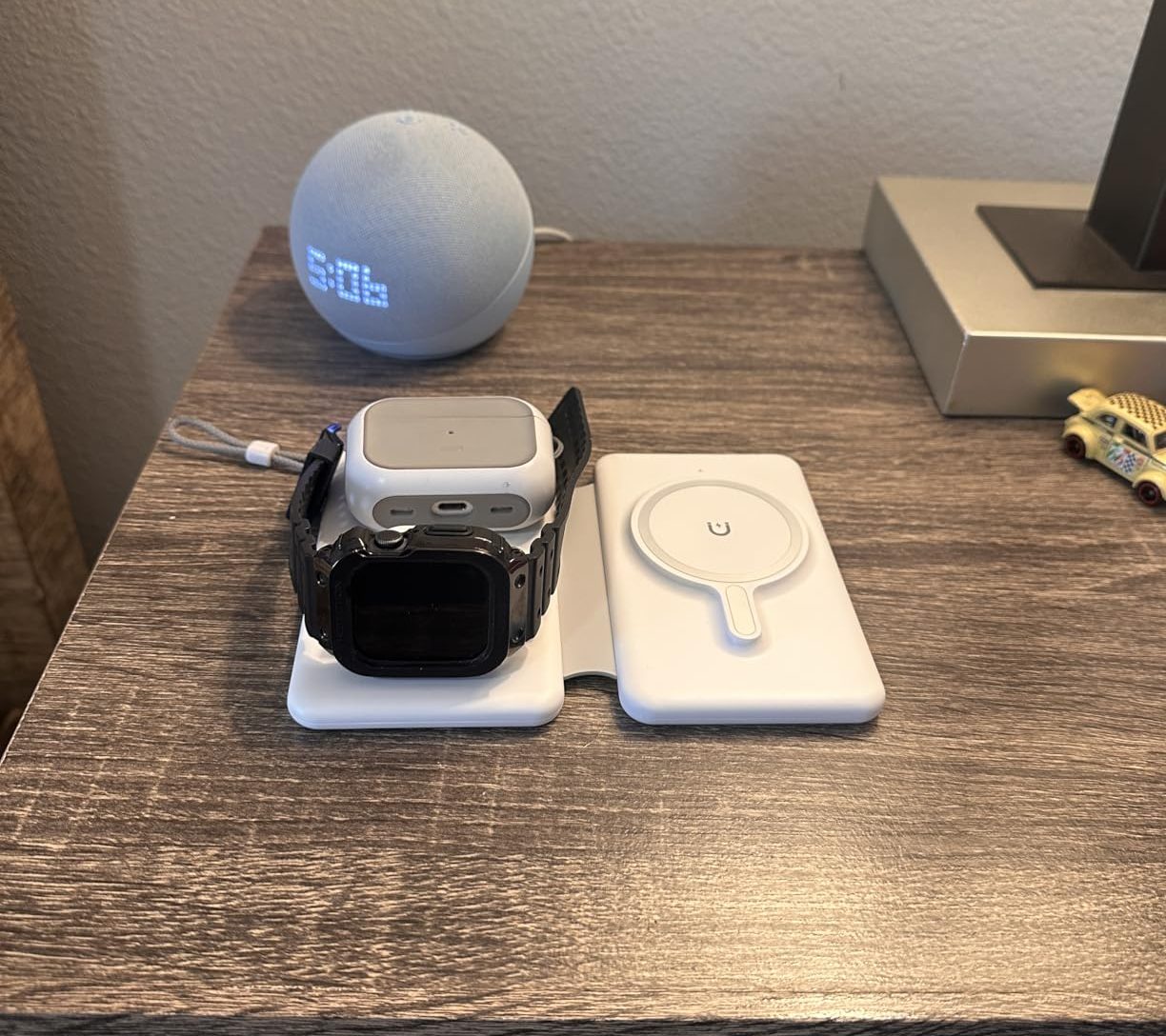
Folding mechanisms address the specific friction of travel. A charging station that works perfectly on a nightstand becomes a burden in a suitcase if it doesn’t collapse. The feature isn’t about portability for its own sake—it’s about matching the physical reality of packing constraints when every item needs to justify its space.
Travel adapters introduced another layer of complexity. International outlets vary, but the Apple ecosystem doesn’t. People who travel frequently found themselves carrying charging solutions that work in their home country but require adapters abroad. The magnetic station that folds flat still needs the right plug configuration for each destination.
SIMILAR
Why iPhone users are carrying standalone noise machines instead of relying on sleep apps
Apple Watch charging became a bedside ritual, here's why the placement matters more than expected
iPhone users are quietly giving up the cable and most dont realize why it happened so gradually over time
Nightstand real estate became a consideration that didn’t matter in the single-device era. The surface that used to hold a single cable now requires space large enough to accommodate three devices simultaneously. Bedroom furniture that worked fine before feels inadequate once charging needs expand.
The behavioral shift extends beyond the physical act of charging. People now position devices with intention—watch on the left, phone in the center, earbuds on the right—creating personal charging arrangements that become ritualized. The order matters not for technical reasons but because consistency reduces the cognitive load of managing multiple devices.
iOS doesn’t coordinate charging behavior across devices. Each item reports its own battery status independently. There’s no unified dashboard showing ecosystem-wide power levels or suggesting optimal charging sequences. The devices exist as a family in marketing but charge as individuals in practice.
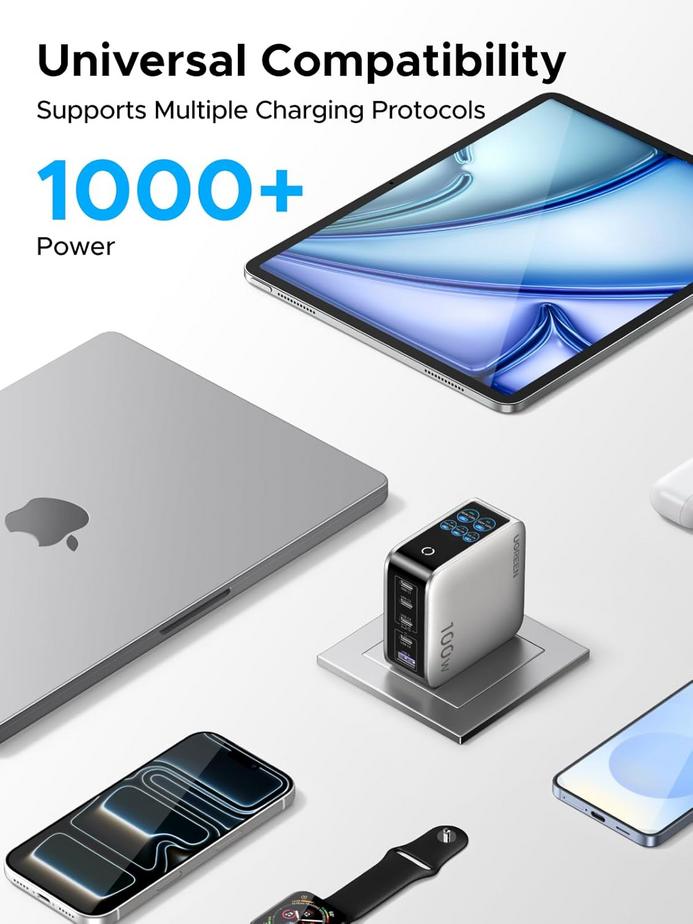
Previously listed around $28, current listings for three-in-one magnetic charging stations with folding designs now appear closer to $16, indicating how standard multi-device charging has become for users invested in the Apple ecosystem.
"Note: Readers like you help support The Apple Tech. We may receive a affiliate commission when you purchase products mentioned on our website."