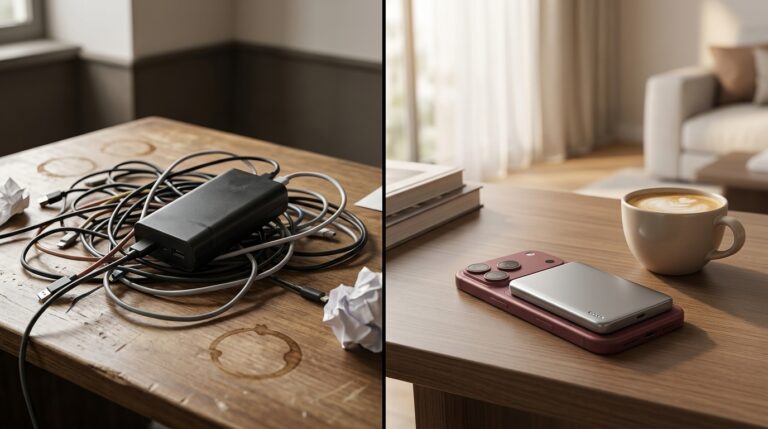
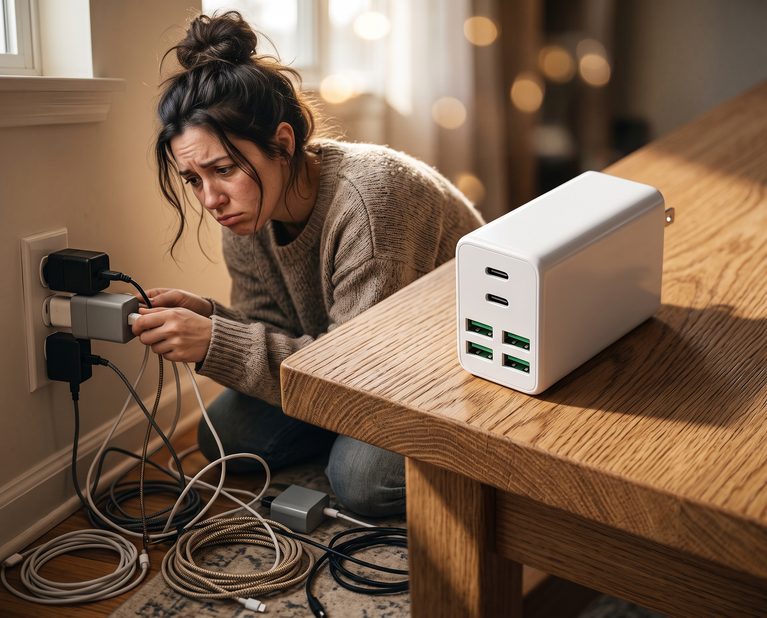
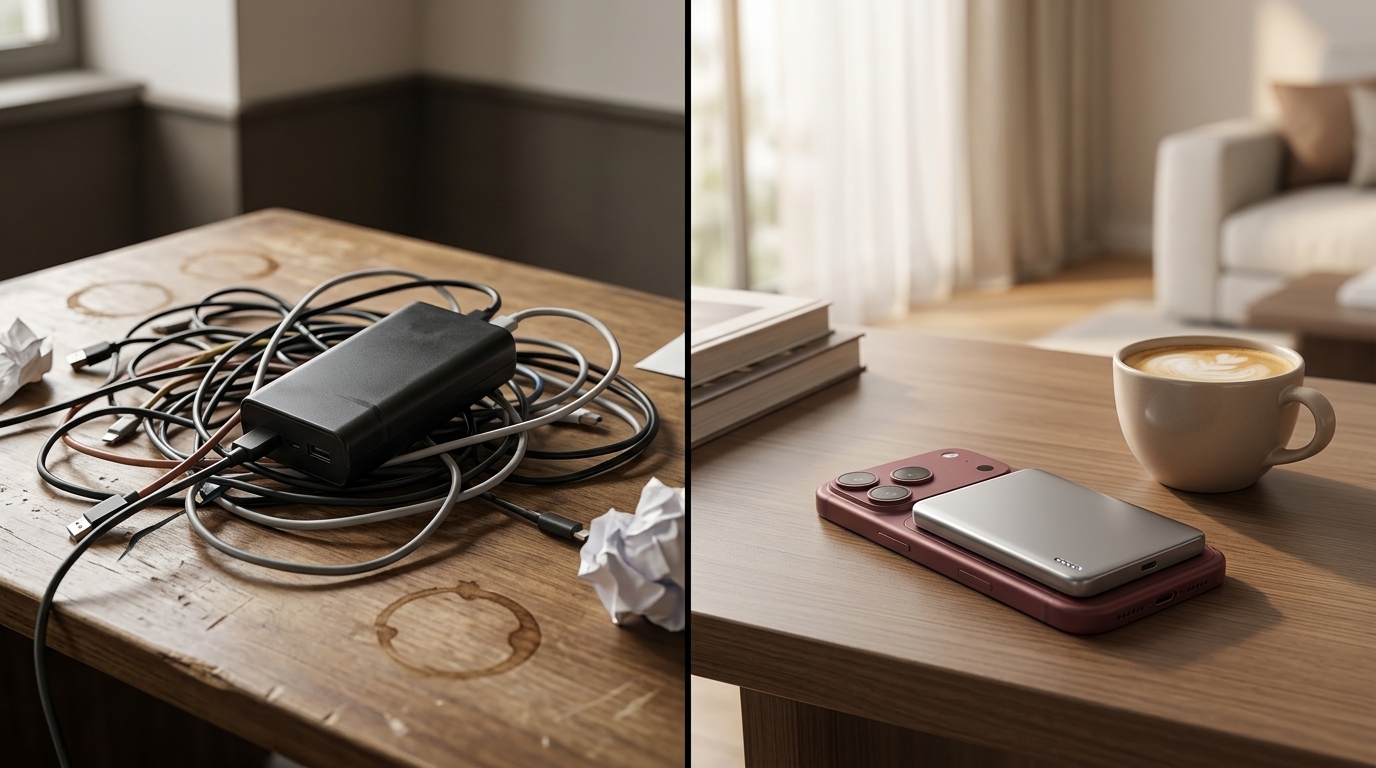
The number of devices requiring simultaneous power has crossed a threshold that home electrical layouts weren’t designed to accommodate. A typical bedroom or home office now hosts an iPhone, iPad, Apple Watch charger, MacBook, and possibly AirPods, alongside non-Apple items like lamps, monitors, and routers. Standard wall outlets offer two sockets. The math doesn’t work.
This has created a secondary market for power strips that function less like surge protectors and more like electrical real estate expansion. Units with eight or more outlets are becoming common household objects, placed in corners and under desks, converting a single wall socket into a hub for an entire room’s worth of devices.
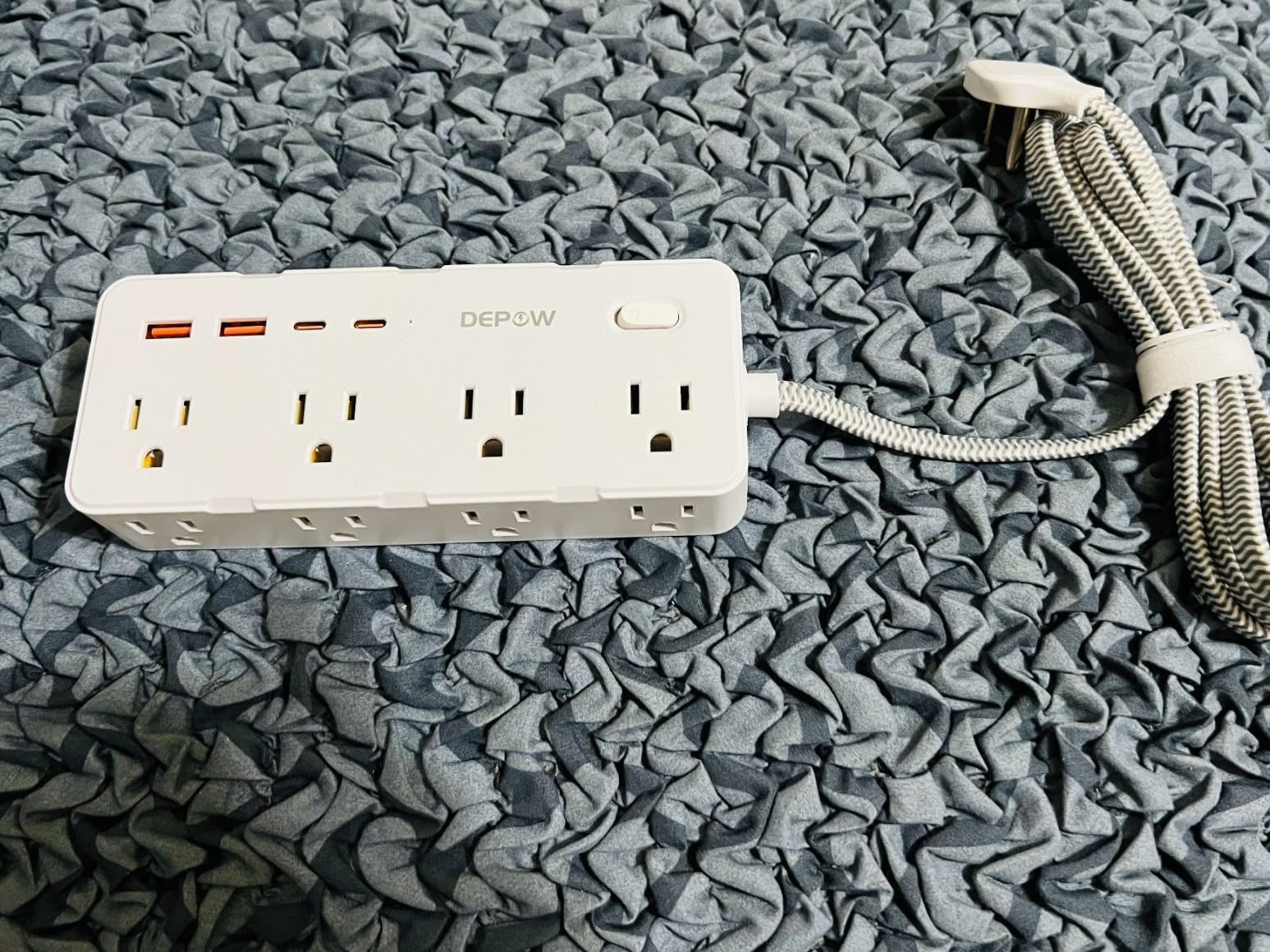
What’s changed isn’t just the number of devices. It’s the expectation that everything should remain plugged in and ready. Older workflows involved charging a device, unplugging it, using it, and repeating the cycle. Current behavior assumes persistent connection. Devices live on chargers. They’re picked up when needed and returned immediately. This requires more outlets than most rooms provide.
The Apple ecosystem specifically amplifies this. Each product category introduces another charging obligation. An Apple Watch needs nightly power. AirPods need occasional top-ups. An iPad might sit unused for days but still requires readiness. The MacBook anchors the setup. Suddenly, one person’s Apple usage footprint demands four to five dedicated power points.
SIMILAR
Why iPhone users are carrying standalone noise machines instead of relying on sleep apps
Apple Watch charging became a bedside ritual, here's why the placement matters more than expected
iPhone users are quietly giving up the cable and most dont realize why it happened so gradually over time
This reshapes room layouts in subtle ways. Desks are positioned near outlets. Nightstands are chosen based on proximity to wall sockets. Furniture placement becomes constrained by electrical access. The physical infrastructure of a home is bending to accommodate the power demands of a digital ecosystem.
There’s also a quiet anxiety around surge protection. Lightning strikes and power fluctuations are rare, but the cumulative value of devices plugged into a single strip can easily exceed a thousand dollars. Users report an awareness of this risk that wasn’t present when fewer expensive objects shared one power source.
What’s emerging is a new category of household infrastructure problem. It’s not about internet speed or Wi-Fi coverage. It’s about whether the walls provide enough electrical access points to support the number of devices people now consider essential. The solution is inelegant—extension cords and power strips—but it’s becoming universal.
Previously listed near $23, some multi-outlet surge protectors with USB ports, current listings hover around $11(CODE YD822YL6).
"Note: Readers like you help support The Apple Tech. We may receive a affiliate commission when you purchase products mentioned on our website."