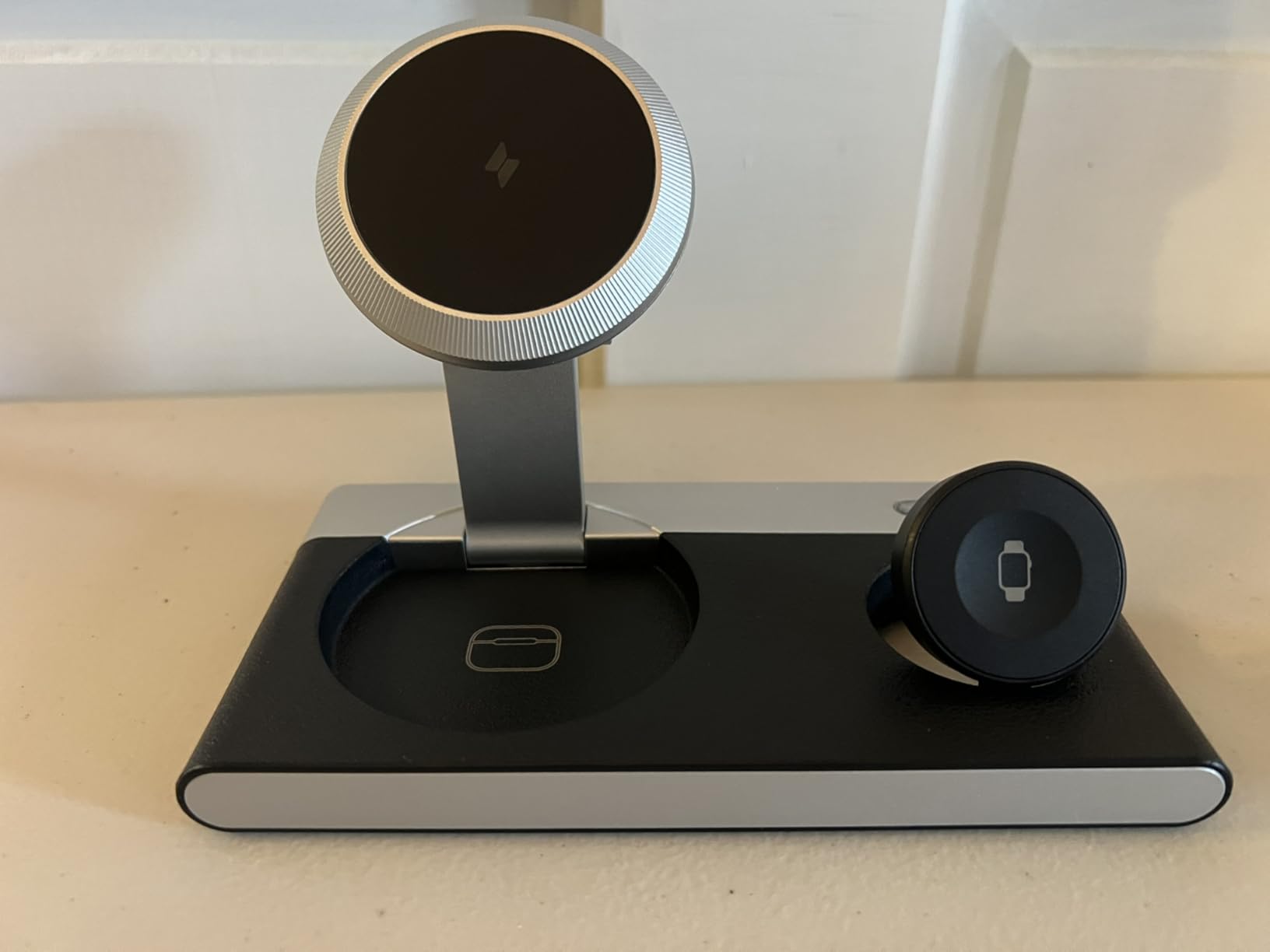
The nightstand has taken on a new function that would have seemed strange a decade ago. It’s no longer just a surface for books or glasses. It’s become the primary location where multiple Apple devices converge each night to regain power. iPhone, Apple Watch, and AirPods all require charging, and the habit of placing them in one designated spot has quietly become a universal bedtime ritual.
What’s driving this shift isn’t just convenience. It’s the realization that managing three or more charging cables on a nightstand creates visual clutter and physical awkwardness. Cables tangle. Connectors face the wrong direction. Devices slide off surfaces. The simple act of charging has become a minor source of friction that people are now trying to eliminate.
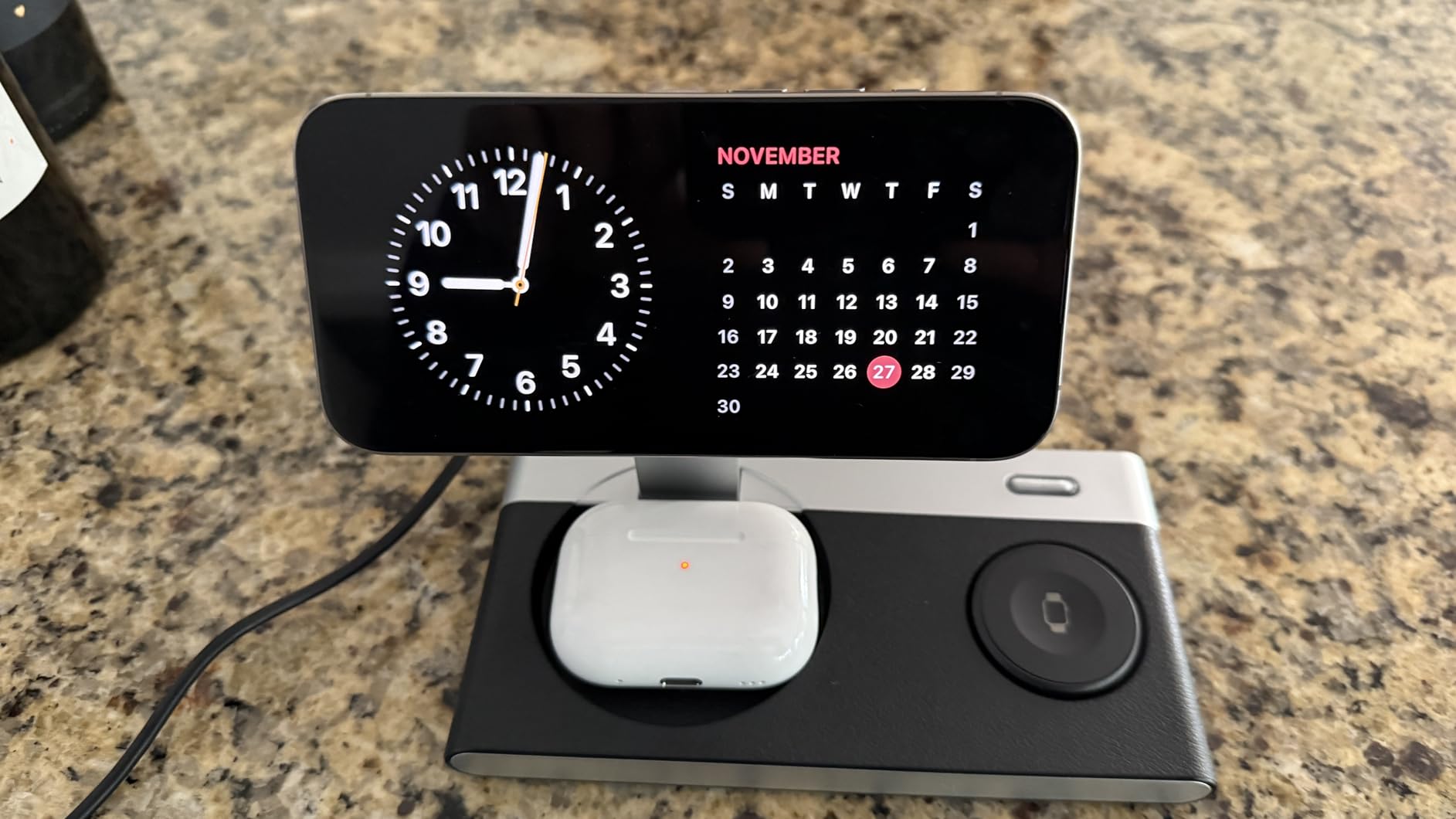
Consolidated charging stations address this by creating a single location where all devices belong. The ritual becomes simpler: place the iPhone on the magnetic surface, set the Apple Watch on its designated spot, drop the AirPods case nearby. The act of charging shifts from plugging in multiple cables to positioning objects in predetermined locations. The mental load decreases because the routine becomes physical and spatial rather than technical.
This reflects a broader pattern in how Apple ecosystem habits are formed. Devices are designed to work together, but the practical logistics of keeping them all powered still requires user-designed solutions. Apple doesn’t provide a unified charging system. Users create one themselves by adopting third-party infrastructure that consolidates what the ecosystem assumes should happen but doesn’t facilitate directly.
SIMILAR
Why iPhone users are carrying standalone noise machines instead of relying on sleep apps
Apple Watch charging became a bedside ritual, here's why the placement matters more than expected
iPhone users are quietly giving up the cable and most dont realize why it happened so gradually over time
There’s also a subtle shift in bedroom atmosphere. Many of these charging stations include ambient lighting, which transforms a functional object into something that shapes the room’s environment. The light is dim enough not to disrupt sleep but present enough to serve as a nightlight. Charging infrastructure has become embedded in the bedroom’s sensory landscape in ways that feel both practical and slightly intrusive.
What’s notable is the speed of adoption. A few years ago, nightstands held individual charging cables. Now, a growing number of iPhone users have replaced that setup with a single station that handles everything. The shift happened without much discussion or marketing. It simply became the obvious solution to a problem that had become too annoying to ignore.
The trade-off is less flexibility. Devices must be placed precisely for charging to work. Moving the station requires finding a new outlet near the bed. And if the station fails, all three devices lose their charging source simultaneously. But for most users, the consolidation feels worth it. The nightstand is tidier. The routine is simpler. The bedroom feels slightly more organized.
Previously listed near $50, current listings of these some multi-device wireless charging stations with integrated lighting now appear closer to $20(CODE XK9KOSFN).
"Note: Readers like you help support The Apple Tech. We may receive a affiliate commission when you purchase products mentioned on our website."