


The iPhone’s transition to wireless charging introduced a new variable: the charger became furniture. A flat pad or angled stand now occupies permanent desk space, which means the phone’s location during the day is no longer improvised. It has a spot.
That shift has quietly reshaped how people interact with their devices during long stretches at a desk. When the phone has a designated place—especially one that holds it upright—it becomes easier to glance at notifications without picking it up. The screen stays visible. Charging becomes ambient rather than intentional.
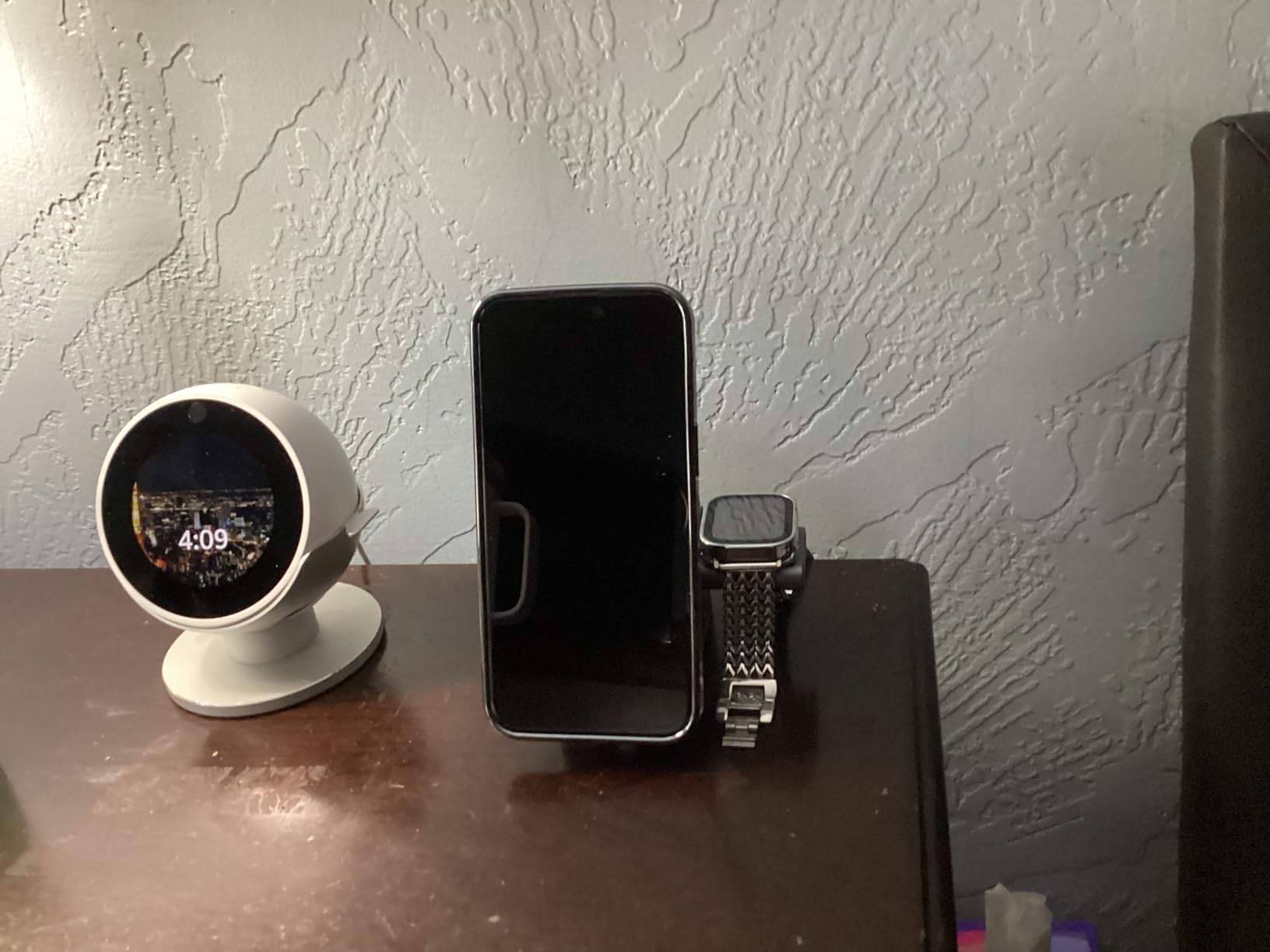
But the same setup that keeps the phone charged also keeps it present. For users trying to minimize distraction, that visibility creates a new kind of friction. The phone is always there, always lit, always within reach. What began as a convenience has started to feel like a tether.
The appeal of multi-device charging stations reflects this tension. A stand that charges an iPhone, Apple Watch, and AirPods in one place consolidates the ecosystem into a single footprint. It’s efficient, but it also means every device in that ecosystem is now clustered together, all demanding attention at once.
Foldable designs have emerged as a response to users who want the option to dismantle that presence. A charger that collapses into a small cube can be tucked into a drawer or bag, which means the phone’s charging location becomes temporary again. The desk is no longer committed to holding the device.
SIMILAR
Why iPhone users are carrying standalone noise machines instead of relying on sleep apps
Apple Watch charging became a bedside ritual, here's why the placement matters more than expected
iPhone users are quietly giving up the cable and most dont realize why it happened so gradually over time
This isn’t about portability for travel. It’s about reclaiming space and control over when the iPhone is visible. Some users are choosing to charge overnight in another room, or only during specific hours, rather than keeping the phone on a stand all day. The charging station becomes something you set up and then put away.
Apple’s ecosystem is designed to make devices feel indispensable, and charging infrastructure quietly reinforces that. A stand that holds an iPhone, Watch, and AirPods together suggests those devices should always be ready, always nearby. The friction comes when users realize they’ve built a setup that makes stepping away harder.
Previously listed around $60, Previously listed around $60, current versions of multi-device charging stands now appear closer to $40 in some listings. now appear closer to $40 in some listings.
"Note: Readers like you help support The Apple Tech. We may receive a affiliate commission when you purchase products mentioned on our website."






