
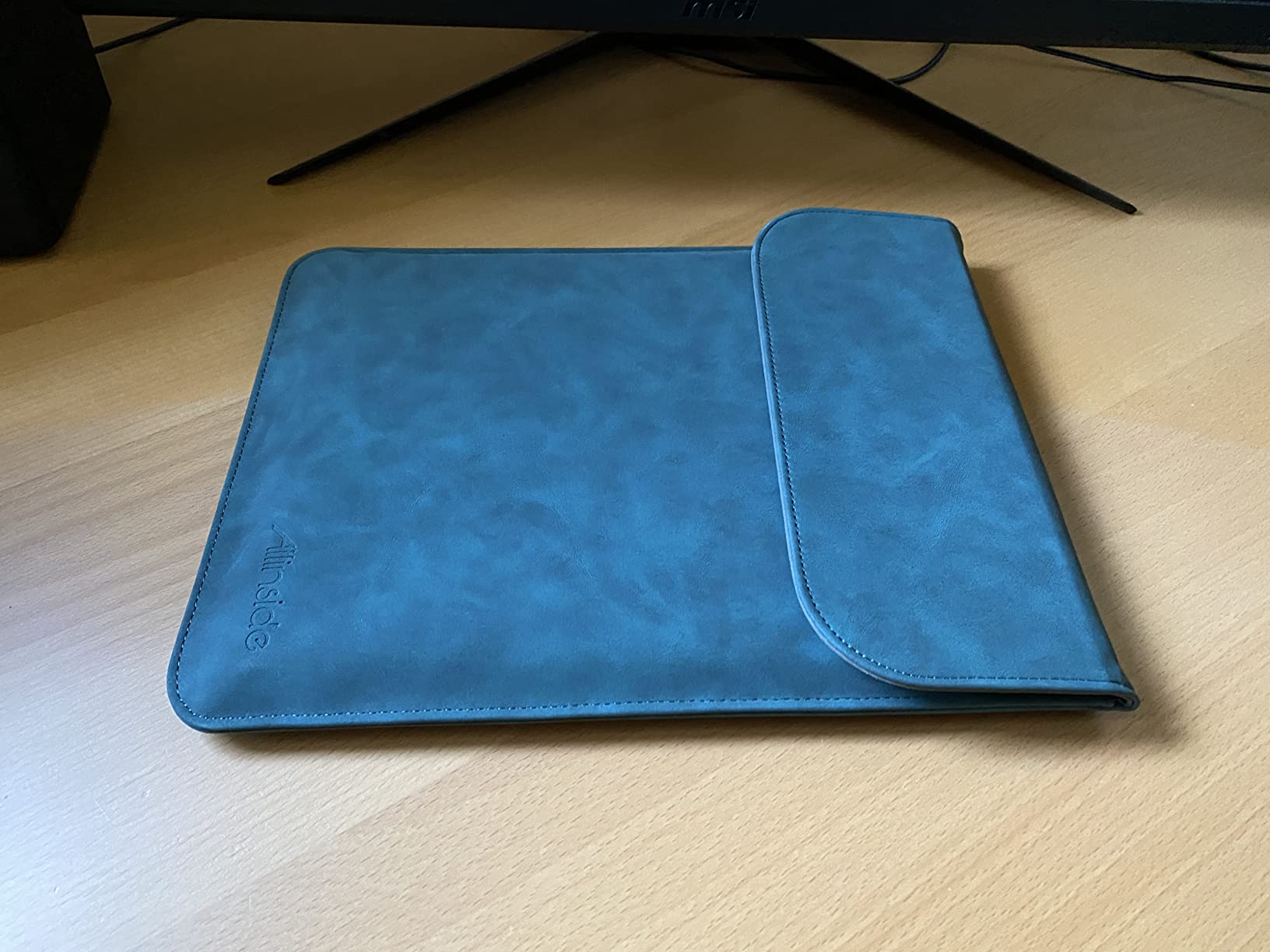
The MacBook sleeve has evolved past its original function. What began as a padded layer to prevent scratches during transport has expanded into a portable setup that anticipates the lack of a fixed desk. A sleeve that doubles as a stand changes the assumption about where work happens.
This design shift emerged from a quiet behavioral change: more MacBook users are working in spaces that weren’t designed for laptops. Coffee shops with low tables. Airport lounges with uneven surfaces. Kitchen counters that sit too high or too low. The sleeve that converts into an angled stand provides a workaround for environments that don’t accommodate long typing sessions.
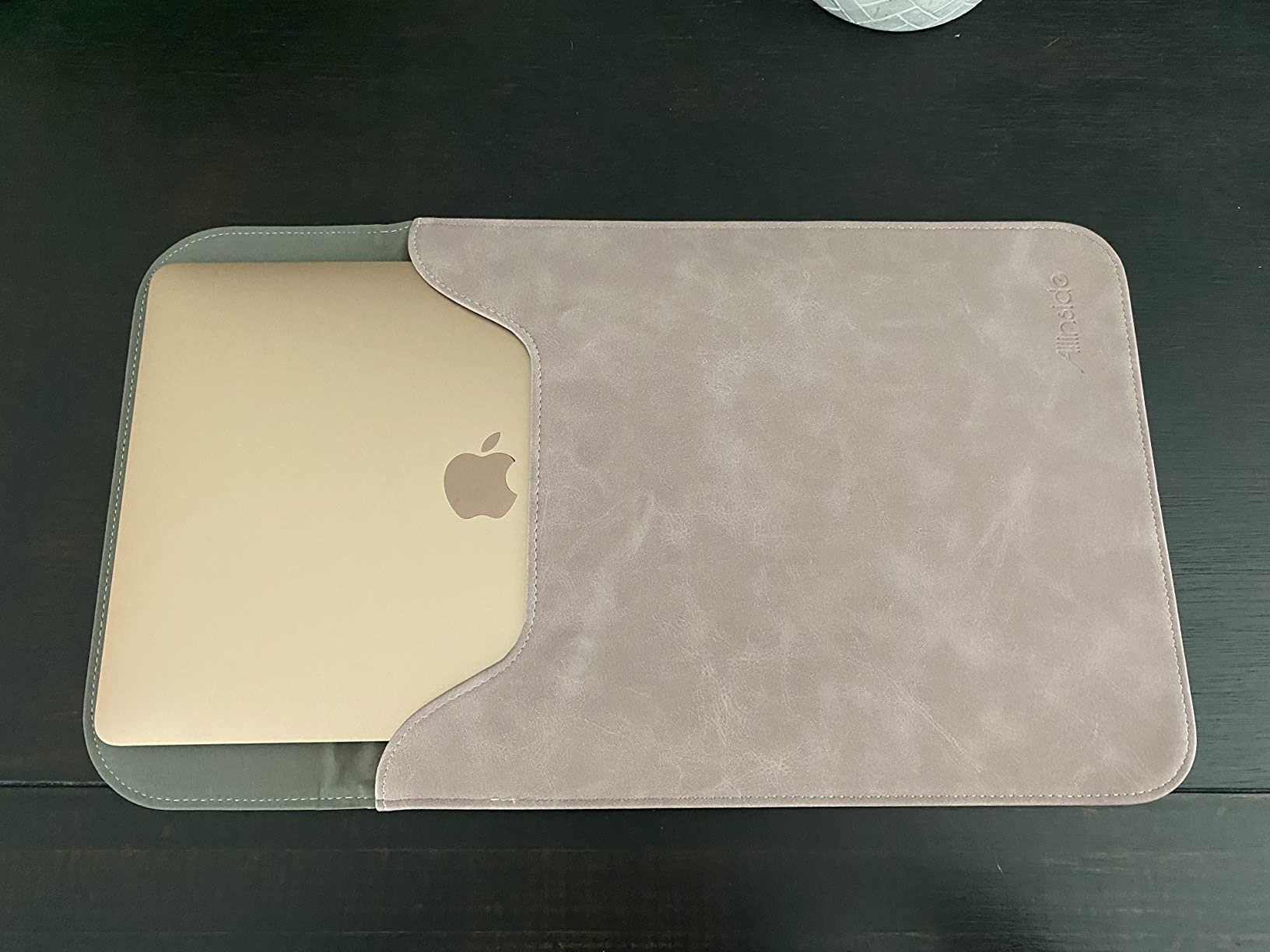
The inclusion of an accessory pouch reflects another adaptation. MacBook workflows increasingly depend on peripherals—chargers, USB-C hubs, adapters, dongles. Carrying those separately means more bags, more pockets, more things to forget. A sleeve with a built-in pouch consolidates the ecosystem into one object, which reduces the friction of moving between locations.
Waterproof or water-resistant materials signal a related concern: MacBooks are traveling through weather, not just rooms. A matte finish resists the wear that comes from being shoved into backpacks repeatedly. These features suggest users are treating the MacBook as a mobile-first device, not a desk-first one that occasionally leaves the house.
The stand function also changes posture. A MacBook flat on a table encourages hunching. An angled sleeve lifts the screen closer to eye level, which reduces strain during longer work sessions. That adjustment matters more when the work session happens somewhere without an external monitor or ergonomic setup.
SIMILAR
Why iPhone users are carrying standalone noise machines instead of relying on sleep apps
Apple Watch charging became a bedside ritual, here's why the placement matters more than expected
iPhone users are quietly giving up the cable and most dont realize why it happened so gradually over time
This shift has downstream effects on macOS behavior. When the MacBook becomes easier to use in transient spaces, users spend less time at a fixed desk, which means less reliance on external displays, keyboards, and mice. The laptop’s built-in tools—trackpad, keyboard, speakers—become the primary interface more often.
Apple’s design philosophy has always emphasized portability, but the ecosystem’s dependency on accessories created tension. The MacBook is thin and light, but the bag of cables and adapters is not. A sleeve that consolidates both the laptop and its peripherals into one portable unit resolves that tension, at least partially.
Previously listed around $26, current versions of these multi-function MacBook sleeves now appear closer to $22 in some listings.
"Note: Readers like you help support The Apple Tech. We may receive a affiliate commission when you purchase products mentioned on our website."