

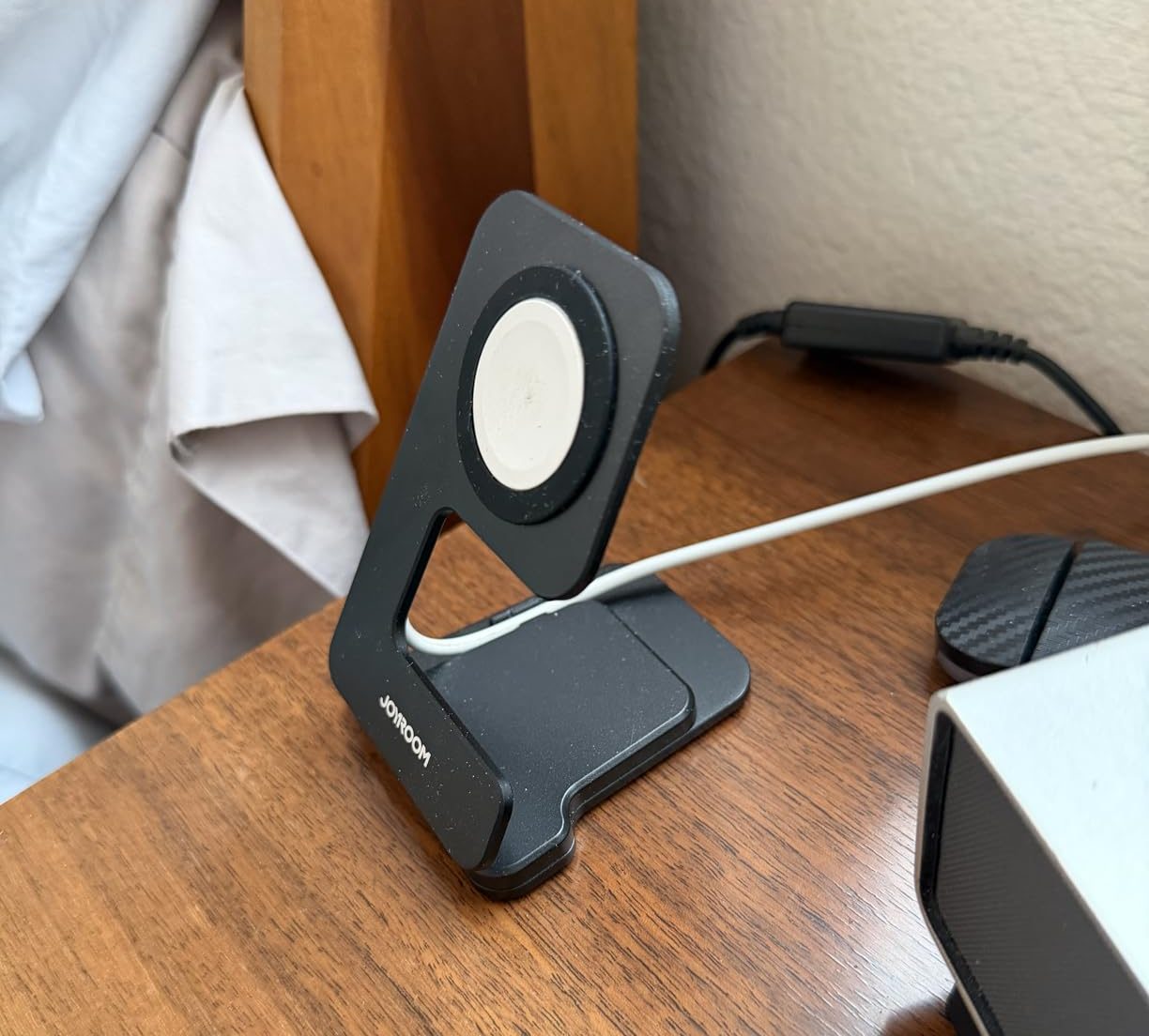
For years, the default Apple Watch charging ritual involved a flat puck on a nightstand, the watch lying face-up in Nightstand Mode, alarm glowing softly in the dark. That pattern made sense when the watch was primarily a fitness tracker that needed a full overnight charge to survive the next day.
But battery life has improved across recent Apple Watch models, and many users now find they don’t need to charge overnight at all. A quick top-up during a shower or while working at a desk is often enough. This has shifted the charging location from bedroom to workspace, and with it, the expectation of how the watch should sit while powering up.
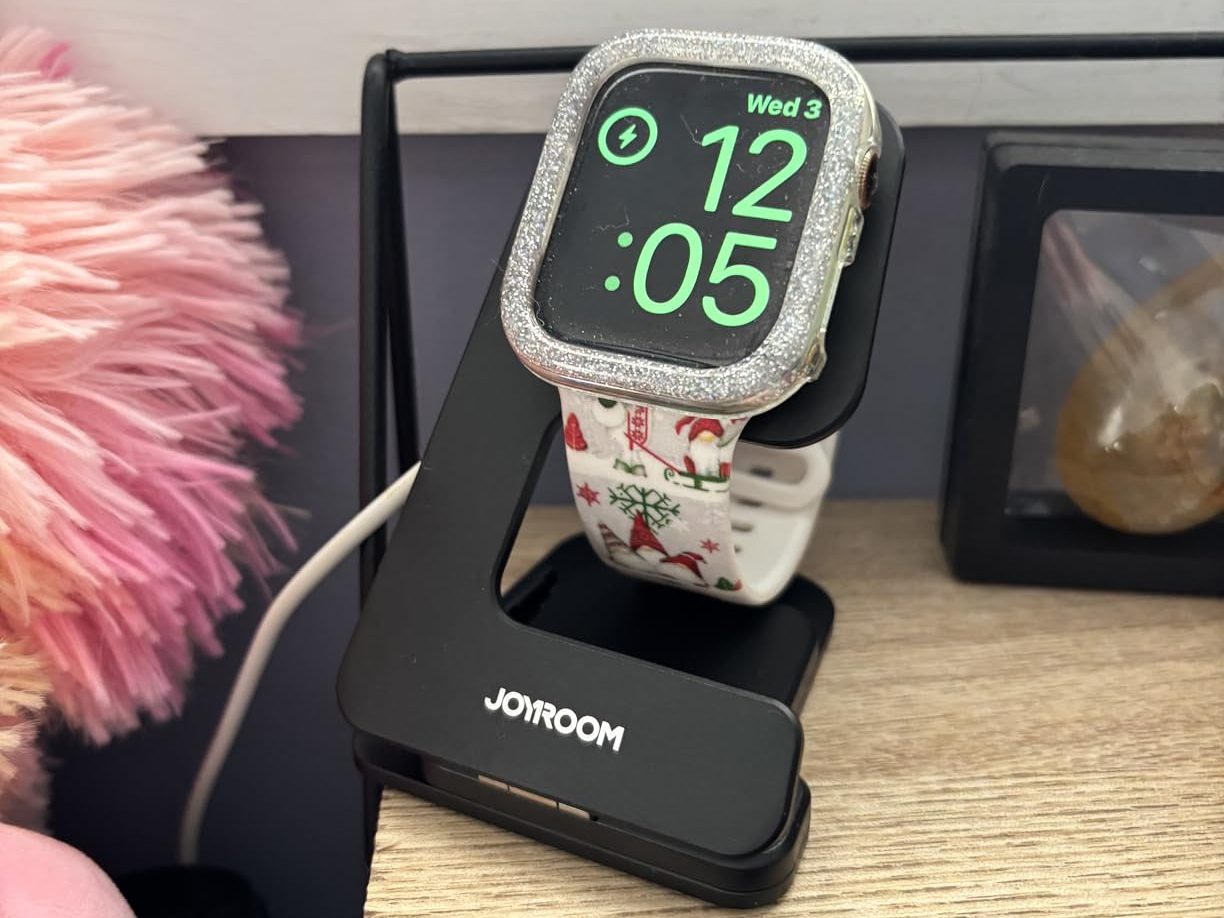
Nightstand mode was designed for horizontal surfaces, but desks operate on verticality. Papers, keyboards, and monitors compete for space. A flat charging puck feels intrusive. Magnetic stands that hold the watch upright—mimicking how it’s worn—have become more common, not because they charge faster, but because they take up less desk real estate and keep the watch visible without demanding attention.
The magnetic attachment itself has become a small point of behavioral tension. Apple’s fast-charging capability requires precise alignment, and some users report that even slight nudges—brushing a sleeve, shifting a notebook—can interrupt the charge cycle. Stands that grip the watch more firmly reduce this friction, but they also introduce a new habit: the watch must be deliberately placed, not simply dropped onto a surface.
SIMILAR
iPhone and MacBook users are compensating for a port problem Apple created
iPhone users are eliminating the tangled cable from every car charging session
iPhone users are transforming nightstands into silent charging infrastructure
This shift also reflects a broader change in how people use the Apple Watch throughout the day. If the watch is charging at a desk during work hours, it’s not tracking movement, monitoring heart rate, or logging stand reminders. The device that was designed to encourage constant wear is now being set aside during periods of sedentary focus, creating a subtle gap in the data it was meant to capture continuously.
The migration from nightstand to desk also changes the watch’s role in daily routines. It’s no longer the last thing touched before sleep and the first thing grabbed in the morning. Instead, it’s tethered to the rhythm of work sessions, recharged in fragments, and worn less as an all-day companion and more as a device that comes and goes based on when a charge is convenient.
Desk-mounted magnetic charging stands, some designed to match Apple’s aesthetic language, are now widely available, often priced under $15. Their growing presence suggests that Apple Watch charging is no longer a bedtime ritual but a daytime interruption—one that users are quietly accommodating by changing where and how they power the device.
"Note: Readers like you help support The Apple Tech. We may receive a affiliate commission when you purchase products mentioned on our website."






