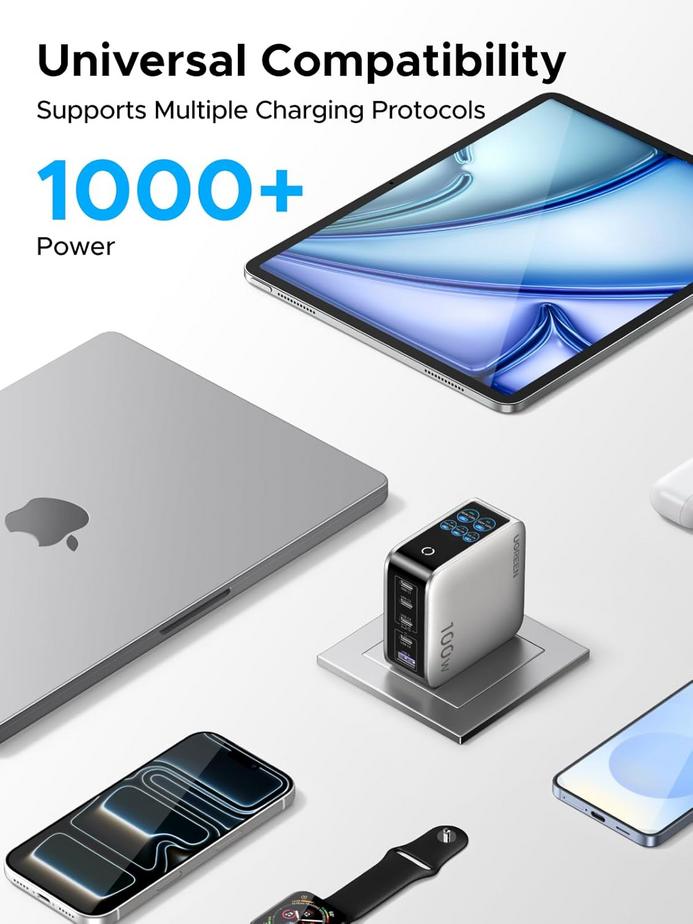


The friction of travel charging doesn’t announce itself immediately. It surfaces when you arrive at a hotel room and discover that the available outlets are behind furniture, already occupied by a lamp, or positioned so low that cables dangle awkwardly across the floor. The problem compounds when three separate Apple devices need charging and only one outlet is conveniently accessible.
This spatial constraint has led to a behavioral shift away from flat charging pads toward vertical stands that hold iPhone, Apple Watch, and AirPods in a compact footprint. The appeal isn’t aesthetic—it’s geometric. A stand that keeps all three devices upright and aligned takes up less horizontal surface area than three separate cables sprawled across a nightstand. In cramped hotel rooms or crowded airport seating areas, that difference matters.
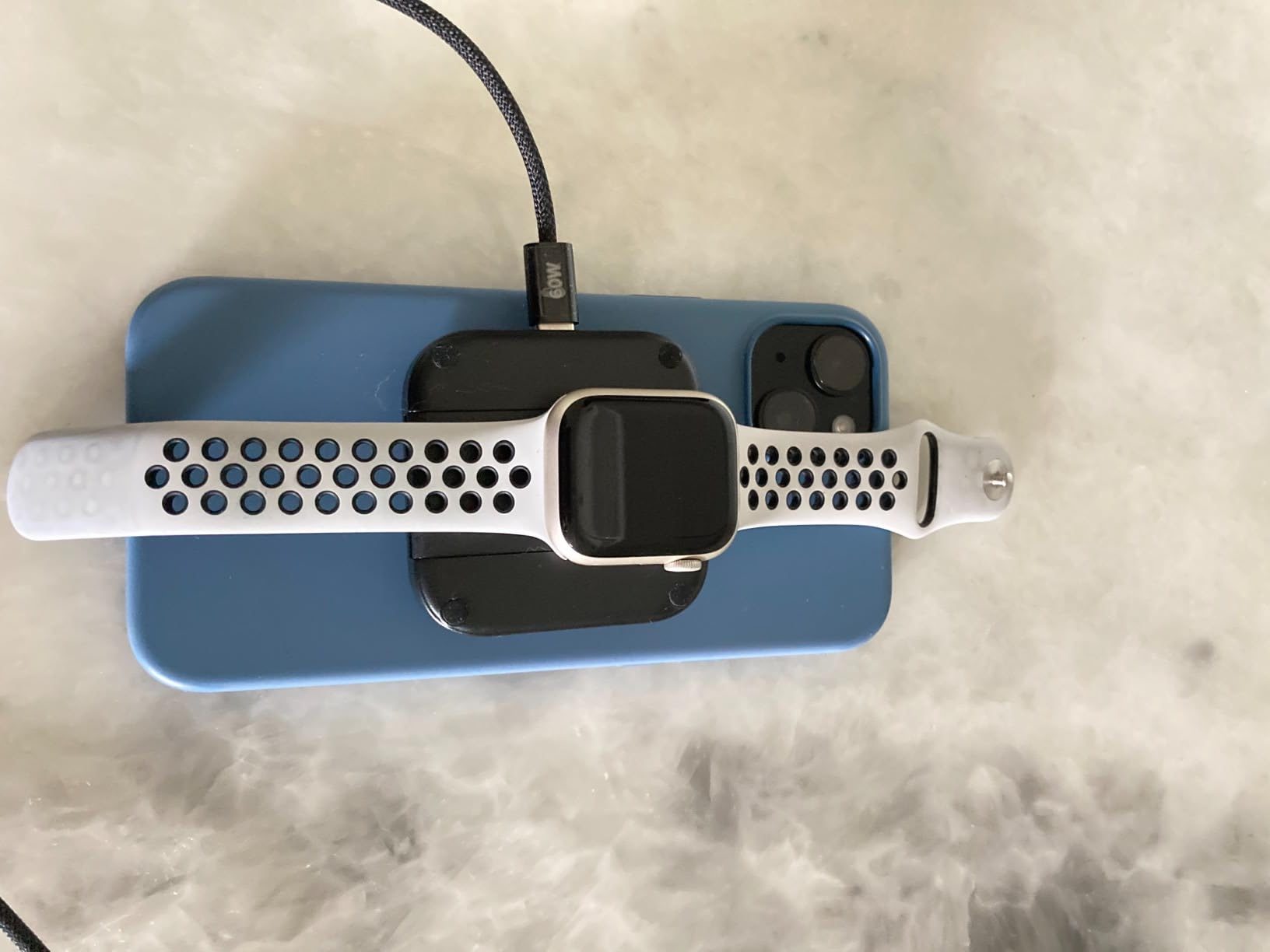
What’s revealing is how quickly this becomes a priority once someone experiences the alternative. Travelers who’ve used consolidated charging stands rarely go back to carrying multiple cables, not because the stands charge faster or more reliably, but because they eliminate the small frustrations of managing cords in unfamiliar spaces. The behavior change isn’t driven by technology—it’s driven by the repetitive annoyance of tangled cables and insufficient surface area.
MagSafe has accelerated this shift by making alignment automatic. Earlier wireless charging required precise placement, and a phone nudged slightly off-center overnight would wake up uncharged. MagSafe’s magnetic connection removes that uncertainty, which makes vertical stands more practical. The phone snaps into place and stays there, even when the stand is perched on an uneven surface or bumped during the night.
Airplane travel has also influenced how these stands are designed. Tray tables are small, and the person in front can recline without warning. A charging stand that doubles as a viewing angle for watching content means the phone stays charged and visible simultaneously, which matters during long flights where entertainment and battery management happen in parallel. The stand isn’t just for charging—it’s for creating a stable viewing position in an inherently unstable environment.
SIMILAR
iPhone and MacBook users are compensating for a port problem Apple created
iPhone users are eliminating the tangled cable from every car charging session
iPhone users are transforming nightstands into silent charging infrastructure
The expectation that travel charging would simplify over time has instead become an exercise in spatial efficiency. Apple designed each device with its own charging method, but users have collectively decided that managing those methods in transit requires consolidation. The stand becomes a portable charging hub that adapts to whatever outlet configuration the destination provides, whether it’s a hotel room, airport gate, or friend’s guest bedroom.
What this reflects is a broader recalibration of what travel-friendly means within the Apple ecosystem. It’s not about smaller devices or longer battery life—it’s about reducing the number of separate items that need to be unpacked, plugged in, and repacked each time a location changes. The fewer individual pieces, the less cognitive load, and for frequent travelers, that reduction in mental overhead is more valuable than any single feature improvement.
Compact magnetic charging stands supporting iPhone, Apple Watch, and AirPods with foldable designs and adjustable viewing angles are currently available around $13, reflecting a market where multi-device travel charging has shifted from optional convenience to expected standard for anyone moving regularly between locations with limited outlet access.
"Note: Readers like you help support The Apple Tech. We may receive a affiliate commission when you purchase products mentioned on our website."