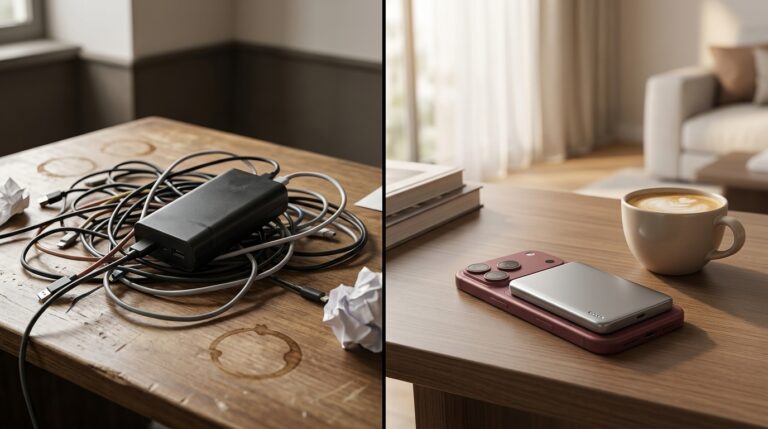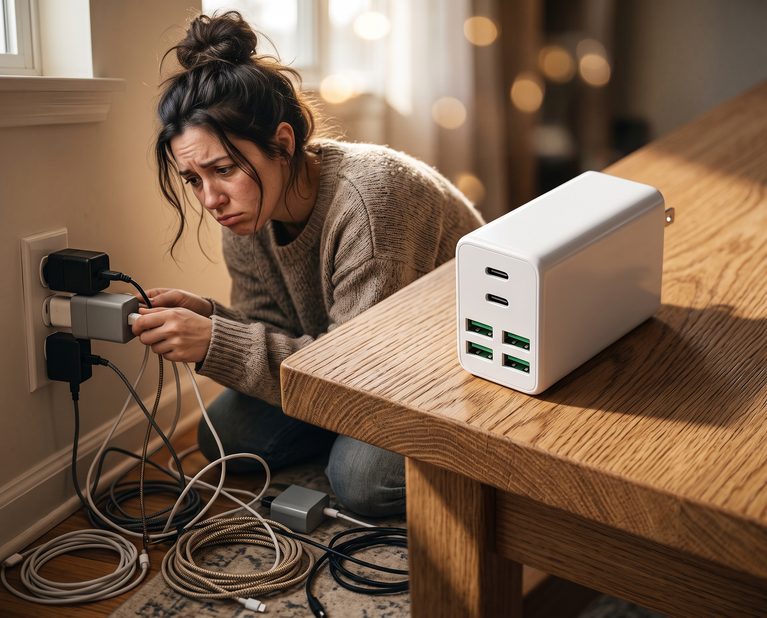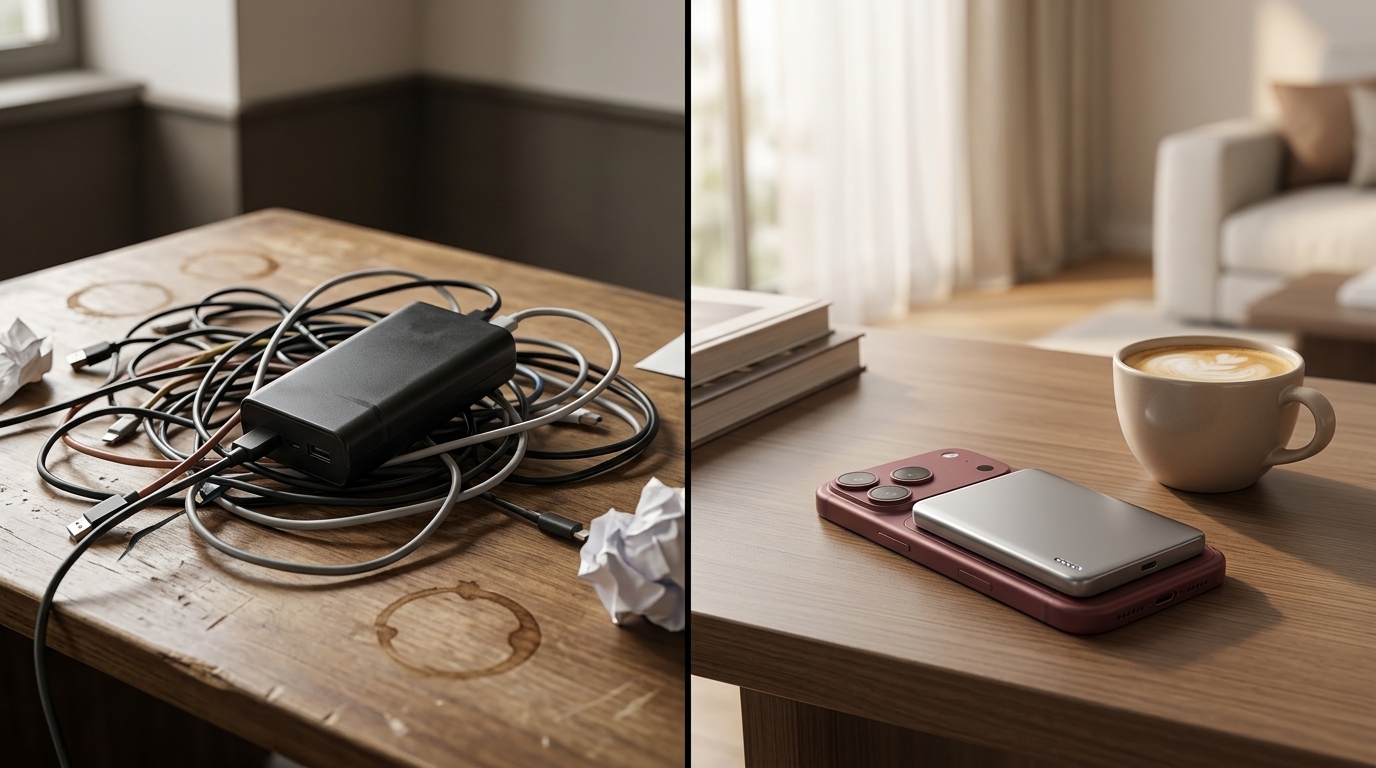


The original approach to charging multiple Apple devices while traveling was to bring each device’s included charger and hope the hotel room or airport gate had enough outlets. This worked, but it was inefficient and often frustrating. Wall space near beds and desks is limited, and outlets are frequently blocked by furniture or already occupied. The friction wasn’t just about finding power—it was about competing for it.
This has driven a shift toward high-wattage wall chargers with multiple USB-C ports that can power MacBook, iPad, and iPhone simultaneously from a single outlet. The appeal is logistical: one charger, one plug, less to carry. But the behavior that’s emerged reveals a more complex negotiation around how power gets allocated when multiple devices are connected at once.
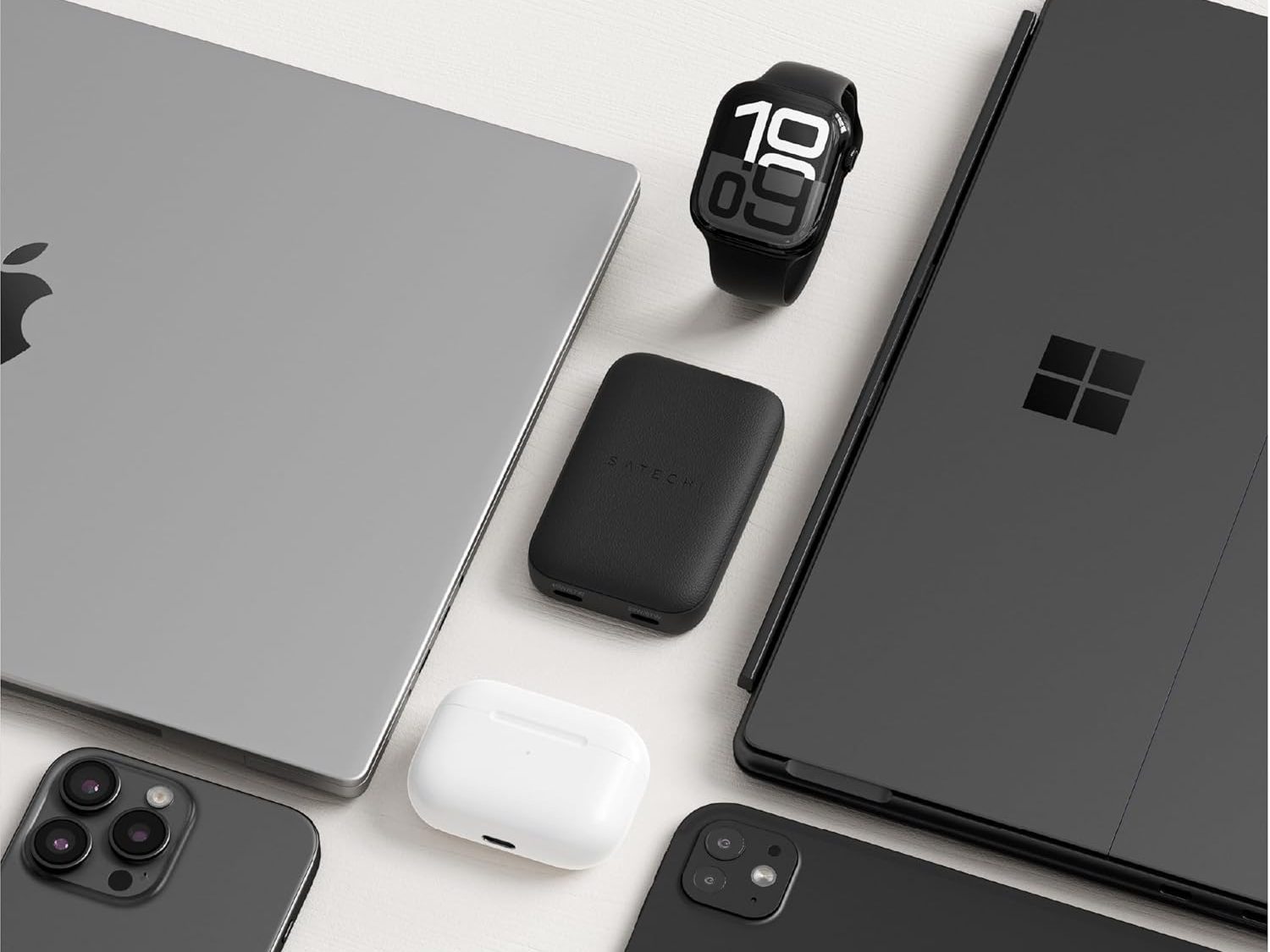
MacBook draws significantly more power than iPhone or iPad, particularly during intensive tasks like video rendering or extended work sessions. When all three devices are plugged into a multi-port charger, the total wattage gets distributed based on what’s connected and when. If MacBook is charging first and iPhone gets plugged in second, the charger reallocates power dynamically, often reducing the wattage delivered to MacBook to accommodate the new device. This works, but it’s not always intuitive, and users don’t always realize why their laptop is charging more slowly than expected.
The expectation that a single wall charger would handle everything has been replaced by the realization that power distribution matters more than raw wattage. A 67-watt charger sounds sufficient for MacBook Air, and it is—until iPad and iPhone are added to the equation. Then the power splits, and MacBook might receive only 45 watts while the other devices draw the remainder. For light tasks, this is fine. For processor-intensive work, it becomes noticeable.
This has led to a behavioral adjustment where users prioritize which devices charge when. MacBook charges first, alone, until it reaches a comfortable level. Then iPhone and iPad get plugged in. Or everything charges overnight when time isn’t a constraint, and the slower pace doesn’t matter. The single-charger setup reduces cable bulk, but it introduces a new kind of friction around sequencing and power management that wasn’t present when each device had its own dedicated charger.
GaN technology has made these multi-port chargers smaller and lighter, which has reduced the travel burden. The physical footprint is now comparable to Apple’s standard MacBook charger, but with two or three USB-C ports instead of one. The trade-off is that the user has to think more deliberately about what’s plugged in and when, rather than simply connecting everything and assuming it will charge at full speed.
SIMILAR
iPhone and MacBook users are compensating for a port problem Apple created
iPhone users are eliminating the tangled cable from every car charging session
iPhone users are transforming nightstands into silent charging infrastructure
What’s also changed is the role of the charging cable itself. USB-C cables vary in their power delivery capability, and not all cables that came with older Apple devices can handle the wattage required for fast charging. Users who consolidate to a single multi-port charger often discover that their existing cables don’t support the speeds they expected, which leads to purchasing higher-rated cables separately—an additional cost and consideration that wasn’t part of the original consolidation plan.
What this reflects is a shift in how MacBook users approach power management when traveling with multiple devices. The goal is simplification—one charger, one outlet—but achieving that simplification requires understanding how power distribution works across ports and accepting that simultaneous fast charging for all devices isn’t always possible. The single charger solves the outlet problem, but it doesn’t eliminate the need to think about charging strategy.
High-wattage GaN wall chargers with dual USB-C ports, supporting 67 watts total output with dynamic power allocation, are currently available around $60, reflecting a market where MacBook users are consolidating travel charging setups while navigating the trade-offs of shared power delivery across multiple devices.
"Note: Readers like you help support The Apple Tech. We may receive a affiliate commission when you purchase products mentioned on our website."