

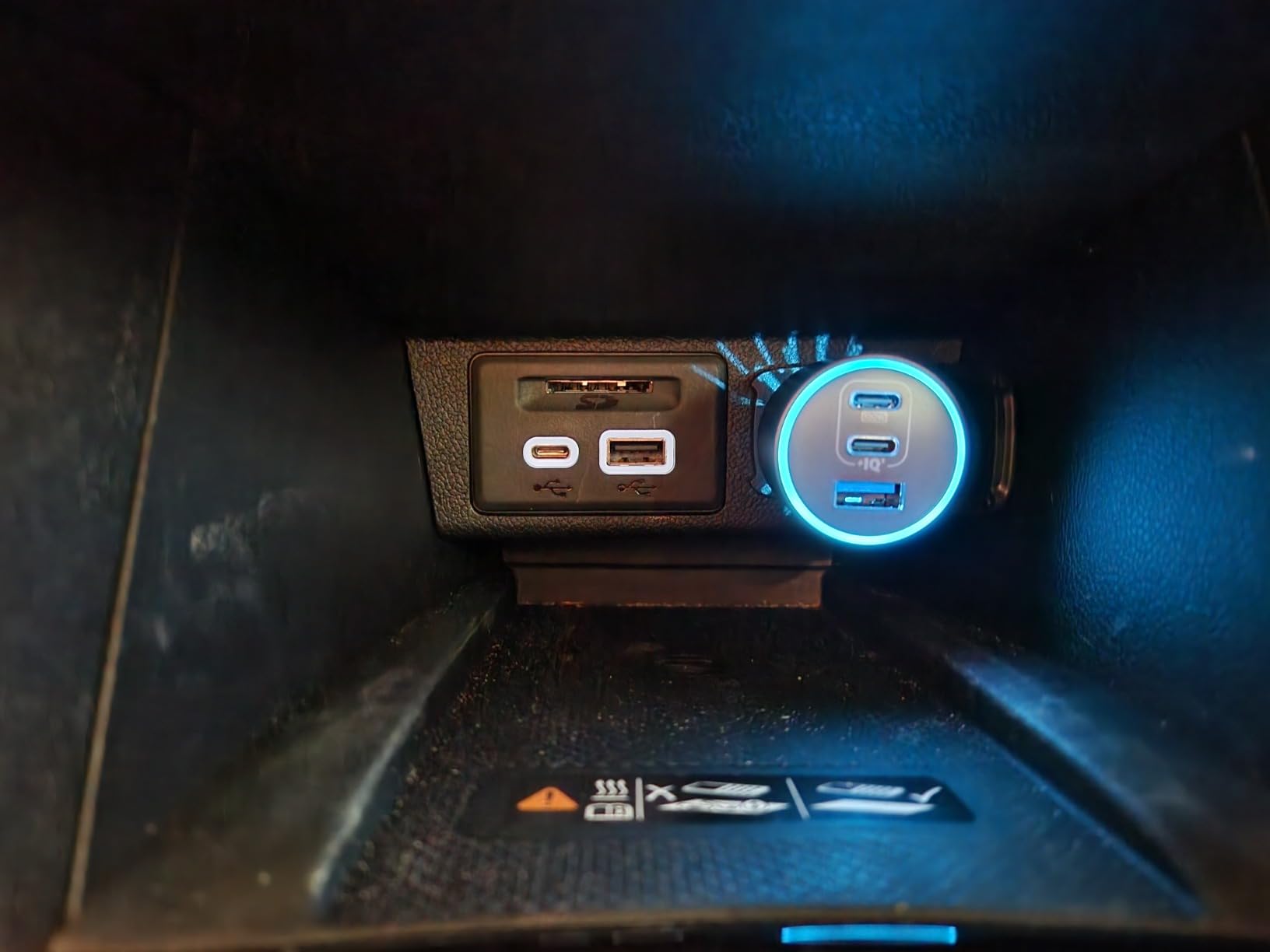
Apple’s ecosystem thrives on the assumption that charging will always be available. At home, MagSafe pucks wait on nightstands. At work, USB-C cables snake across desks. But on the road—especially on multi-hour drives where navigation, entertainment, and communication all run simultaneously—the infrastructure collapses under demand.
The modern road trip requires at least three devices to be powered at all times. The driver’s iPhone, running Maps or Waze with the screen on, location services active, and the battery draining at a rate no wireless charger can match. A passenger’s device, streaming music or managing a shared playlist. And increasingly, a laptop or iPad, tethered for work or entertainment in a moving vehicle that doubles as a mobile office.
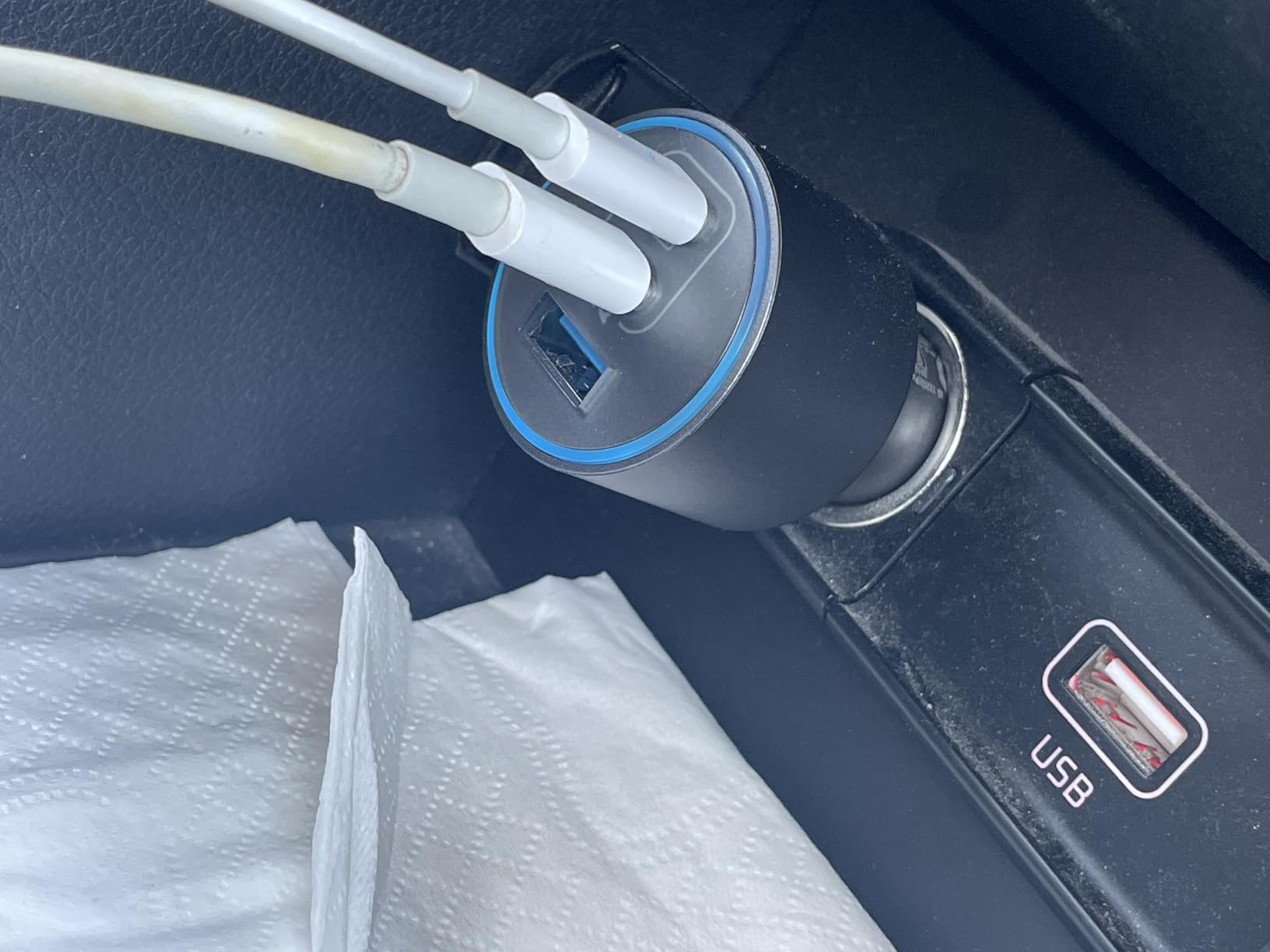
The problem is that most cars offer one or two USB ports, maybe a 12-volt outlet. Apple’s transition to USB-C helped, but only marginally—devices still outnumber ports, and not all ports deliver the wattage a MacBook demands while simultaneously fast-charging an iPhone.
The solution is a high-wattage, multi-port hub that treats the car’s electrical system as a power grid, distributing 167 watts across three devices simultaneously. It’s overkill for a grocery run. It’s baseline for a family road trip where everyone’s device is essential, not expendable.
SIMILAR
iPhone and MacBook users are compensating for a port problem Apple created
iPhone users are eliminating the tangled cable from every car charging session
iPhone users are transforming nightstands into silent charging infrastructure
What’s notable is how this setup bypasses CarPlay entirely. CarPlay assumes the phone is wired into the car’s USB port, but that port is now occupied by the hub. The phone connects wirelessly—if the car supports it—or sits in a mount, charging via the hub, while navigation runs on the car’s built-in screen. The ecosystem splinters, each device charging independently, with no unified control.
The front seat becomes a power negotiation zone, where the driver’s navigation needs, the passenger’s playlist control, and a laptop’s battery percentage all compete for the same three ports. Priority shifts based on urgency, not device prestige.
Previously listed at $53.99, current listings hover around $33.99. That pricing reflects the hub’s role as infrastructure for users who’ve learned that Apple’s ecosystem doesn’t plan for the chaos of simultaneous, sustained, high-wattage demand in a moving vehicle.
The irony is that Apple builds the most power-efficient devices in the industry, yet the cumulative load of running three of them at once still overwhelms most in-car power systems. The gap remains, and road-trippers fill it with hardware Apple never designed.
"Note: Readers like you help support The Apple Tech. We may receive a affiliate commission when you purchase products mentioned on our website."






