Car ownership used to be stable. You bought a car, you kept it for years, and any accessories you installed—phone mounts, air fresheners, seat covers—became permanent fixtures. The mount went on the dashboard, stayed there, and you never thought about it again. But car usage has fragmented. People Uber to work. They rent cars for weekend trips. They borrow a partner’s vehicle when theirs is in the shop. The car you’re navigating with today isn’t the car you’ll navigate with tomorrow, and permanent mounts don’t work in temporary contexts.
The vacuum suction mount emerged as the solution. It attaches with enough force to survive potholes and hard braking—the “heavy duty” spec isn’t marketing, it’s necessity—but it removes cleanly, leaving no adhesive residue, no suction cup ring, no evidence it was ever installed. For users rotating between personal cars, rentals, and borrowed vehicles, that clean removal is as important as the secure attachment.
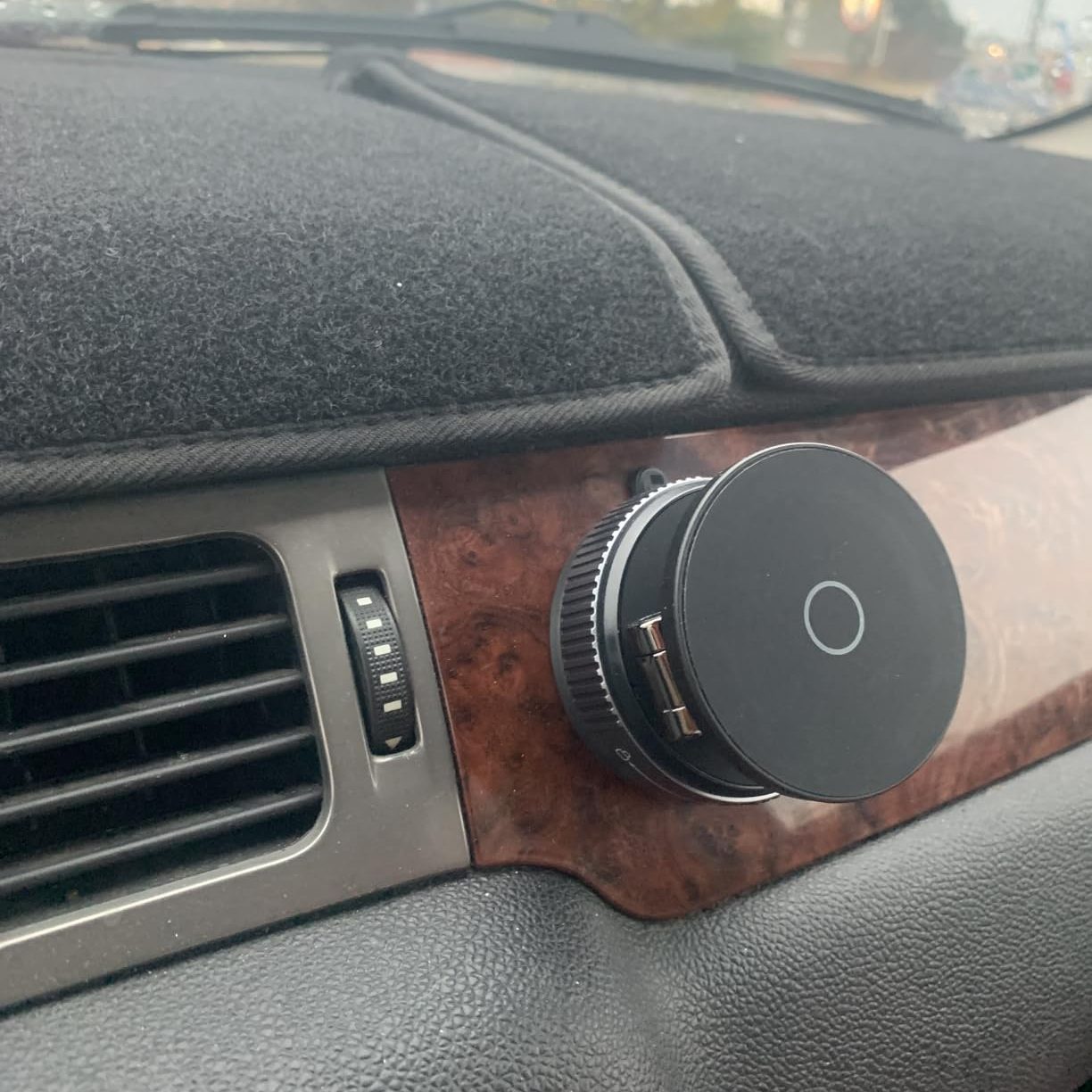
This behavior shows up most clearly in rental car contexts. You pick up the car, spend two minutes installing the mount, drive for a weekend or a week, then remove it before returning the vehicle. The mount has to work immediately—no 24-hour adhesive cure time, no complicated installation—and it has to come off without requiring tools or leaving marks that could trigger cleaning fees or damage claims.
What’s interesting is how this changes the relationship between phone and car. The mount isn’t part of the car’s infrastructure anymore—it’s part of the phone’s infrastructure. It travels with the phone, stored in a bag or glove compartment, deployed as needed, removed when the trip ends. The phone remains the constant. The car becomes the variable.
SIMILAR
iPhone and MacBook users are compensating for a port problem Apple created
iPhone users are eliminating the tangled cable from every car charging session
iPhone users are transforming nightstands into silent charging infrastructure
MagSafe compatibility layers another requirement on top. The mount has to hold the phone magnetically, which means it needs strong enough magnets to counteract road vibration and sudden stops, but not so strong that removing the phone requires two hands and a deliberate pull. The 360-degree adjustability becomes critical when you’re installing the mount in unfamiliar vehicles—you need to adapt to whatever dashboard angle or windshield curve the rental company gave you, and you need to do it quickly, before you start driving.
The vacuum suction mechanism itself is telling. It’s more secure than adhesive for rough roads, but it’s also more forgiving of imperfect surfaces. Dashboard textures vary wildly across car models—some smooth, some textured, some curved in ways that defeat traditional mounts. Vacuum suction adapts to more surface types, which matters when you’re installing the mount in a different car every few weeks.
What’s lost in this setup is the seamless integration Apple envisions with CarPlay. The assumption behind CarPlay is that your phone connects wirelessly, disappears from view, and navigation happens on the car’s built-in screen. But that assumes the car supports wireless CarPlay, which many rentals and older personal vehicles don’t. The mount becomes necessary because the phone itself remains the primary navigation interface, and that interface needs to be visible, stable, and positioned where glancing at it doesn’t require looking away from the road.
The “2026 Heavy Duty Model” branding is curious—it’s forward-dating a product to suggest it’s cutting-edge, when really it’s solving a problem that’s existed since rideshare became mainstream half a decade ago. But the branding reflects user anxiety: will this mount actually hold in a car I’ve never driven before? The “heavy duty” label is reassurance, a promise that the vacuum suction won’t fail mid-trip and send the phone sliding off the dashboard into the footwell.
Previously listed at $36.99, current listings hover around $20.69. That pricing reflects the mount’s role as essential travel infrastructure for users who no longer assume they’ll be driving the same car tomorrow that they drove today.
The mount becomes temporary infrastructure you install and uninstall multiple times a week, adapted to a world where the car you’re driving today isn’t the car you’ll drive tomorrow. It’s a rejection of the permanent dashboard accessory model, replaced by portable phone infrastructure that follows the user across vehicles, leaving no trace behind. For iPhone owners navigating rental cars, borrowed vehicles, and rideshare contexts where they occasionally need to mount their own phone for navigation, the removable mount isn’t a convenience—it’s the only option that works across the fragmented landscape of modern car usage.
"Note: Readers like you help support The Apple Tech. We may receive a affiliate commission when you purchase products mentioned on our website."