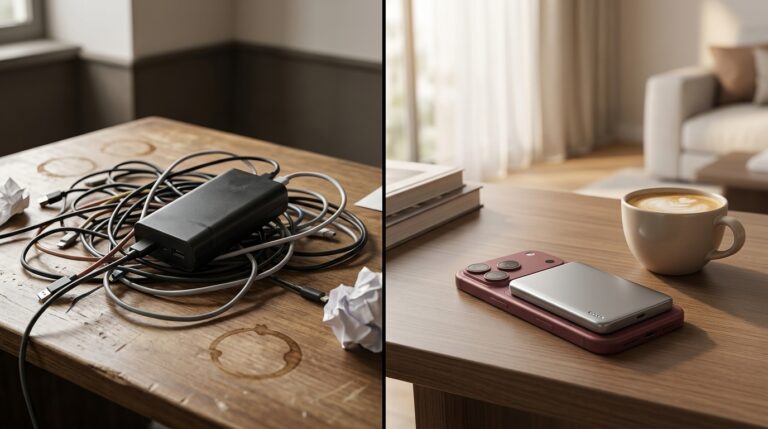
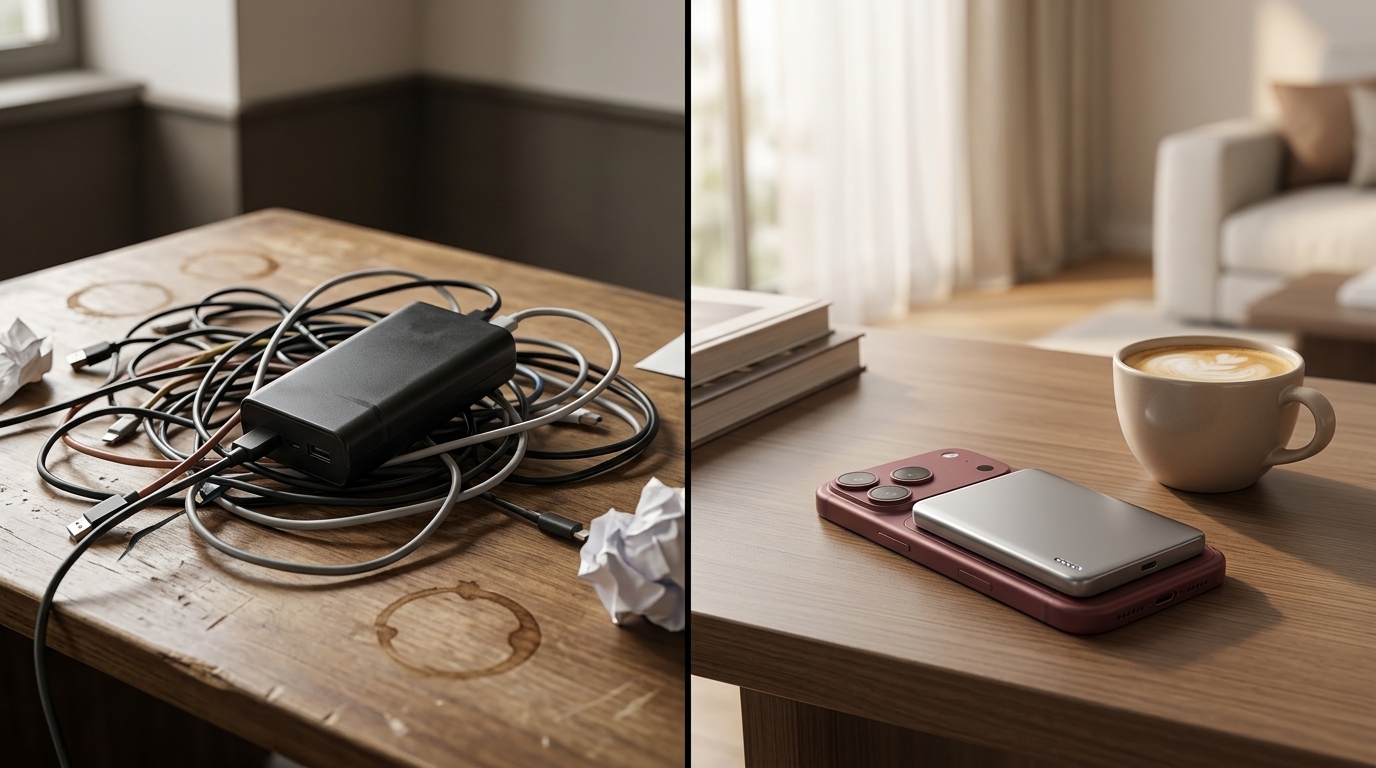
MagSafe introduced magnetic alignment as the solution to wireless charging’s core friction: the phone had to land on the pad just right, or it wouldn’t charge. Miss by half an inch, and you’d wake up to 12% battery and a ruined morning. MagSafe eliminated that guesswork—the magnets snap the phone into perfect position every time. Yet a sizable portion of iPhone users never made the switch, sticking instead with the flat, non-magnetic pads MagSafe was meant to replace.
The reason isn’t technical. It’s behavioral. The flat pad doesn’t require alignment precision, which means it doesn’t require conscious thought. You set the phone down in the general vicinity of the pad, and as long as it makes contact somewhere near the center, it charges. There’s no snap, no confirmation, no moment where you have to ensure the magnets engaged properly. The pad becomes a landing zone where precision doesn’t matter, where you can drop the phone in the dark without worrying whether it aligned correctly or whether you’ll wake up to a dead battery.
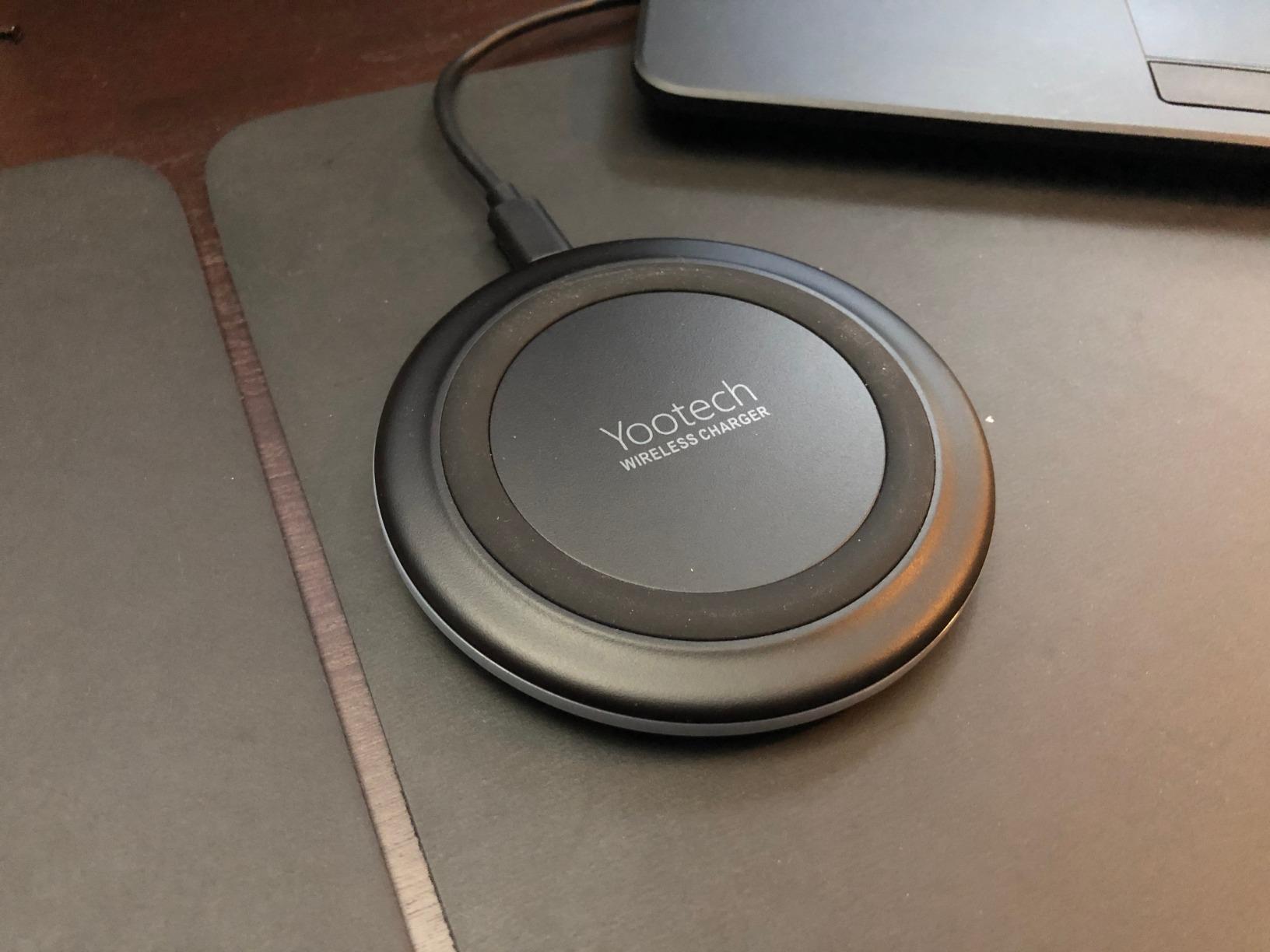
This matters most at night. The bedside table is where wireless charging sees its heaviest use, and it’s also where people are least attentive. You’re half-asleep, reaching for the nightstand, setting the phone down without looking. MagSafe’s magnetic snap is satisfying when you’re awake and paying attention, but it requires that you’re awake and paying attention. The flat pad works even when you’re not.
What’s notable is how this preference persists even among users who own MagSafe-compatible iPhones. They have the hardware. They know MagSafe exists. But they continue buying flat pads because the user experience—imprecise, forgiving, requiring no fine motor control—better matches how they actually interact with charging at the end of a long day.
SIMILAR
iPhone and MacBook users are compensating for a port problem Apple created
iPhone users are eliminating the tangled cable from every car charging session
iPhone users are transforming nightstands into silent charging infrastructure
The lack of an included AC adapter is telling. These pads are so commoditized that manufacturers assume users already have a USB power brick from a previous phone, tablet, or accessory. It’s infrastructure that layers onto existing infrastructure, not a complete standalone solution. For users deep in the Apple ecosystem, that assumption holds—everyone has spare power bricks scattered across their home, leftovers from devices that came and went.
The 10-watt charging speed is slower than MagSafe’s 15 watts, but for overnight charging, speed is irrelevant. The phone has eight hours to reach 100%. Whether that happens in two hours or four doesn’t matter. What matters is that it happens reliably, without the user needing to confirm alignment before falling asleep. The flat pad delivers that reliability through tolerance, not precision.
This behavior exposes a broader tension in Apple’s ecosystem: the company optimizes for the ideal user experience, but users optimize for the lowest-friction experience. MagSafe is ideal—perfectly aligned, elegantly magnetic, visually satisfying. The flat pad is low-friction—it works when you’re tired, distracted, or fumbling in the dark. For bedside charging, low-friction wins.
The pad also survives case changes better than MagSafe. Swap to a non-MagSafe case, and your magnetic chargers stop working. The flat pad doesn’t care. It charges through any case under 5mm thick, no magnets required. For users who switch cases seasonally or experiment with different styles, that case-agnostic compatibility is worth more than magnetic precision.
Previously listed at $19.99, current listings hover around $9.99. That pricing reflects the pad’s status as commodity infrastructure—so cheap it’s almost disposable, bought in multiples for different rooms, replaced without ceremony when one stops working.
The pad becomes a landing zone where precision doesn’t matter, where you can drop the phone in the dark without worrying whether it aligned correctly or whether you’ll wake up to a dead battery. It’s the opposite of MagSafe’s engineered elegance, yet for millions of iPhone users navigating the half-conscious ritual of bedtime charging, it remains the better solution—not because it’s more advanced, but because it demands less attention in a moment when attention is the scarcest resource.
"Note: Readers like you help support The Apple Tech. We may receive a affiliate commission when you purchase products mentioned on our website."