

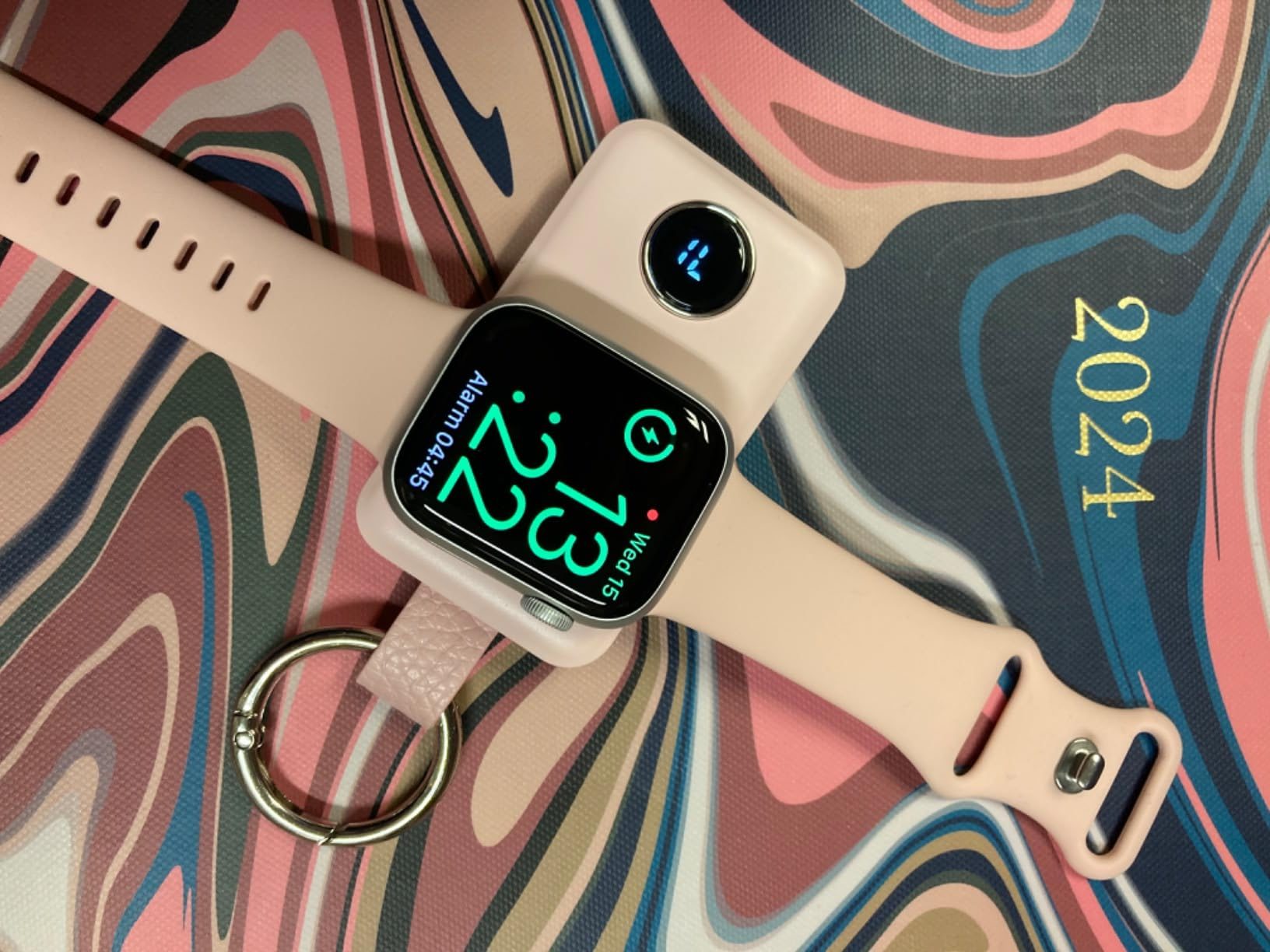
Battery life remains one of the few Apple Watch specifications that hasn’t improved proportionally to everything else. The screen got brighter, the sensors multiplied, the processor gained efficiency—but the daily charging ritual stayed constant. For most users, that rhythm works. For others, it became a design constraint worth solving independently.
Portable Apple Watch chargers have existed for years, but the form factor has shifted. What used to be travel accessories—small pucks tucked into laptop bags for business trips—are now keychain-sized objects that live in everyday pockets and purses. The miniaturization reflects a change in how people conceptualize the watch’s limitations. It’s no longer about extending battery life during exceptional circumstances. It’s about having an escape hatch for ordinary days that run long.
This behavior clusters around specific routines. People who work shifting schedules, who exercise twice daily, or who use sleep tracking alongside intensive fitness monitoring find themselves in a narrow window where the watch might die before bedtime. The portable charger becomes a hedge against that scenario, even if it only gets deployed once a week. The reassurance of having it matters more than the frequency of use.
The watch was supposed to eliminate the need to check your phone constantly, but now some users check whether their charger is in their bag with the same frequency. It’s a different kind of device anxiety—not about missing notifications, but about the device itself becoming unusable at an inconvenient moment. The solution they’ve adopted would feel familiar to anyone who carried external batteries during the early smartphone era, except now it’s for a device that’s supposed to fade into the background.
Apple has nudged users toward overnight charging as the default pattern, designing watch faces and low-power modes around that assumption. But a meaningful segment of owners has opted out of that rhythm, using sleep tracking features that require the watch to be worn at night and functional in the morning. Portable chargers patch the gap between how Apple imagined the device being used and how these users actually live with it.
The keychain form factor is telling. It suggests the charger isn’t just for emergencies—it’s part of the daily carry bundle, alongside keys and wallets. That level of integration implies a permanent workaround rather than a temporary fix, a quiet acknowledgment that some design tensions don’t resolve through software updates.
What’s shifted isn’t the watch’s capability. It’s the user’s willingness to adapt the ecosystem to their habits instead of adjusting their habits to fit the ecosystem’s constraints. Previously listed at around $20, current versions hover near $13, making the hedge even easier to justify.
"Note: Readers like you help support The Apple Tech. We may receive a affiliate commission when you purchase products mentioned on our website."






