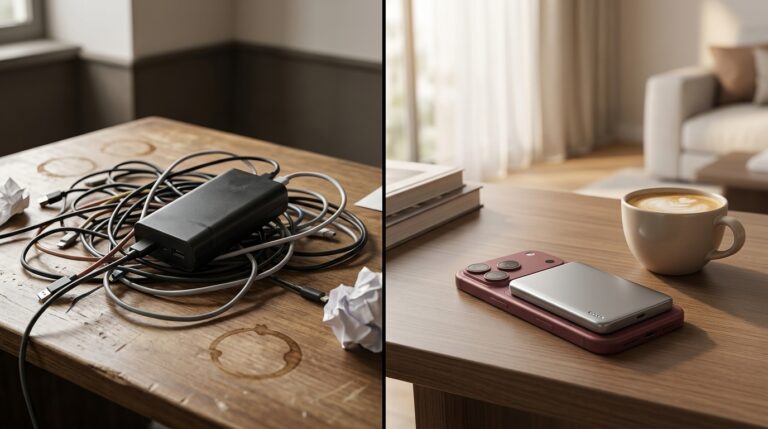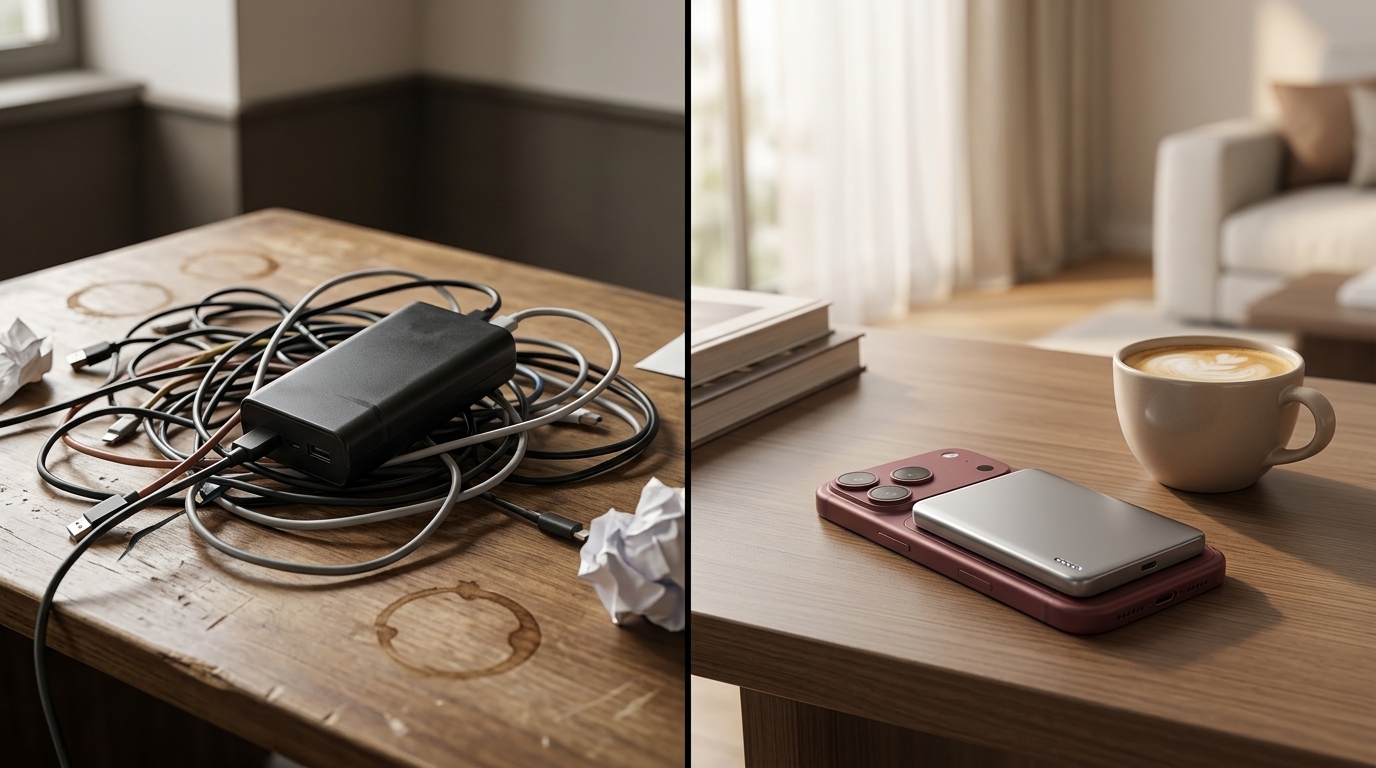

There’s a specific type of annoyance that occurs when you remember to pack a charger but forget the cable, or vice versa. It’s not catastrophic—someone nearby usually has a spare—but it’s the kind of low-level friction that accumulates across dozens of trips until it becomes a pattern worth solving.
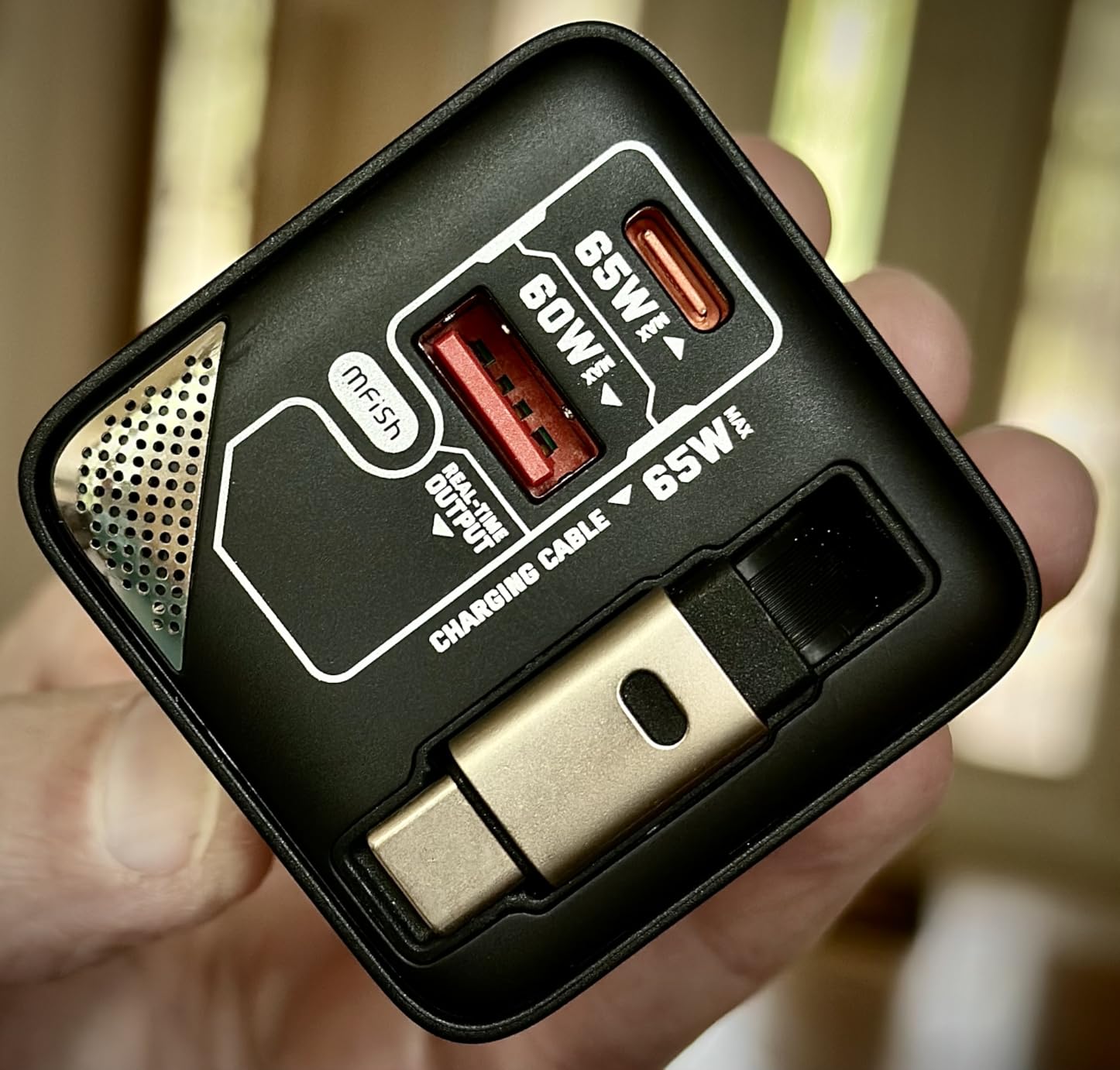
Chargers with integrated retractable cables address this by collapsing two objects into one. The design isn’t new, but its adoption among iPhone and MacBook users marks a shift in how people think about portable power. What used to be a travel-specific feature now appears in everyday chargers, the ones that live in work bags and move between kitchen counters and bedroom nightstands. The portability has become permanent.
The behavioral change is subtle but measurable. People who switch to integrated designs stop thinking about cables as separate inventory items. The mental checklist shortens. The charging ritual simplifies. There’s no untangling before use, no coiling after, no wondering whether the cable that worked last week is still in the same pocket of the same bag.
This matters more in multi-device households where MacBook, iPad, and iPhone chargers all use USB-C but live in different rooms. The retractable cable becomes a way to mark territory—this charger stays with this device, and the cable never migrates to someone else’s setup. It’s a small containment strategy in an ecosystem designed around interchangeable parts.
The shift also exposes a tension in how Apple approaches accessories. The company has historically sold chargers and cables separately, treating modularity as flexibility. But users are increasingly opting for third-party solutions that prioritize convenience over configurability, especially when those solutions support the same fast-charging standards that Apple devices depend on.
The charger itself has absorbed the labor of staying organized, eliminating a small friction point that people didn’t realize they were negotiating daily. It’s the kind of design evolution that doesn’t announce itself but quietly reshapes expectations. Once someone experiences a retractable cable, the old system—two separate pieces that must stay paired—starts to feel unnecessarily complicated.
What remains unresolved is whether this preference will influence Apple’s own accessory roadmap or whether third-party manufacturers will continue to fill a gap that Apple doesn’t acknowledge exists. For now, the market suggests that enough users have decided cable management shouldn’t be their responsibility anymore.
"Note: Readers like you help support The Apple Tech. We may receive a affiliate commission when you purchase products mentioned on our website."