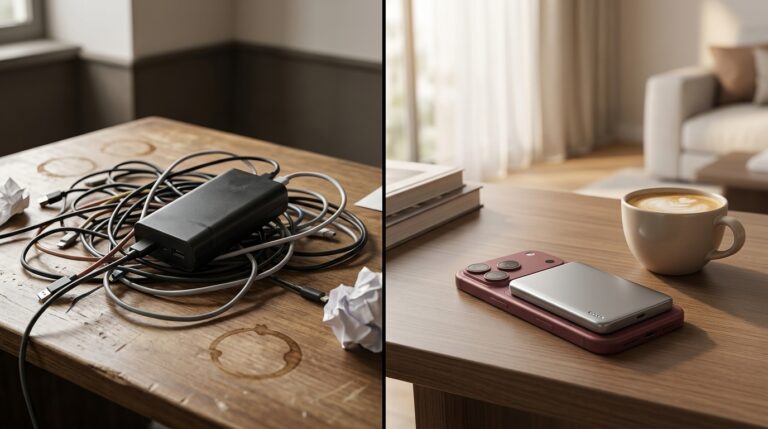

Apple has historically sold charging components separately. The power adapter is one product, the cable another. The approach made sense within the company’s modular accessory philosophy—users could mix and match based on their specific needs, replacing worn cables without discarding functional adapters. But it also meant that buying a new MacBook charger required two separate purchases, and the friction of that process has created an opening for alternative approaches.
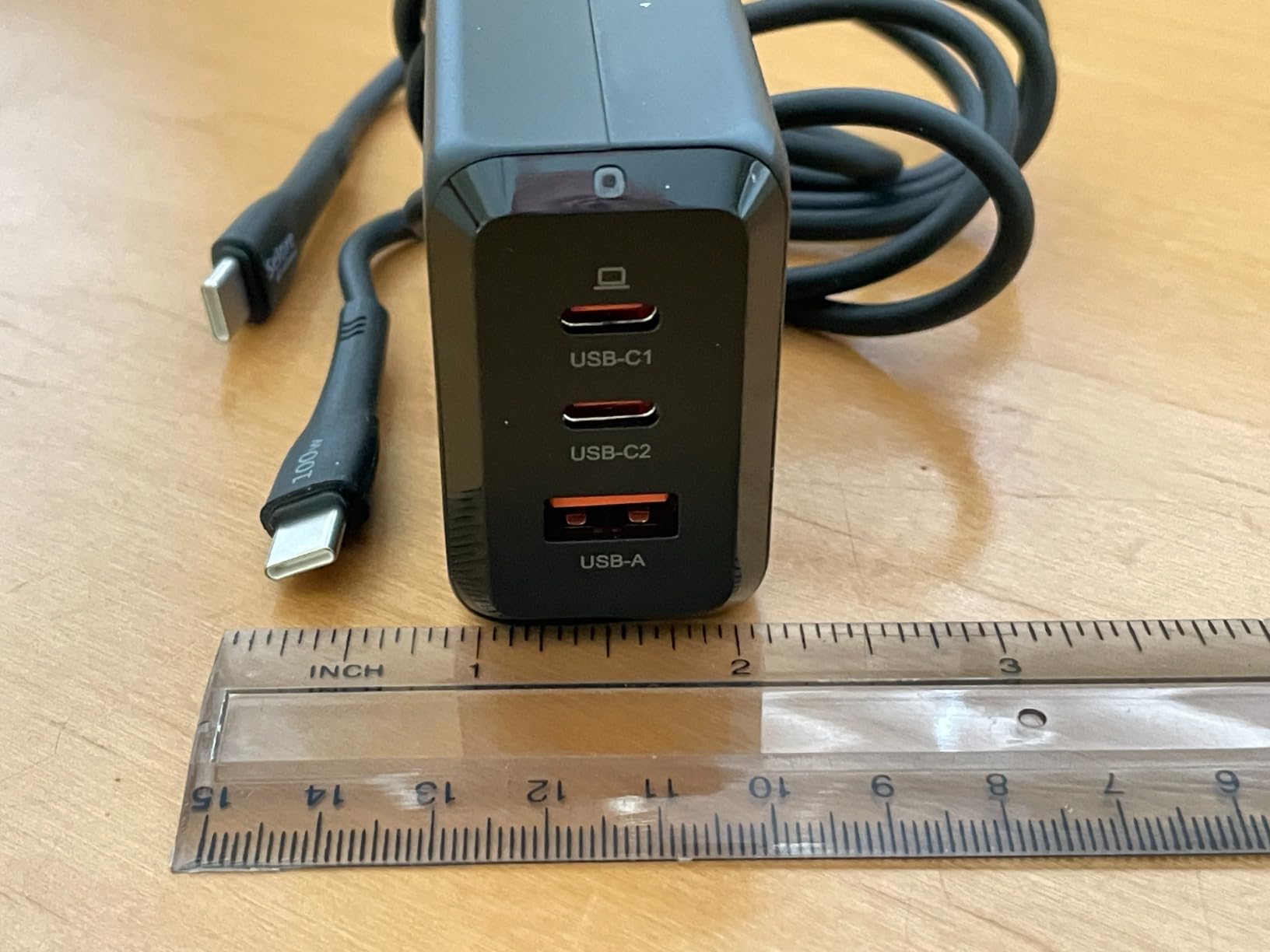
Third-party manufacturers have collapsed that separation. Chargers now ship with cables permanently attached or bundled in the same package, treating the complete charging solution as a single unit rather than an assembly of parts. For MacBook users accustomed to Apple’s split model, this feels like a small revelation—the charger works immediately upon unboxing, no additional shopping required.
The behavioral impact is more significant than it initially appears. When someone’s MacBook charger fails, they’re often dealing with either a broken cable or a dead adapter, rarely both simultaneously. Under Apple’s system, they could replace just the failed component. Under the bundled model, they replace everything regardless of what actually broke. It’s less modular but eliminates decision paralysis. There’s no evaluating whether the cable or the brick is the problem—the solution is the same either way.
This shift also changes how people think about backup chargers. A MacBook user who wants a second charger for travel or a different room now gets a complete setup in one transaction rather than assembling it piece by piece. The mental overhead of ensuring compatibility between separately purchased components disappears. The cable that comes with the charger is guaranteed to work with it, and that certainty has proven appealing enough to override the efficiency benefits of modular replacement.
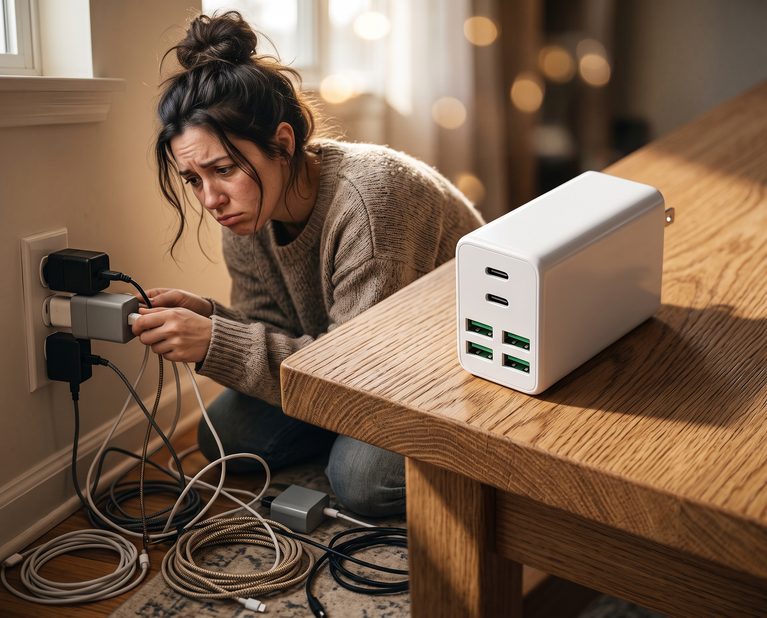
The three-port configuration on these bundled units reflects another assumption shift—that MacBook users rarely charge just one device at a time. The laptop takes one port, but the iPhone and iPad or AirPods need power too, and having all three on a single adapter reduces the number of outlets required in hotel rooms, coffee shops, and increasingly crowded power strips at home.
The idea that a charger should arrive ready to use, without requiring a separate cable purchase, has shifted from convenience to expectation. Users who’ve experienced the bundled approach find it difficult to return to Apple’s component-based model, not because the quality differs but because the cognitive load does. One box, one cable, one transaction—the simplicity compounds over time.
At $20, these complete charging solutions cost less than buying Apple’s adapter and cable separately, which accelerates the migration toward bundled systems even among users who might otherwise prefer Apple’s official accessories.
"Note: Readers like you help support The Apple Tech. We may receive a affiliate commission when you purchase products mentioned on our website."