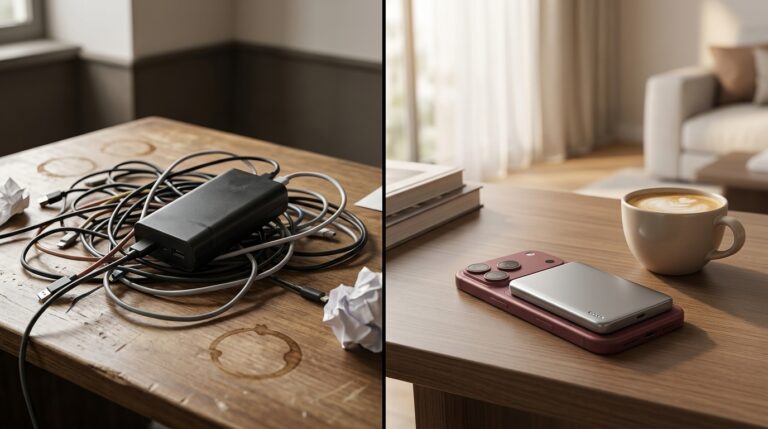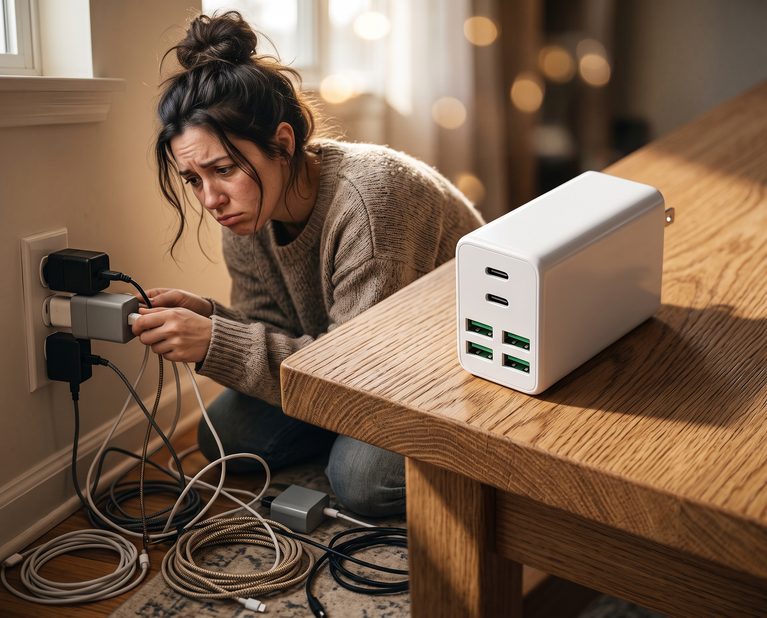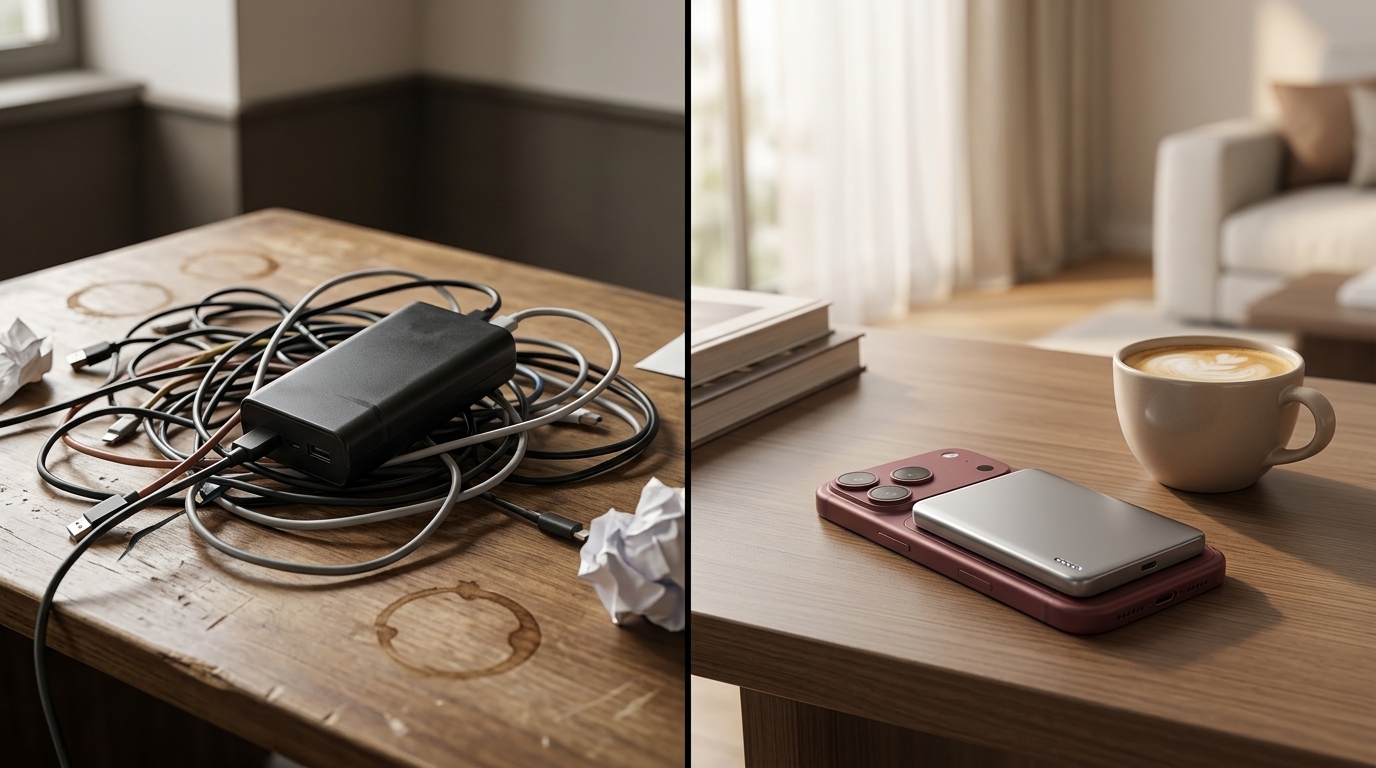

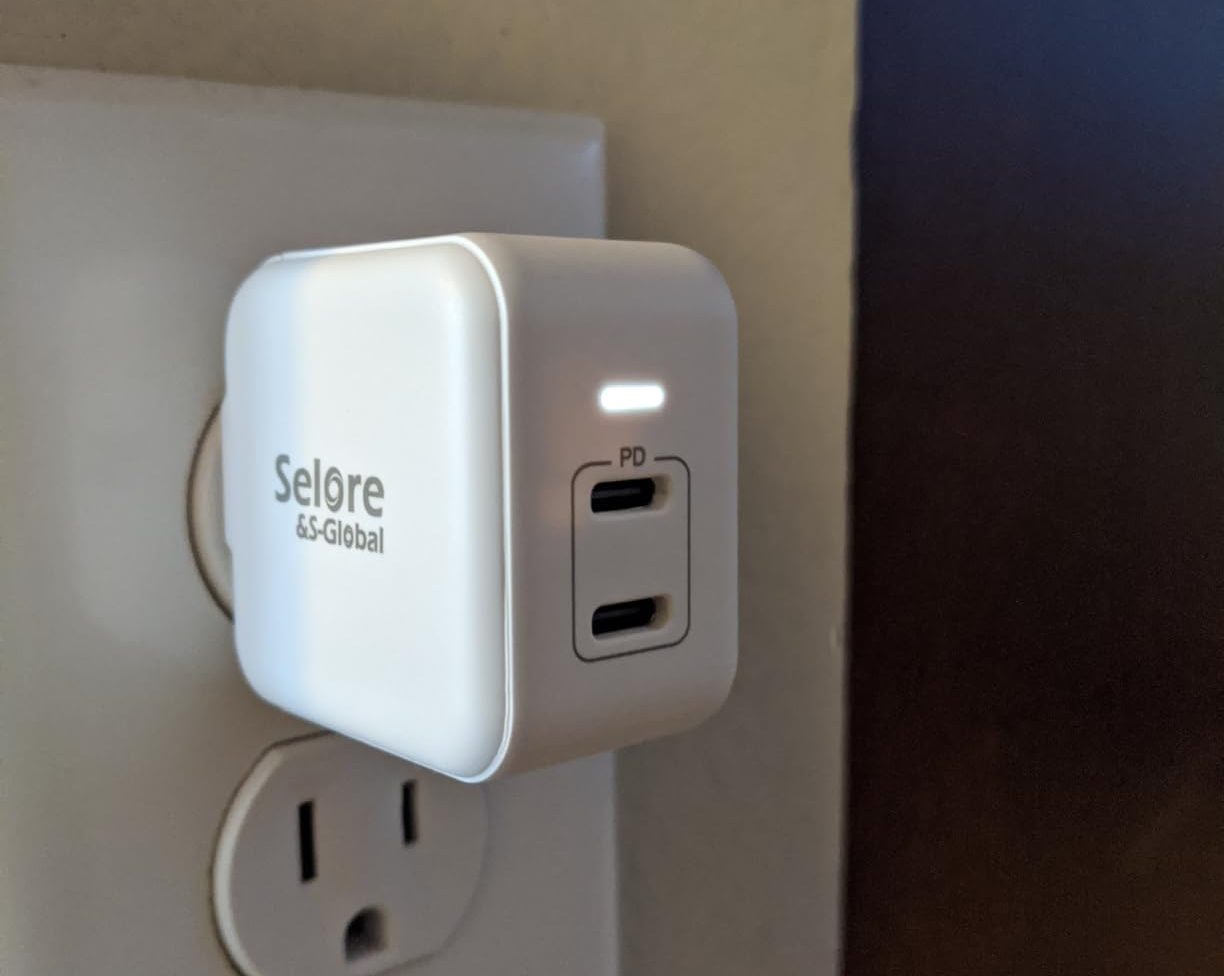
Phone chargers used to stay put. One lived beside the bed, another on a desk, maybe a third in the kitchen. They occupied outlets semi-permanently, their prongs extended into walls for weeks or months at a time. Moving them required unplugging, and the exposed metal prongs made them awkward to carry anywhere except coiled inside a cable organizer.
Foldable prongs changed that assumption quietly. The design feature seems minor—hinges that let metal pins collapse flush against the charger body—but it represents a fundamental rethinking of how people interact with power adapters. The charger becomes pocketable, throwable into a bag without snagging, and safe to toss into a drawer with other electronics. It transitions from infrastructure to accessory.
This shift tracks closely with how iPhone users actually live. Remote work blurred the boundaries between home and travel. Someone might charge their phone at a coffee shop in the morning, a co-working space in the afternoon, and home in the evening. The charger that used to serve one location now needs to serve three, and the physical design had to accommodate that mobility without adding bulk or creating new friction points.
The dual-port configuration matters too, but in a different way. It acknowledges that most people now carry at least two devices that need USB-C power—an iPhone and an iPad, or an iPhone and wireless earbuds, or any combination of the dozens of accessories that have converged on the same charging standard. The second port isn’t redundancy; it’s recognition that single-device charging has become the exception rather than the rule.
What’s notable is how this portable-first design has migrated from travel-specific products into everyday chargers. People aren’t buying foldable blocks exclusively for trips anymore—they’re replacing their stationary chargers with portable ones because the form factor has become preferable even when mobility isn’t immediately necessary. The optionality itself has value. The charger can stay plugged in, but it doesn’t have to, and that flexibility has proven more appealing than a slightly smaller non-foldable alternative.
The charger is no longer something that lives plugged into a wall—it’s something that moves through bags, pockets, and hotel rooms with the same frequency as the devices it powers. That’s a behavioral evolution that happened gradually, but the hardware has now caught up to formalize it. The foldable prong isn’t just a feature; it’s an acknowledgment that charging infrastructure has become as mobile as the ecosystem it supports.
The price point accelerates this transition. At $14, the cost difference between portable and stationary chargers has effectively disappeared, removing the financial penalty that once made portability feel like a premium upgrade rather than a baseline expectation.
"Note: Readers like you help support The Apple Tech. We may receive a affiliate commission when you purchase products mentioned on our website."