

The iPhone used to sit in the cupholder or center console while driving. It was nearby, accessible for quick glances at navigation or call controls, but not integrated into the vehicle itself. The MagSafe car mount changed that. Now the phone snaps onto a vent-mounted magnetic disc, held at eye level, always visible, always active.
What the mount enables is a kind of augmented driving. The iPhone becomes the dashboard. Maps display turn-by-turn directions. Podcasts and music stream through the car’s audio system via Bluetooth. Incoming calls appear as banners that can be answered or dismissed with a tap. The phone isn’t a passenger anymore. It’s infrastructure.
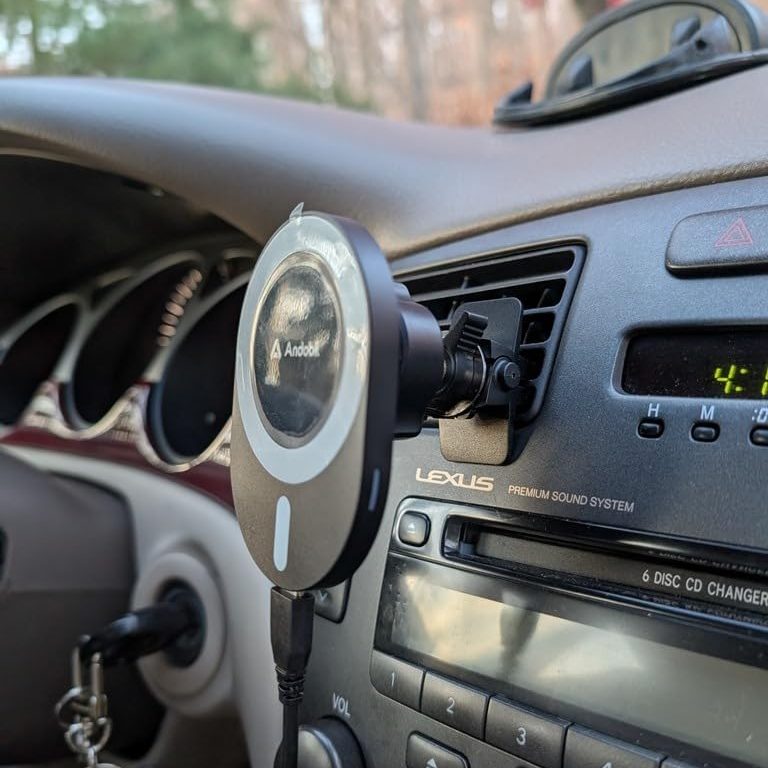
This shift happened because MagSafe solved the attachment problem. Earlier car mounts used clamps, adhesive pads, or suction cups—all of which required adjustment, repositioning, and eventual failure. The magnetic connection is instantaneous. The phone clicks into place, held firm enough to stay put over bumps and turns, but easy enough to remove with one hand when the drive ends.
The 360-degree rotation mentioned in some product descriptions is critical. The phone needs to switch between portrait and landscape depending on the task. Navigation works best in portrait, keeping the route visible without requiring constant panning. Video calls, on the rare occasions they happen while parked, need landscape. The mount accommodates both without requiring the driver to dismount and remount the device.
There’s also a safety argument, though it’s complicated. Keeping the iPhone at eye level reduces the need to look down at the center console or lap. Eyes stay closer to the road. But the presence of the phone at eye level also creates a constant visual pull. Notifications arrive. Messages appear. The screen lights up with each alert. The mount makes the phone harder to ignore, not easier.
What’s changed is the expectation. Drivers now assume the iPhone will be mounted, not stowed. The mount has become part of the pre-drive routine, like adjusting mirrors or fastening a seatbelt. The phone snaps on, navigation launches, and the drive begins. Without the mount, the experience feels incomplete, improvised, less secure.
The carbon fiber finish mentioned in some listings is aesthetic, but it signals something about how users perceive these accessories. The mount isn’t hidden behind the dashboard. It’s visible, part of the interior design. Users want it to look intentional, not like an afterthought clipped to the vent. The mount has to justify its presence visually as well as functionally.
Previously listed at $36.59, current listings hover around $27.95. The price reflects the engineering required to create a magnetic hold strong enough for larger devices like the iPhone 17 Pro Max, which is heavier and more prone to vibration-induced detachment. But the real cost is behavioral. The mount commits the driver to a specific relationship with the phone—always visible, always accessible, always part of the drive. The iPhone doesn’t just come along for the ride anymore. It mediates the entire experience.
"Note: Readers like you help support The Apple Tech. We may receive a affiliate commission when you purchase products mentioned on our website."