


When Apple transitioned MacBooks to USB-C, the promise was universality. One port type for everything: charging, data, displays, accessories. In theory, it meant fewer cables and less confusion.
In practice, it meant a transitional period that hasn’t quite ended. The MacBook charges via USB-C. The iPhone does too, now. The iPad, depending on the model, might. The Apple Watch doesn’t. AirPods might, depending on the case. The Apple Pencil might, depending on the generation.
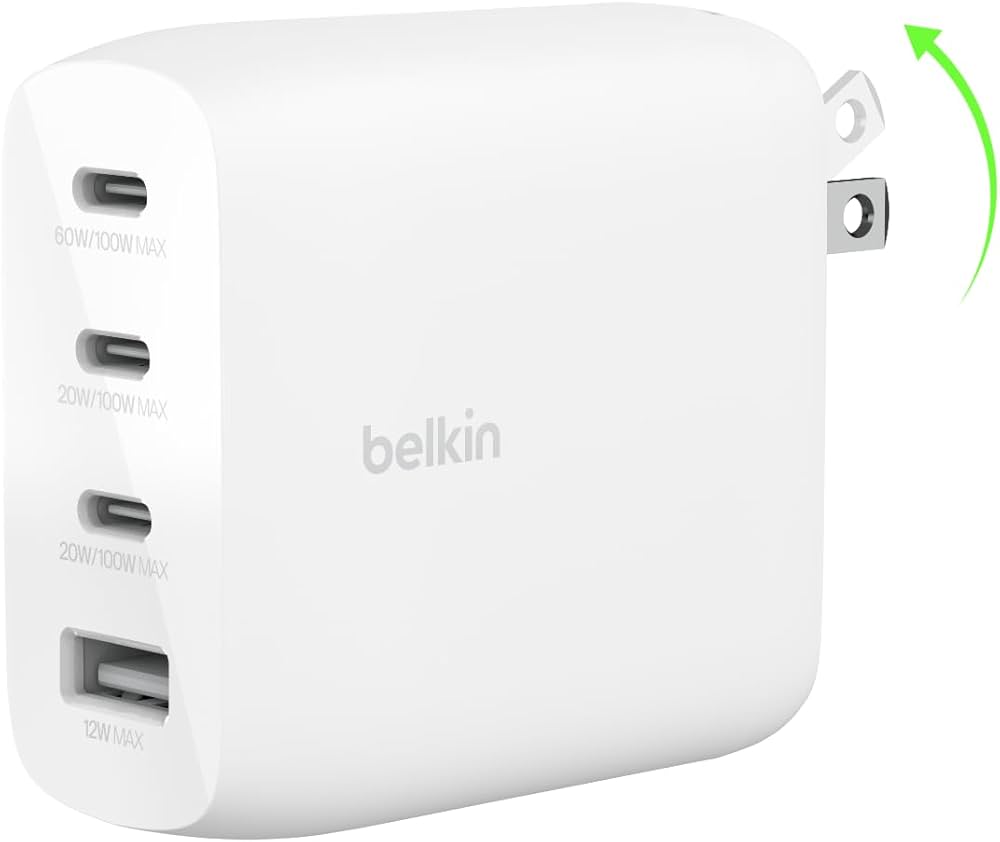
This creates a packing problem. If you’re traveling with multiple Apple devices, you need multiple charging solutions. USB-C covers some of it, but not all. And even when everything is USB-C, you still need enough ports or adapters to charge simultaneously.
The result is that many MacBook users carry multi-port chargers—devices that consolidate several outputs into one plug. It’s not an Apple product, but it’s an Apple ecosystem necessity. The charger sits in the bag next to the MacBook, handling the overflow that Apple’s hardware can’t.
There’s an irony here. Apple designs each product to be self-contained and elegantly minimal. But using multiple Apple products together requires visible infrastructure—hubs, adapters, multi-port bricks. The ecosystem is cohesive in software, but fragmented in power delivery.
Some of this is generational. Older devices still in use don’t align with current standards. A 2018 iPad charges differently than a 2024 one. An Apple Watch has never charged via USB-C. These aren’t flaws, but they do mean that “upgrading” doesn’t eliminate complexity—it just shifts it.
For frequent travelers, this becomes acute. Hotel rooms rarely have enough outlets. Airport charging stations are USB-A or built-in cables. A multi-port charger with both USB-C and USB-A outputs becomes essential, not optional.
What’s less visible is how this changes people’s relationship with charging. It’s no longer “plug in the MacBook.” It’s “plug in the hub that charges the MacBook and the phone and the watch and whatever else needs power overnight.” The MacBook is still the anchor, but it’s no longer the only thing that matters. Previously listed at $46.99, some higher-wattage options now appear near $41.99, though the shift reflects a broader truth: Apple’s ecosystem is cohesive until you try to power all of it at once.
"Note: Readers like you help support The Apple Tech. We may receive a affiliate commission when you purchase products mentioned on our website."