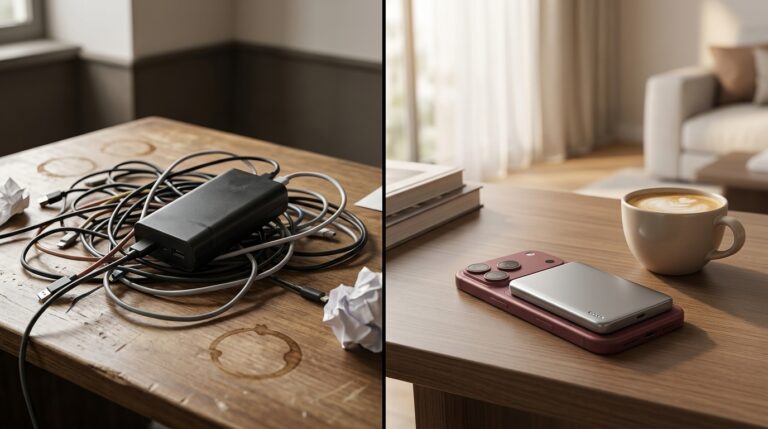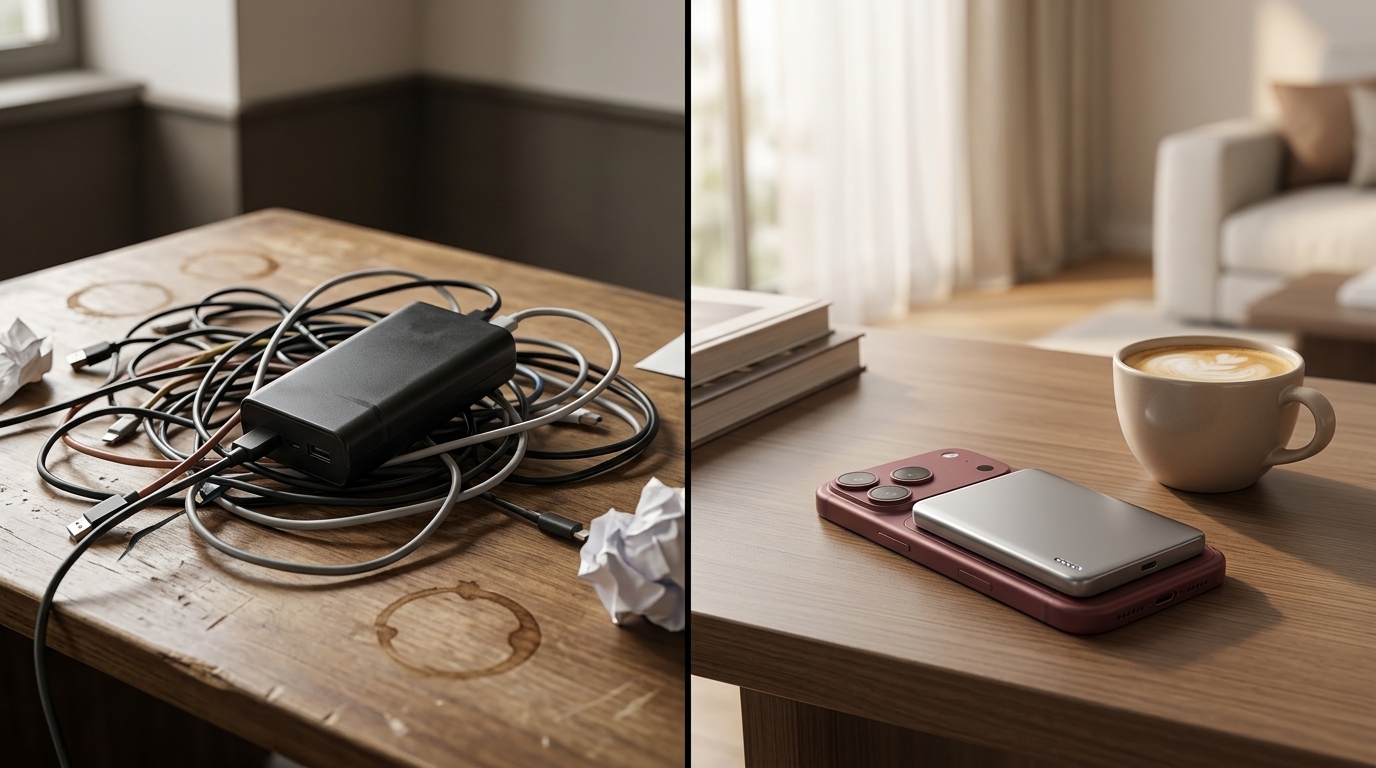

Apple’s MacBook chargers have always shipped with detachable cables. The brick is one piece, the cable is another. If the cable fails, you replace just the cable. If you need a longer one, you swap it out. The system is modular.
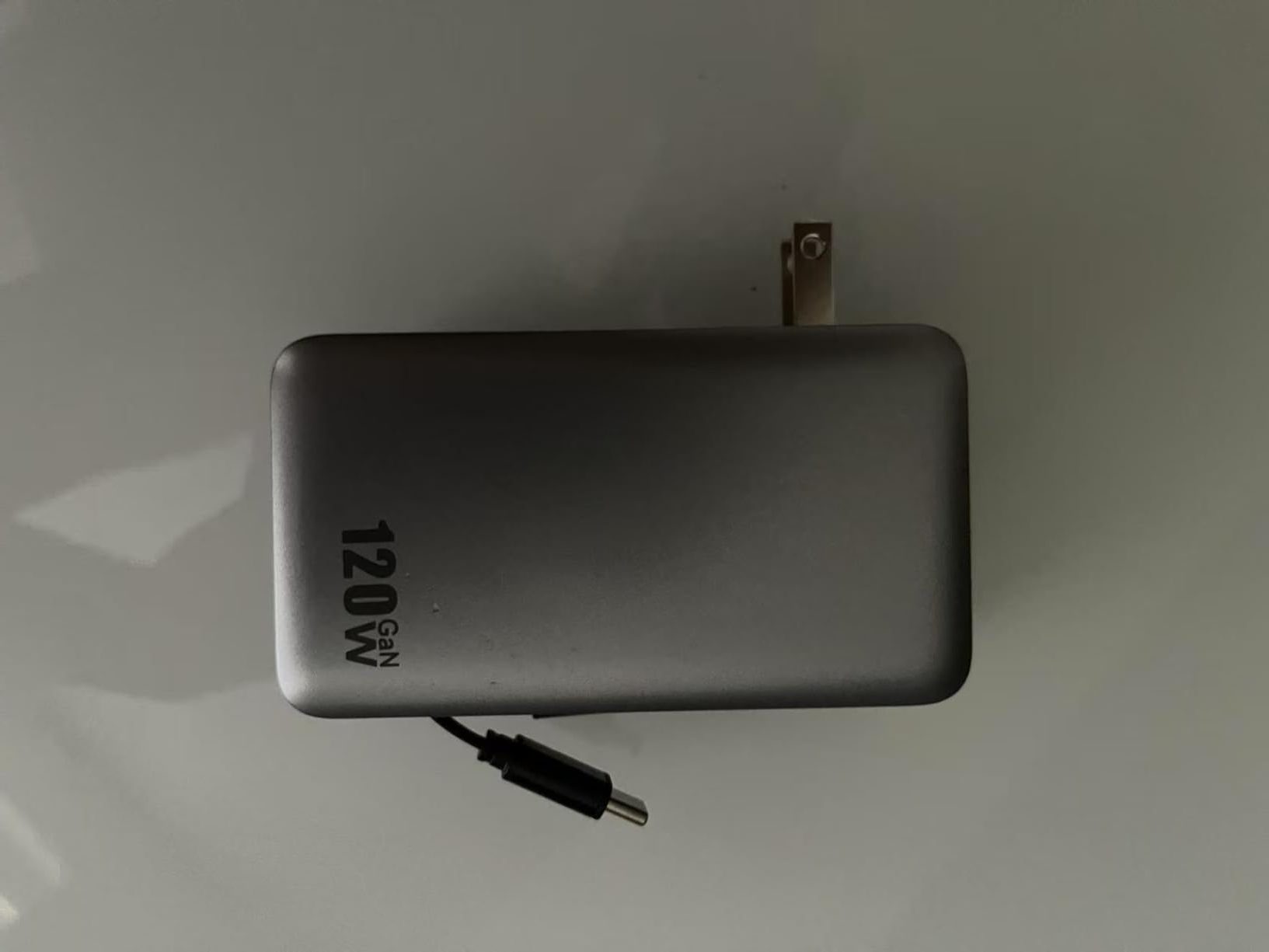
But third-party charging solutions are increasingly moving toward integrated designs—chargers with built-in cables that retract or fold into the body of the device. The cable is always there, always connected, impossible to forget.
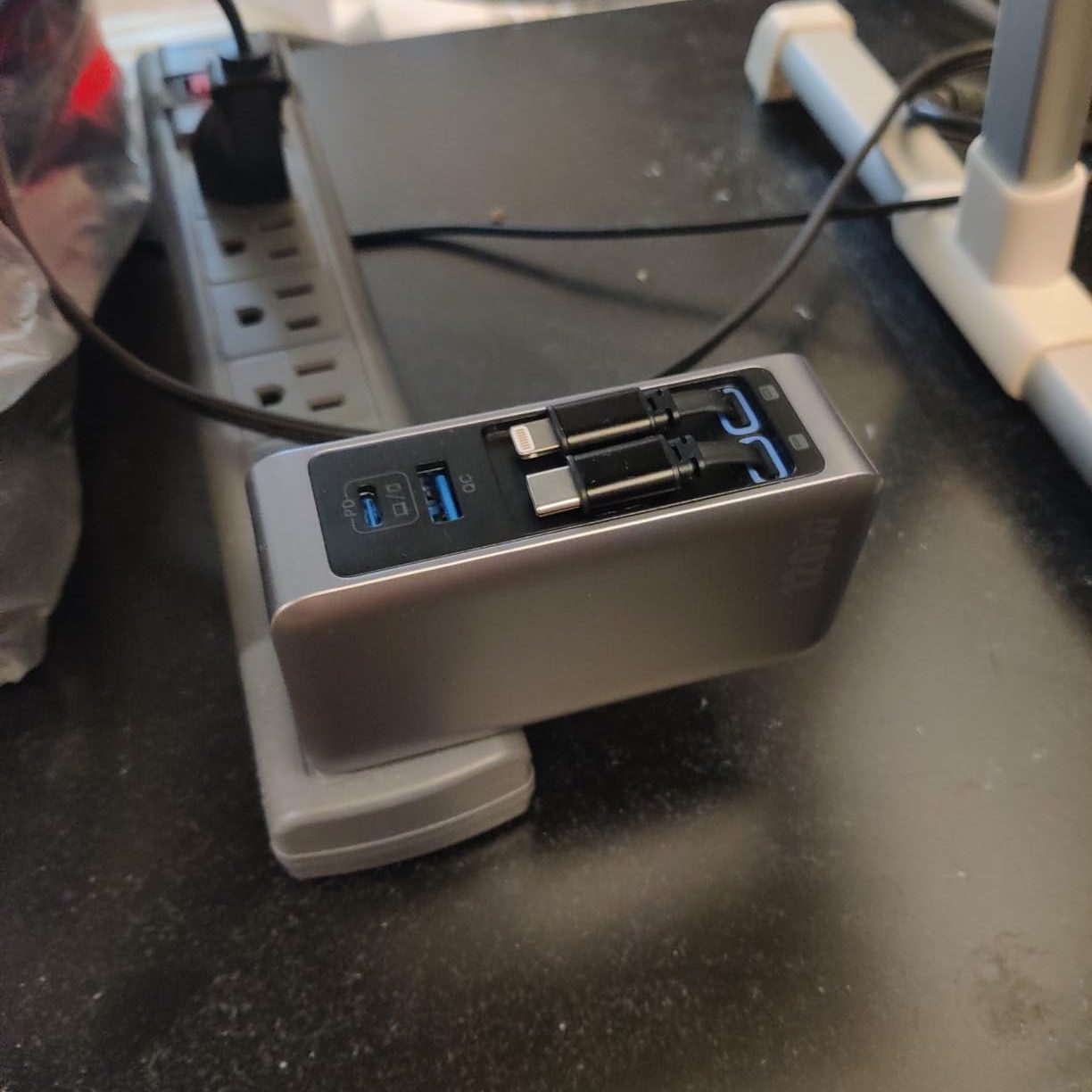
For people who travel regularly, this has obvious appeal. One of the most common packing failures is remembering the charger brick but forgetting the cable, or vice versa. An integrated design eliminates that failure mode entirely.
But it introduces a new risk: the cable becomes a single point of failure for the entire charger. Cables wear out, especially retractable ones that experience repeated mechanical stress. When the cable fails, the whole unit is compromised. With a modular setup, you’d replace a $20 cable. With an integrated setup, you might be replacing a $40 charger.
There’s also the question of length and flexibility. A built-in cable is usually a fixed length—often shorter than what you might want in certain situations. A hotel room with an outlet across the room becomes a problem. A café table far from a wall socket becomes a problem. With a detachable cable, you can swap in a longer one. With a built-in cable, you’re limited.
Some MacBook users compromise by carrying both—an integrated charger for convenience and a traditional modular setup as backup. This defeats the simplification purpose, but it hedges against both failure modes.
What’s revealing is that Apple itself hasn’t moved toward integrated MacBook chargers, despite the popularity of the design in third-party products. It suggests different priorities: Apple values replaceability and flexibility; third-party manufacturers are betting on convenience and reduced packing complexity.
Previously listed at $39.95, some integrated options now sit near $31.95, though the price difference isn’t the deciding factor—it’s whether you trust a single cable to survive months or years of travel without failure, knowing replacement means starting over entirely.
"Note: Readers like you help support The Apple Tech. We may receive a affiliate commission when you purchase products mentioned on our website."