

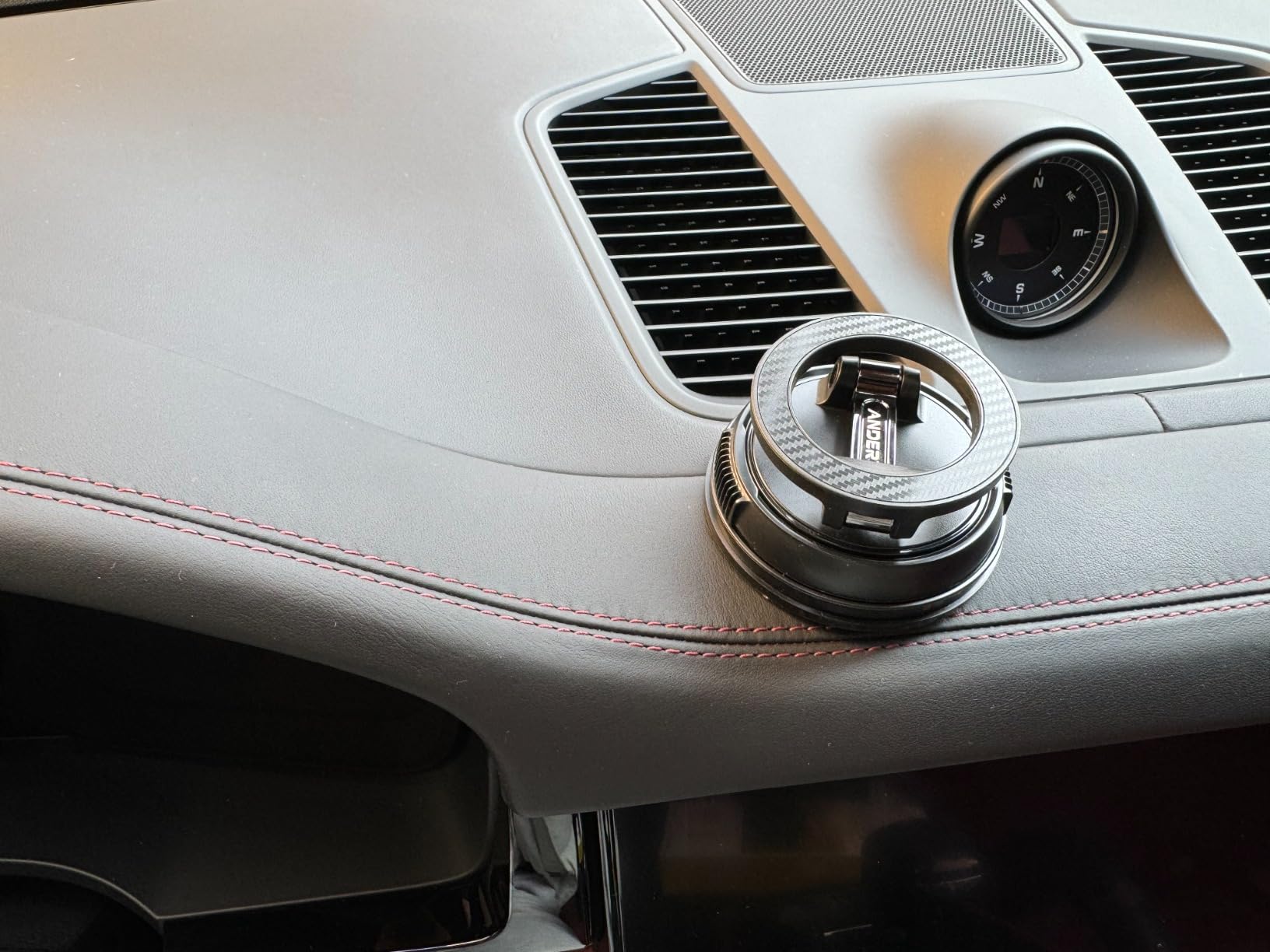
The carbon fiber pattern didn’t affect function, but it communicated seriousness about the mount’s purpose. In a market saturated with plastic magnetic phone holders, material aesthetics have become signaling mechanisms. Carbon fiber—or the visual simulation of it—suggests automotive performance, precision engineering, and durability under stress.
The force specifications tell a story about market evolution. When magnetic car mounts first appeared, manufacturers competed on convenience and adjustability. Now they compete on reassurance. Seventy-eight pounds of suction force and 2,400 grams of magnetic strength aren’t just numbers—they’re promises that the phone will not fall, regardless of driving conditions.

This reflects accumulated user anxiety from cheaper mounts that failed. Someone who’s experienced their iPhone detaching mid-drive and sliding under the brake pedal develops a specific wariness. They’re willing to pay more for a mount that emphasizes strength above all other features, even if they can’t directly verify whether the claimed specifications are accurate.
The 360-degree adjustment capability exists in tension with the extreme attachment strength. If the suction and magnet are strong enough to survive aggressive driving, they might also be strong enough to make repositioning the phone require two hands and deliberate effort. The mount that never fails might also never yield, even when you want it to.
What’s interesting is how this creates tiers within the MagSafe car mount category. Budget options at a third of the price offer the same basic functionality—magnetic attachment, phone holding. Premium options sell peace of mind and aesthetic alignment with automotive culture. The carbon fiber finish places the mount in conversation with car interiors rather than pure phone accessories.
The positioning matters. Windshield and dashboard mounts are highly visible, both to the driver and to passengers. Unlike a phone case or a charging cable, the car mount is a public-facing object. Choosing one that looks deliberate rather than generic becomes part of how drivers curate their vehicle’s interior appearance.
Previously listed at $42.59, current listings hover around $25.61. The pricing gap between this and budget alternatives reflects the premium for materials signaling and force specifications, targeting users for whom mount failure would be unacceptable rather than merely inconvenient.
"Note: Readers like you help support The Apple Tech. We may receive a affiliate commission when you purchase products mentioned on our website."