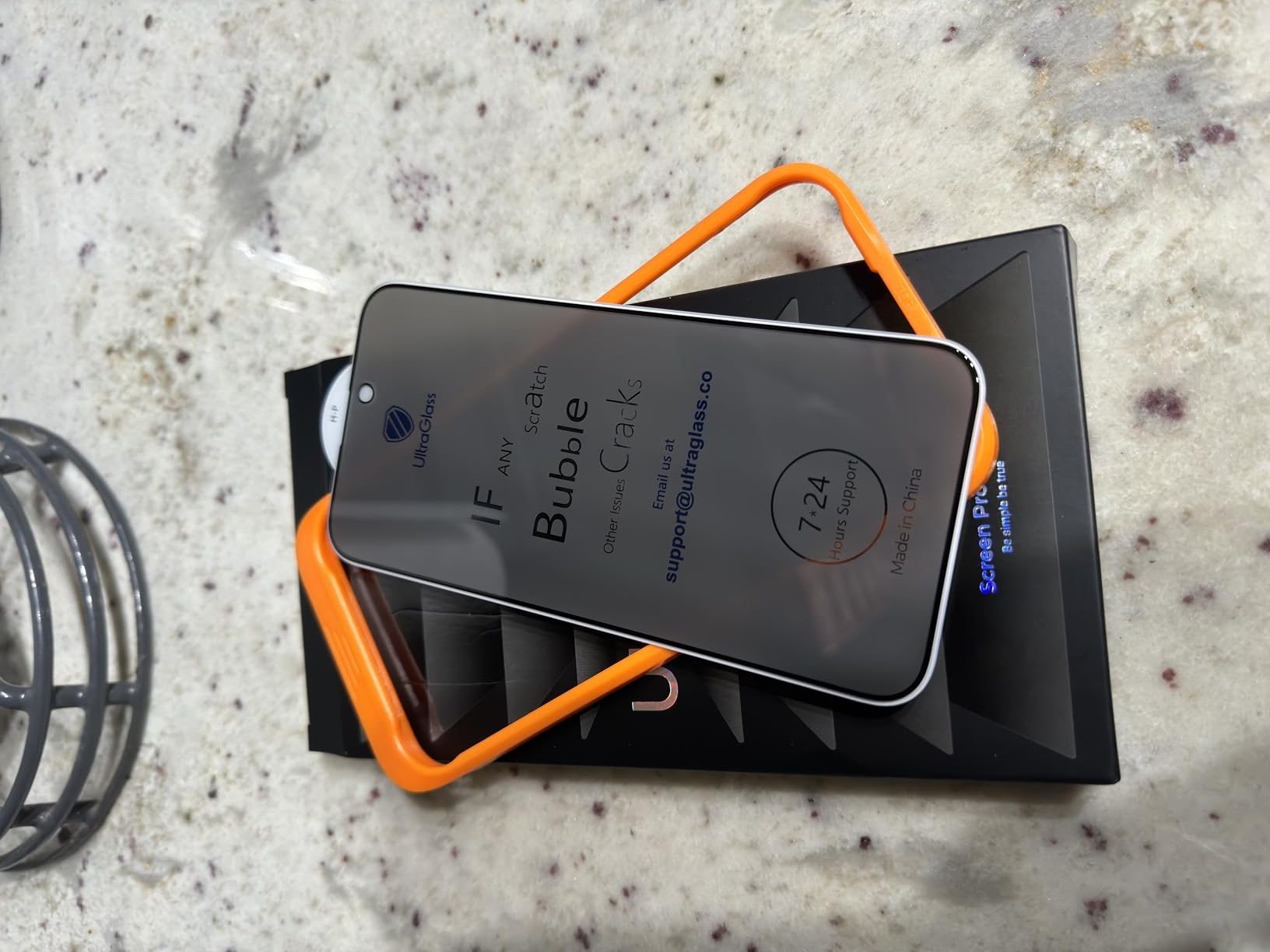
The screen remained perfectly visible straight-on but turned dark from the sides, creating a privacy bubble in public spaces. Privacy screen protectors use micro-louver technology to restrict viewing angles, making iPhone screens readable only when viewed directly. From even slight side angles, the screen appears black or significantly dimmed.
This addresses a specific anxiety that has intensified with remote work’s migration into public spaces. Coffee shop workers handle sensitive emails. Commuters review financial information on trains. The assumption of screen privacy that existed in private offices doesn’t extend to shared spaces, yet the work happening on iPhones often remains equally sensitive.
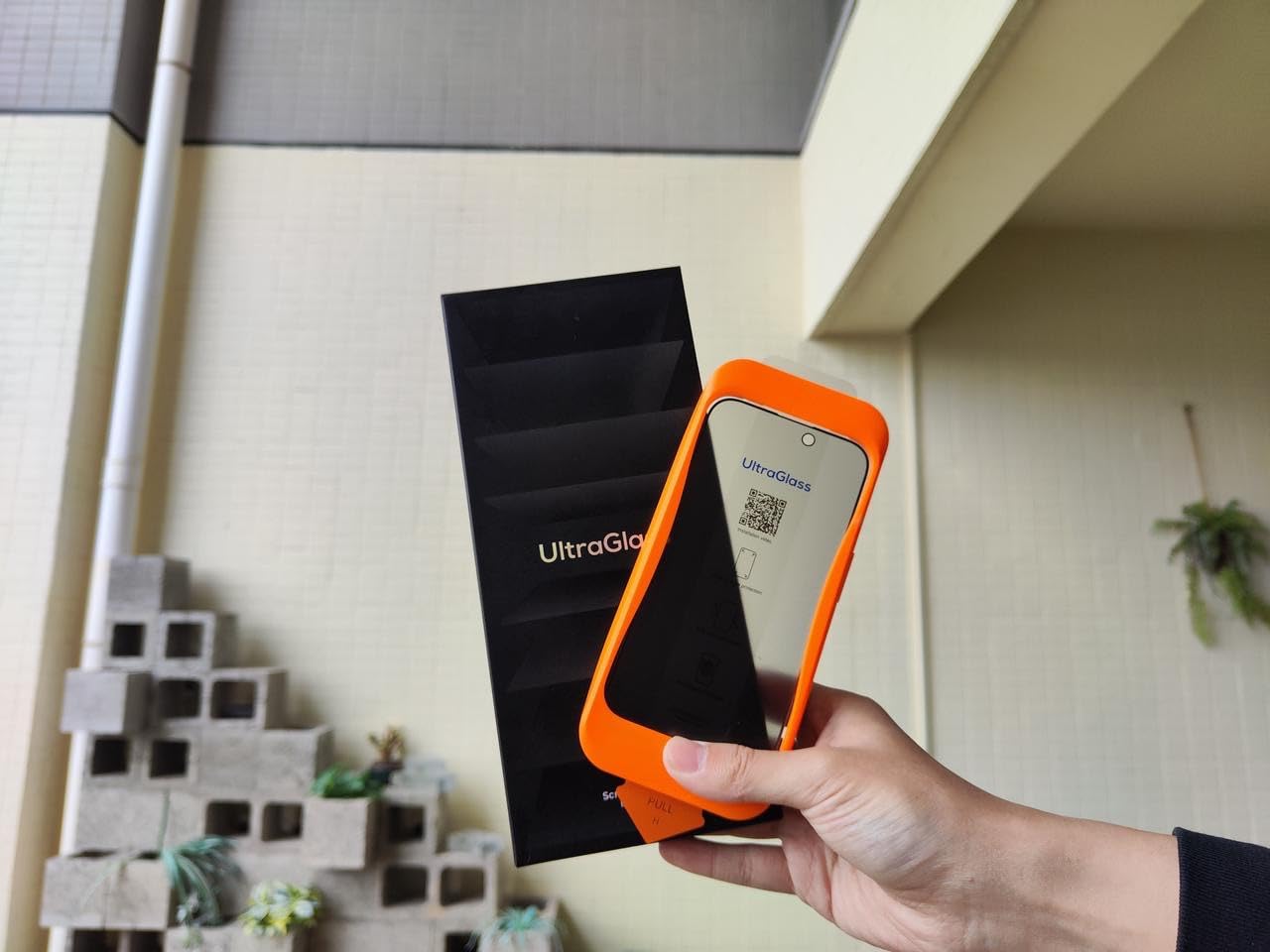
The military-grade shatterproof marketing language reveals how privacy features have merged with protection features. Users aren’t just worried about visual snooping—they’re concerned about device security holistically. A screen protector that prevents both shoulder surfing and impact damage addresses multiple vulnerabilities simultaneously.
But privacy screens introduce trade-offs. The technology that blocks side viewing also reduces overall screen brightness and clarity. Colors appear less vibrant. Viewing angles become genuinely restricted, which means even the device owner must hold the phone more directly in front of them. Casual glances at a phone resting on a desk become difficult.
The two-pack packaging acknowledges that privacy screens often get replaced more frequently than standard protectors. The very features that make them valuable—the micro-louver layers—can degrade faster with daily use, scratching, or cleaning. Users expect to rotate through these more quickly than basic tempered glass.
What’s interesting is how this reflects changing assumptions about public space device use. Twenty years ago, laptop privacy screens were niche accessories for corporate travelers handling classified information. Now, privacy screen protectors for phones are mass-market products, suggesting widespread concern about visual access to personal screens has become normalized.
Previously listed at $37.98, current listings hover around $28.86 for a two-pack. The premium over standard screen protectors reflects the specialized optical technology, but the price has dropped enough that privacy protection is accessible rather than exclusively for high-security contexts.
"Note: Readers like you help support The Apple Tech. We may receive a affiliate commission when you purchase products mentioned on our website."