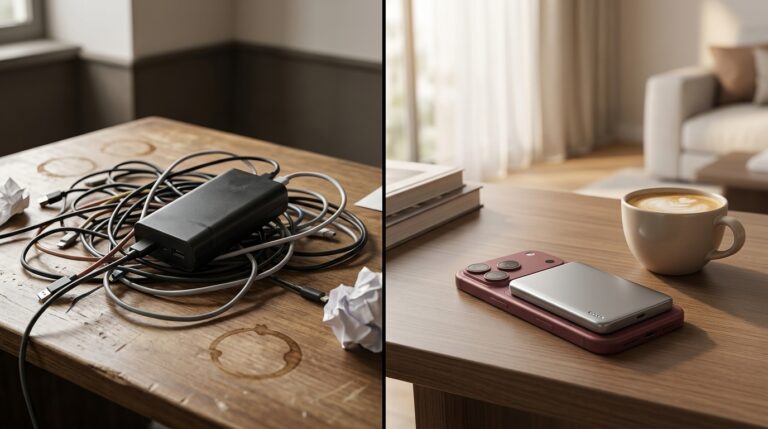
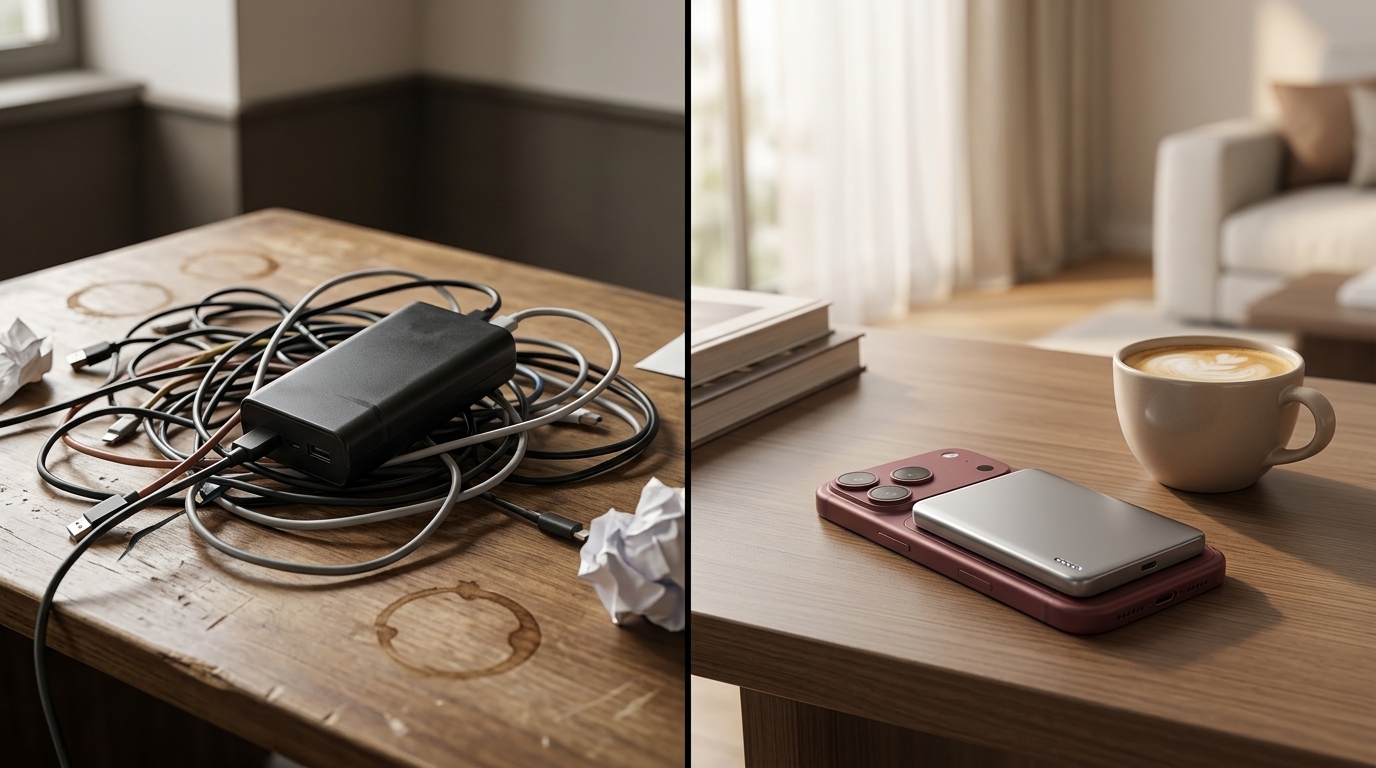
The battery had no wireless charging, which meant it charged faster and generated less heat than magnetic alternatives. Wireless charging is convenient but lossy—significant energy becomes heat rather than battery charge. Wired connections are more efficient, which matters for users who want maximum charge in minimum time.
The built-in cables eliminate the separate cable problem while maintaining wired charging benefits. The cables are permanently attached to the battery body, so you can’t forget them, but they connect physically to phones rather than charging wirelessly. This combines cable-free carrying with wired charging efficiency.
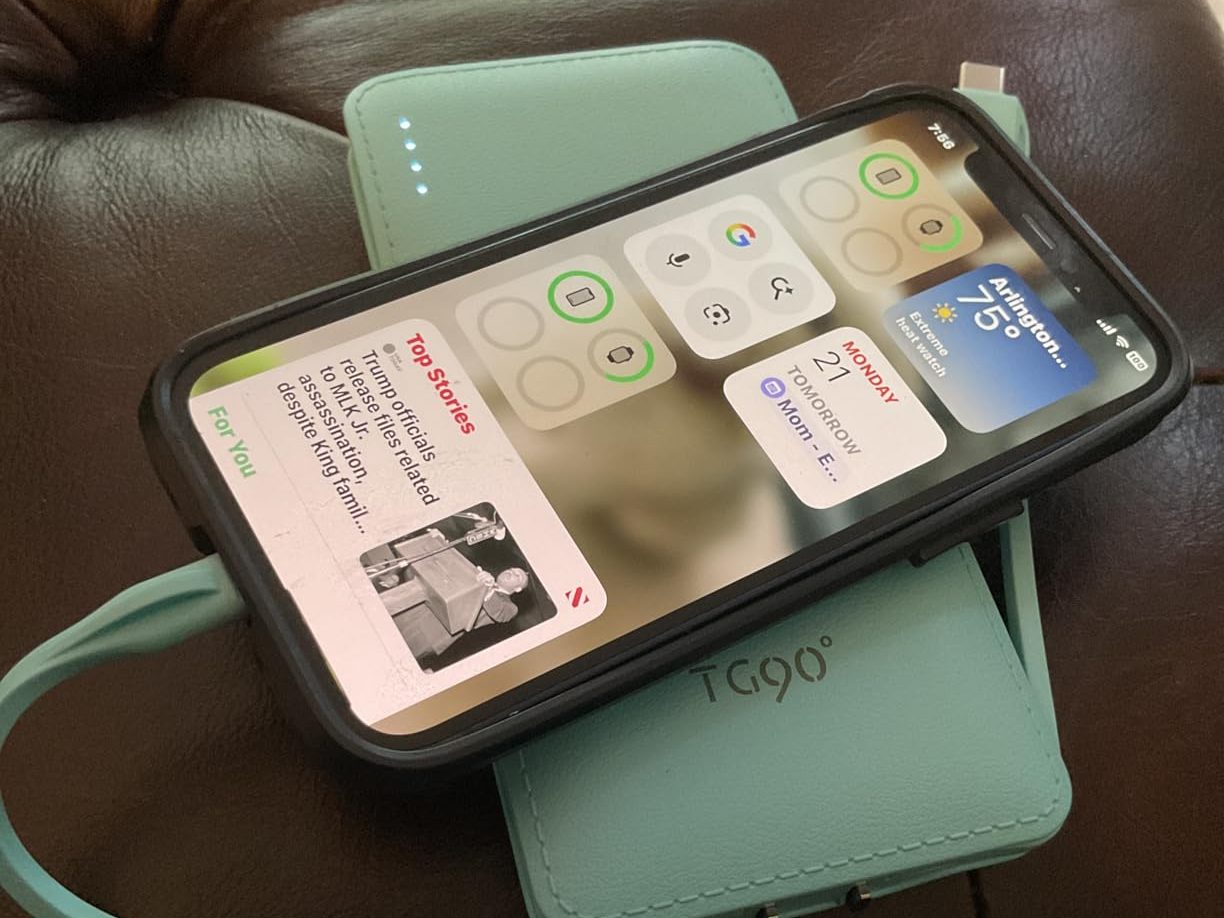
The 10,000mAh capacity in a cable-only battery pack can be packaged more compactly than wireless equivalents because it doesn’t need the coils and alignment magnets that wireless charging requires. The form factor can optimize purely for battery cells and circuitry rather than accommodating charging technology.
The “no plug” designation indicates this is a battery pack only—it doesn’t include AC prongs for plugging directly into walls to recharge itself. Users need separate wall chargers to recharge the battery, which is standard for most battery packs but worth clarifying for those expecting integrated wall charging.
What’s revealing is how wireless charging hasn’t completely displaced wired despite the convenience advantage. For users who charge devices in contexts where they can set phones down anyway—at desks, on nightstands—wired charging’s speed and efficiency benefits outweigh wireless charging’s marginally easier connection process.
The cross-platform compatibility spanning iPhone, Samsung, Google, and iPad reflects how USB-C has unified charging across ecosystems. The same battery pack serves whatever devices you carry, making it useful across family members with different brands.
Previously listed at $39.99, current listings hover around $29.99. The pricing for wired-only battery packs sits below wireless equivalents, reflecting the simpler technology while delivering comparable capacity.
"Note: Readers like you help support The Apple Tech. We may receive a affiliate commission when you purchase products mentioned on our website."