
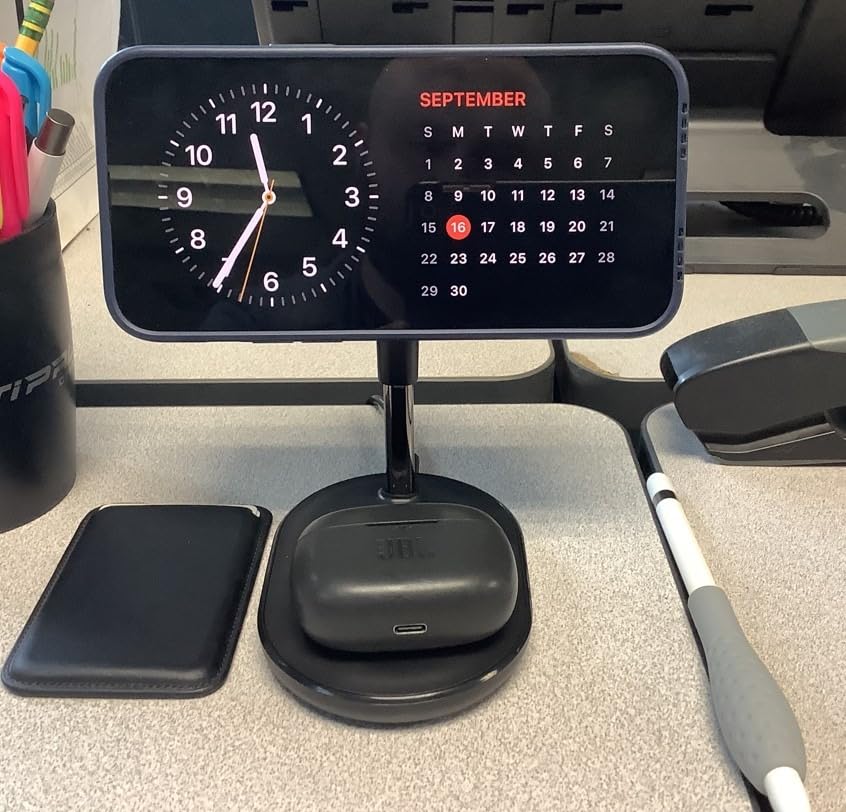
The nightstand has become a charging hub. For people deep in the Apple ecosystem, that means an iPhone, an Apple Watch, and AirPods all need power overnight. Three devices, three cables, three separate spots on the nightstand—or at least that’s how it worked until MagSafe-compatible charging stations promised to consolidate everything into a single footprint.
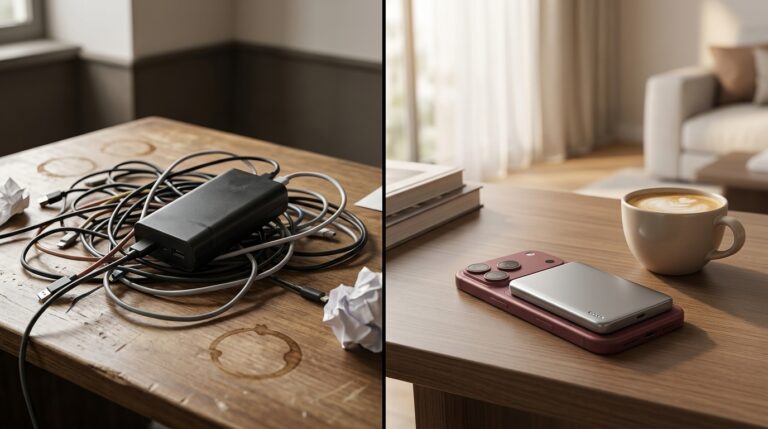
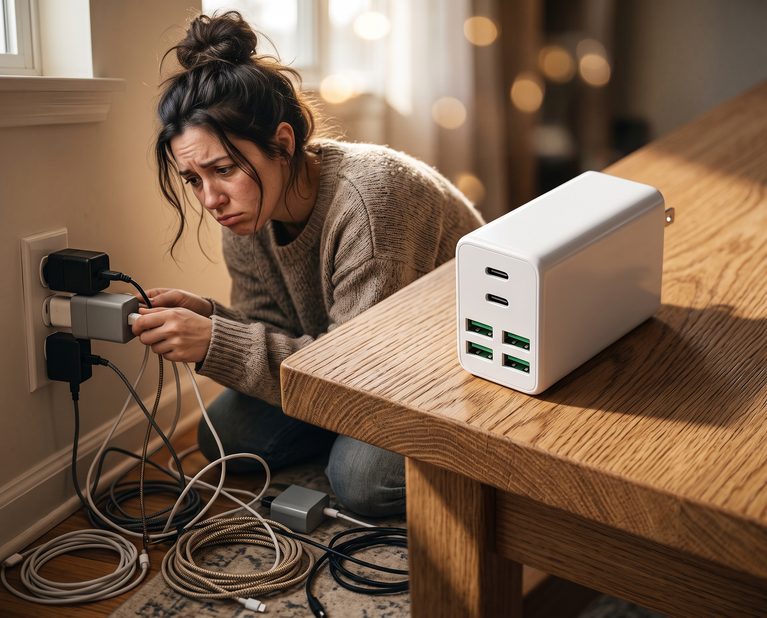
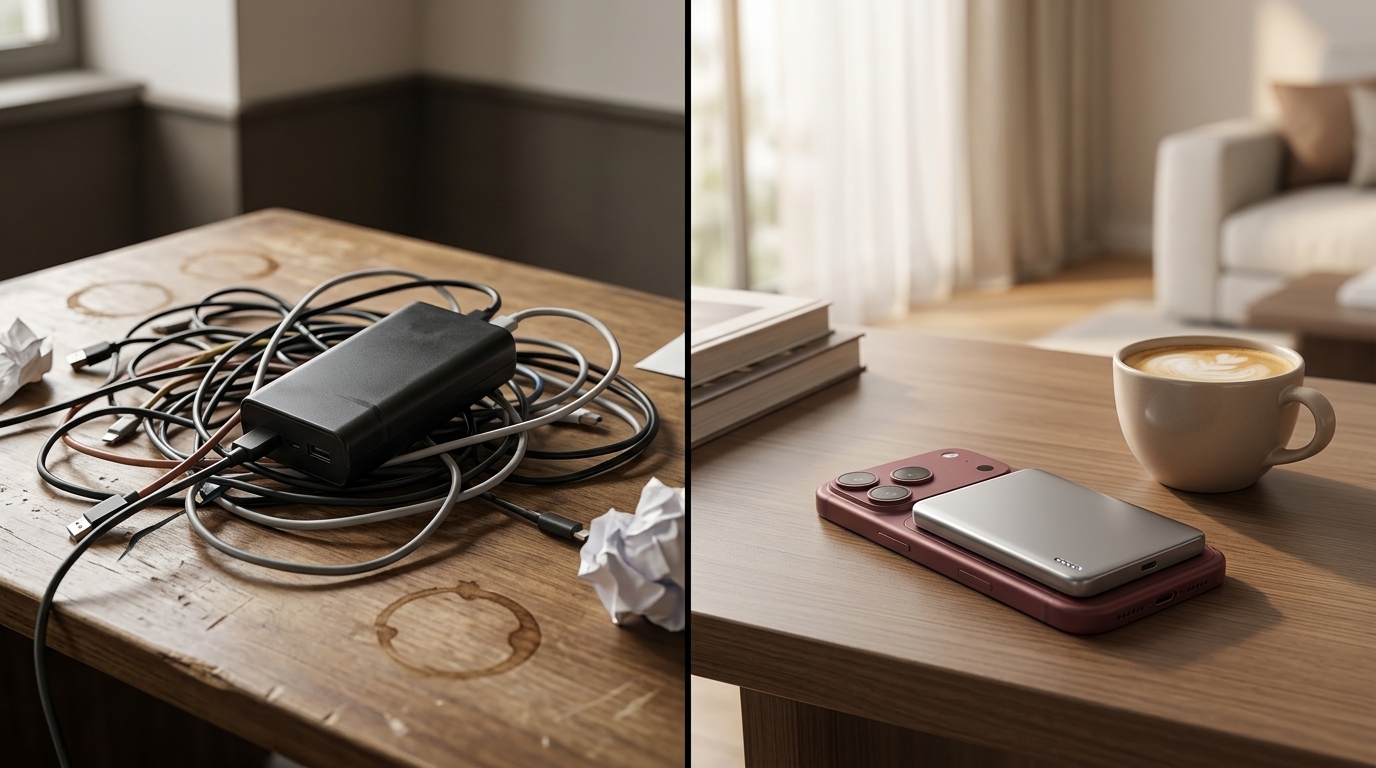
The appeal is immediate and visual. One stand replaces a tangle of cables. The surface area is reclaimed. The aesthetic is cleaner. For users who value minimalism or simply don’t have much nightstand space to begin with, the consolidation feels like a genuine improvement. The devices stack or nest, and the morning routine becomes simpler: grab everything off the stand and go.

But the stand enforces a specific order. The iPhone goes on the magnetic platform. The Apple Watch fits onto its designated charging puck. The AirPods rest on a flat Qi pad. Each device has its place, and if any device is missing—still in a bag, left in another room, already at full charge—the stand looks incomplete. The empty slot becomes a visual reminder that the system was designed for all three devices, and anything less feels like underuse.
MagSafe alignment solves one problem but creates another. The iPhone snaps into place magnetically, which ensures charging starts without manual centering. This is a meaningful improvement over flat Qi pads, where a phone placed two millimeters off-center might not charge at all. But the magnetic pull is strong enough that repositioning the phone mid-charge—to check a notification, to silence an alarm—requires pulling it free entirely. The friction is small but constant.
The integrated nightlight is a feature some users appreciate and others find intrusive. A soft glow near the charging stand can make late-night phone checks easier, but it can also disrupt sleep for people sensitive to ambient light. Some stands allow the light to be dimmed or disabled, but the controls are often buried in settings or require a button press sequence that isn’t intuitive. The light becomes something to tolerate rather than customize.
Charging speed is adequate for overnight use. The 15-watt max for MagSafe is faster than older wireless standards but slower than a wired connection. Over eight hours, the difference is irrelevant—the phone reaches full charge well before morning. But for users who occasionally need a quick top-up, the slower wireless speed becomes noticeable. A wired cable delivers 50 percent charge in 30 minutes. MagSafe takes closer to 45.
Previously listed at $35.99, current listings hover around $21.57, positioning these charging stations in the budget-to-mid tier of MagSafe accessories. The pricing reflects a competitive market where dozens of manufacturers produce functionally similar stands, differentiating primarily on materials, aesthetics, and minor feature variations like adjustable lighting.
The broader pattern is that charging infrastructure has become visible. It’s no longer hidden behind furniture or tucked into drawers—it’s an object that lives on the nightstand, that occupies space, that has design opinions. The stand solves the cable problem, but it introduces a new set of constraints around placement, alignment, and the expectation that all three devices will be present and in need of charging every night. Flexibility is traded for order, and whether that trade feels worthwhile depends on how closely the user’s actual habits align with the stand’s designed assumptions.
"Note: Readers like you help support The Apple Tech. We may receive a affiliate commission when you purchase products mentioned on our website."